
Processor TDP for Mini Servers: How Much You Actually Need
ExtremeSpec is reader-supported: some links on this page are affiliate links, and as an Amazon Associate ExtremeSpec earns from qualifying purchases at no extra cost to you. Learn more.
Processor TDP for mini servers should range from 15W to 65W depending on your specific workload and cooling requirements. You need a 15W to 35W limit for fanless operation, while a 65W threshold supports high-density virtualization and heavy data processing.
Recommended Processor TDP for Mini Server Use Cases
| Use Case | Recommended Processor TDP | Why this number |
|---|---|---|
| Fanless Enclosure | 15W to 35W | Passive cooling requires low thermal output to prevent heat buildup in a sealed chassis. |
| Home Media Server | 35W to 45W | Transcoding 4K video and serving files requires moderate sustained power without high heat. |
| Light Virtualization | 45W to 65W | Running 3 to 5 lightweight containers or VMs requires a higher thermal ceiling for consistent speed. |
| High-Density Storage | 65W | Heavy RAID operations and high-frequency disk I/O benefit from the maximum thermal headroom of standard mini servers. |
| Edge Computing | 15W to 35W | Low power draw ensures the device can run on restricted power supplies or solar-assisted setups. |
Where these choices show up in our reviews
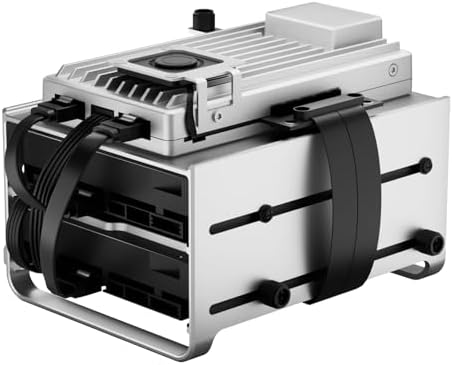
Each of the 3 shown here has its own full review on this site; they run from $329 to $699.95.


What Happens if You Go Under or Over on Processor TDP?
Choosing a Processor TDP below your requirements leads to thermal throttling. When a processor generates more heat than the cooling system can dissipate, the hardware automatically lowers its clock speed to stay within safe temperatures. This results in erratic performance, where a task might start quickly but slow down significantly after several minutes of sustained use. If you choose a 15W-rated chip for a heavy virtualization workload, the server may become unresponsive or experience high latency as the CPU struggles to maintain its speed.
Overbuying processor TDP increases costs and limits mini server space
Overbuying Processor TDP introduces unnecessary costs and heat. A higher TDP rating allows the processor to draw more power and generate more heat. If your workload only requires 20W of power, a 65W-capable processor will still have a higher base power draw and may require a more expensive, louder cooling solution. You pay a premium for thermal headroom that sits unused. In a mini server environment, where space is limited, larger cooling systems required for high TDP units can also limit the number of storage drives or expansion cards you can fit inside the case.
For a deeper dive, look at our full Supermicro A1SRi-2558F review to see the technical specs.
The Trade-off Between Power Consumption and Performance
Lower TDP figures generally correlate with better energy efficiency. A 15W to 35W processor will consume less electricity and generate less waste heat. This is a critical factor for “always-on” hardware. Because mini servers often run 24 hours a day, a lower TDP helps keep electricity costs down and extends the lifespan of the internal components by keeping them cooler. You should choose the lowest TDP that still meets your peak processing requirements to maximize the lifespan of the hardware.
What is the Most Common Mistake with Processor TDP?
The most common mistake is assuming that a high Processor TDP rating automatically translates to faster performance for every task. TDP is a measure of thermal design power, not a measure of raw processing speed or instructions per second. A processor with a 65W TDP might perform identically to a 35W processor for tasks like file serving or simple web hosting because those tasks do not stress the CPU enough to reach its peak capabilities.
Matching processor TDP to specific workload bottlenecks saves budget
You should optimize for the specific bottleneck of your workload instead of chasing the highest TDP number. If your goal is to serve large files, the storage interface and network throughput are the deciding factors. If your goal is to run multiple small applications, the amount of RAM is more important than a high TDP. Buying a high-TDP processor for a low-demand task is a waste of budget. Conversely, buying a low-TDP processor for a high-demand task leads to the thermal throttling mentioned previously.
Detailed specifications are available in our full Intel N100 Mini PC review for low-power needs.
Identifying Your Actual Processing Bottleneck
Determine your primary use case to see which spec actually matters. For a media server, look for hardware-accelerated video encoding. For a database server, look for high-speed storage interfaces. Only when your workload involves heavy encryption, complex virtualization, or high-density containerization does the Processor TDP become the primary deciding factor for your hardware choice.
How Processor TDP Interacts with Other Mini Server Specs
Processor TDP interacts with the cooling system and the power supply unit (PSU) of the mini server. A high TDP value requires a larger heatsink or active fans. If you select a high-TDP processor, you must ensure the mini server chassis is designed to exhaust that much heat. Many compact “mini” designs are physically incapable of cooling a 65W chip without significant noise or risk of failure.
Processor TDP requirements dictate the necessary mini server power supply
TDP also dictates your power supply requirements. A 65W processor does not just use 65W of electricity; it requires a power supply that can handle the peak draws of the CPU plus the storage drives and networking hardware. If your power supply is rated for a low wattage, you cannot safely run a high-TDP processor. You must balance the TDP of the processor with the total power budget of your specific mini server model.
Check out our full Zimaboard 2 1664 review to see how it handles dual-bay storage.
The Relationship Between TDP and Thermal Throttling
Thermal throttling occurs when the heat produced by the processor exceeds the cooling capacity of the mini server. This is the primary reason why TDP limits are set for fanless enclosures. In a fanless design, the chassis acts as the heatsink. Because the surface area of a mini server is limited, the TDP must be low enough for the metal casing to radiate the heat away. If you exceed the thermal limits of the enclosure, the system will slow down to protect itself from permanent damage.
The Relationship Between TDP and Power Supply Capacity
Every watt of Processor TDP is a watt that the power supply must provide. When calculating your needs, remember that the PSU must also power the hard drives, SSDs, and network cards. A 65W processor might require a power supply that can handle a total system draw of 100W or more. If you are running a mini server on a limited power circuit, choosing a lower TDP processor allows you to stay within your electrical limits while still providing enough power for your storage and networking needs.
Efficiency Gains from Low TDP Selection
Selecting a processor with a lower TDP often results in a more stable operating environment. Because lower TDP components generate less heat, the internal components of the mini server stay at a lower and more consistent temperature. This reduces the frequency of fan speed changes, leading to a quieter operation. For a server that sits in a living room or office, the trade-off of slightly lower peak performance for a much quieter and cooler machine is often the preferred choice for most users.