
Mini Server Alternatives: Other Ways to Get the Same Result
ExtremeSpec is reader-supported: some links on this page are affiliate links, and as an Amazon Associate ExtremeSpec earns from qualifying purchases at no extra cost to you. Learn more.
Mini servers provide a dedicated hardware environment for hosting services like home automation hubs, media servers, or private clouds. Buying a dedicated unit is one of several ways to achieve this, ranging from renting remote space to repurposing existing hardware. A buyer needs to decide if they require physical ownership of the hardware, local network access, or if a managed service meets their uptime and maintenance requirements.
How does cloud hosting compare to a mini server?
Cloud hosting provides remote server space managed by a third-party provider. You pay a recurring monthly fee to access compute power and storage on a remote machine, which is usually accessible via the internet. This route removes the need for hardware maintenance, power management, and physical space in your home or office. It is often the most cost-effective method for hosting services that only need to be accessed remotely, such as a personal website or a simple file repository.
How cloud hosting provides high availability with higher latency
Cloud hosting beats a mini server when the primary goal is high availability and zero maintenance. Because the provider manages the physical hardware, the service remains online even if your local power or internet fails. However, cloud hosting stops making sense when you require low-latency access to large amounts of data, such as streaming high-bitrate 4K video from a local media library. In these cases, the time spent uploading data to the cloud or the latency of remote retrieval creates a bottleneck that a local mini server avoids.
A buyer often makes the mistake of choosing cloud hosting for high-bandwidth media streaming because of the ease of setup. This results in monthly costs that scale poorly as storage needs grow, whereas a mini server provides a fixed cost for unlimited local data movement.
For a deep dive into that specific hardware, see our full Supermicro A1SRi-2558F Intel C2558 EKSMC2558M557-M spec breakdown.
Where these choices show up in our reviews
3 options shown here, $329 to $699.95, each with its own full review behind its name.
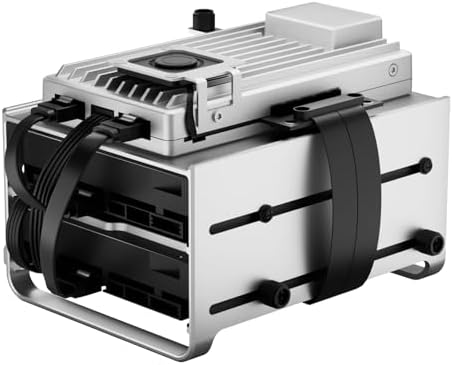


Can a desktop PC replace a mini server?
A desktop PC functions as a high-performance workstation that can also run server software. It offers significantly higher power limits and more expansion slots than a mini server, allowing for multiple GPUs or several high-speed NVMe drives. This route is ideal for users who need to perform heavy computation, such as video rendering or large-scale data processing, while also hosting background services.
Why desktop PCs offer better thermal performance for heavy workloads
A desktop PC beats a mini server when you need a “do-it-all” machine that handles both heavy production work and server tasks simultaneously. Because desktop components have higher thermal ceilings, they can sustain high workloads without the risk of thermal throttling found in compact, fanless designs. This option stops making sense when the primary goal is a low-power, “always-on” device. A desktop PC consumes significantly more electricity at idle, which can lead to higher monthly utility costs for a machine that spends 90% of its time waiting for requests.
The situation where a desktop PC is the better choice is when a user needs to run a local database that requires high IOPS and frequent large-scale writes. A desktop setup allows for dedicated PCIe lanes to high-speed storage controllers that many mini servers cannot accommodate.
Low-power efficiency is a highlight in our full Intel N100 Mini PC spec breakdown.
What are the benefits of refurbished servers?
Refurbished servers are used enterprise-grade machines that have been wiped, tested, and sold at a discount. These machines were originally designed for data centers, meaning they feature high-quality components, redundant power supplies, and ECC memory to prevent data corruption. This route provides “enterprise-grade” reliability at a fraction of the cost of new hardware.
How refurbished servers provide enterprise build quality and reliability
Refurbished servers beat a mini server when reliability and component longevity are the highest priorities. Because these units were built for 24/7 operation in professional environments, their build quality often exceeds that of consumer-grade mini servers. They are particularly useful for running complex virtualization environments where ECC memory is required to protect against memory errors. This route stops making sense when physical space is limited or when power efficiency is a primary concern, as older enterprise hardware can be less efficient than modern, low-power architectures.
A buyer might overlook that older refurbished units may lack modern instruction sets or high-efficiency cores. If the workload requires specific modern CPU features for containerization, an older server may struggle regardless of its build quality.
How do virtual private servers compare to mini servers?
A virtual private server (VPS) is a slice of a larger physical server partitioned into multiple isolated environments. You rent a specific amount of CPU, RAM, and storage from a provider, and they handle the underlying operating system and hardware maintenance. This is the middle ground between a simple cloud instance and a dedicated physical machine.
Detailed hardware analysis is available in our full Zimaboard 2 1664 spec breakdown.
When a VPS offers easier scaling and public internet access
A VPS beats a mini server when you need a stable environment that is easy to scale up or down. If your service suddenly requires more RAM, a VPS provider can often adjust your allocation instantly. It is also a superior choice for hosting services that must be reachable by the public internet without the risk of exposing a home network to port forwarding. A VPS stops making sense when you need to run specialized hardware, such as a specific PCIe card, or when you need to manage the physical storage layout to optimize for high-speed local file access.
If you need to host a private VPN or a local file share for multiple users in the same building, a VPS adds unnecessary latency and monthly costs compared to a local mini server.
Comparison of Different Mini Server Alternatives
| Route | Who it suits | Main advantage | Where it breaks down |
|---|---|---|---|
| Cloud hosting | Remote-only users | Zero maintenance | High latency for local data |
| Desktop PCs | Power users | High performance | High idle power draw |
| Refurbished servers | Reliability seekers | Enterprise build quality | Physical size and power |
| Virtual Private Servers | Scalable web hosts | Easy scaling | No hardware access |
When is buying a mini server the right answer?
Buying a mini server is the right answer when you require a balance of low power consumption, physical ownership, and local network access. It is the correct choice when your primary use case involves hosting services for a local area network, such as a media server or a home automation controller, where low latency is a requirement. If you need a device that can sit on a shelf or be tucked away in a closet while providing 24/7 uptime without the high cost of cloud subscriptions, a mini server is the ideal form factor. It is also the correct choice when you need to run specific software that requires direct access to the local network’s broadcast traffic, which many cloud and VPS providers restrict.