NVIDIA launches RTX Spark and DGX Station for local AI
ExtremeSpec is reader-supported: some links on this page are affiliate links, and as an Amazon Associate ExtremeSpec earns from qualifying purchases at no extra cost to you. Learn more.
NVIDIA announced its full lineup of local AI hardware at GTC Berlin, featuring the RTX Spark platform, DGX Spark, and DGX Station. The RTX Spark, which launched on 16 October 2026, offers up to 128GB of unified memory and 1 petaflop of AI compute for personal agents on Windows PCs. (petaflop: a unit of measurement for the number of floating point operations a computer can perform per second.) (unified memory: a memory architecture where the processor and graphics unit share a single pool of memory.) If you currently rely on cloud-based inference for local tasks, these hardware tiers change your available compute and privacy posture.
Is this for you?
If you require local AI processing, these new hardware tiers provide on-device privacy and performance for PCs and workstations.
- If you are a PC builder, the RTX Spark offers 128GB of unified memory and 1 petaflop of AI compute.
- If you are a Linux developer, the DGX Spark supports 8-unit clusters with 1TB of unified memory.
- If you are an enterprise IT manager, the DGX Station provides 748GB of coherent memory for 30+ users.
- Skip this if you are a mobile or tablet user as the hardware focuses on PCs and workstations.
- Skip this if you are a cloud-only AI researcher as this hardware is designed for local execution.
What you can do now
- If you need Recursive Flint, download the weights from Hugging Face to test on RTX Spark or DGX Spark hardware.
- If you are purchasing a laptop, verify the bootloader status on the specific model to ensure it is unlocked.
- If you want Acer models, wait for the upcoming announcement to see if the chassis meets your requirements.
Key figures
- RTX Spark memory
- 128GB unified memory, announced 21 October 2026
- RTX Spark compute
- 1 petaflop of AI compute, announced 21 October 2026
- DGX Spark cluster
- 1TB unified memory for 8-unit clusters, announced 21 October 2026
- DGX Station memory
- 748GB coherent memory, announced 21 October 2026
- DGX Station performance
- 20 petaflops AI performance, announced 21 October 2026
- DGX Station for Windows
- Expected from partners in December 2026
RTX Spark specifications for personal agents
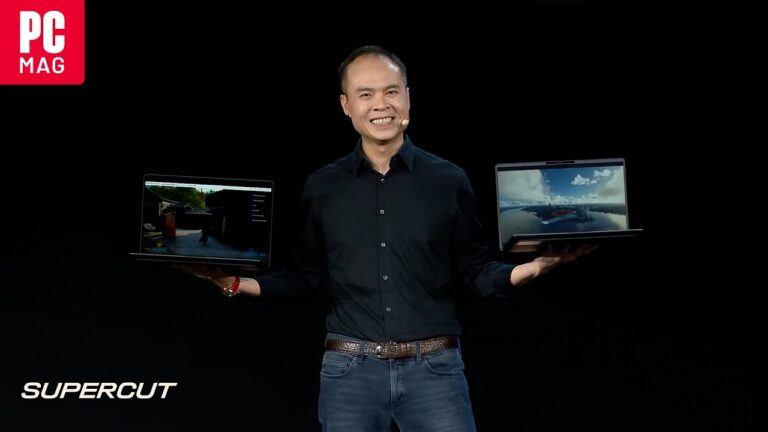
RTX Spark provides 128GB of unified memory—a memory architecture where the CPU and GPU share a single pool of memory—and 1 petaflop of AI compute. NVIDIA says this configuration enables high-end personal agents and 1440p 100 frames-per-second gaming on a single PC. Early reviewers from CGMag and PCMag have described the platform as a “dream machine” for creators and an efficient machine for AI work.
To facilitate customization
Underdog, a desktop agent app for local AI, now runs on RTX Spark using the Husky inference engine. This allows personal agents to operate entirely on-device so user data does not leave the PC. To facilitate customization, many RTX Spark laptops include an unlocked bootloader for developer use. Manufacturers including ASUS, Dell Technologies, HP, Lenovo, Microsoft, and MSI have models available on 21 October 2026, with Acer models expected soon.
DGX Spark scaling for Linux developers
DGX Spark 64GB systems start rolling out from partners on Friday, 23 October 2026. These systems can run models like Nemotron 3.5 Bolt 74B (24GB) and Qwen3.8 27B. For larger workloads, developers can connect up to eight DGX Spark units via built-in NVIDIA ConnectX-7 networking and the NVIDIA Sync Cluster Assistant.
The NVIDIA Sync Model Launcher
NVIDIA states that an 8-unit DGX Spark cluster delivers 1TB of unified memory, providing enough capacity to run frontier-class models like GLM 5.3. The NVIDIA Sync Model Launcher, arriving later this month, simplifies local AI access by automatically downloading models and containers suited to the specific hardware configuration. The October software update also introduces a Wi-Fi Assistant for appliance mode and several “DGX Spark Skills” for maintenance and troubleshooting.
DGX Station enterprise capabilities
DGX Station provides 748GB of coherent memory—memory that is consistent across different processors—and up to 20 petaflops of AI performance. NVIDIA says these specs allow enterprise teams to serve 30+ users at speeds comparable to cloud models. The system integrates with Absolute Security, Microsoft Intune, and other management tools to accelerate corporate deployment and reduce risk.
DGX Station for Windows
DGX Station for Windows is expected from system manufacturer partners in December 2026. This version will support manufacturing applications from providers like Siemens and Rockwell Automation. For robotics teams, DGX Station provides dedicated compute for post-training and simulation, including three new open-source reference workflows for refining GR00T 1.7 models. NVIDIA Cloud Functions is also entering early access for the Linux-based DGX Station to allow shared local model endpoints.
Recursive Flint and model optimizations
Recursive Flint, a new local coding model from Recursive Superintelligence, is now available for NVIDIA local hardware. The 40-billion-parameter mixture-of-experts (MoE) model—an architecture that only activates a subset of parameters during inference—features 2.5 billion active parameters. (mixture-of-experts (MoE): an architecture that only activates a subset of parameters during inference.) NVIDIA claims that specialized kernels boosted Flint’s generation speed on RTX Spark by 55% without altering the model’s weights.
NVIDIA has also provided day-zero support for models including Nemotron Bolt E4B
NVIDIA has also provided day-zero support for models including Nemotron Bolt E4B, GLM, DeepSeek, Qwen, and FLUX.3 Klein. The FLUX.3 Klein diffusion model requires as little as 8GB of VRAM and can create a 1-megapixel image in approximately four seconds on an RTX 5090. For inference speed, NVIDIA worked with the llama.cpp community to add speculative decoding support for Qwen 3.8 Flash Next, which makes tasks up to 1.4x faster on NVIDIA RTX PRO 6000 Blackwell.
vLLM inference engine performance also saw improvements, with new FlashInfer prefill kernels making agentic tasks with Qwen3.8 27B up to 1.3x faster on DGX Spark and up to 1.2x faster on DGX Station. NVIDIA released a new collection of checkpoints optimized for RAM efficiency, including Qwen3.8-Flash-Next-FP4-Local and GLM-5.3-Flash-FP4-Local, to ensure frontier-class models leave enough memory for KV cache.
Who this is for: PC builders and content creators
PC builders and content creators who need to run local agents and 1440p 100fps gaming without cloud latency should look at RTX Spark, which provides 128GB of unified memory and 1 petaflop of AI compute. Linux-based AI developers who need to build and scale applications with large coding models should use DGX Spark, which supports 8-unit clusters with 1TB of unified memory. Enterprise IT managers who need to deploy frontier-class models to 30+ users securely on-premises should use DGX Station, which offers 748GB of coherent memory and enterprise management integrations. Robotics engineers who need dedicated compute for post-training and simulation should use DGX Station, which provides open-source reference workflows for robotics and simulation.
Who this is not for: Mobile or tablet users
Mobile or tablet users can ignore this hardware as the focus is strictly on PC, desktop, and workstation hardware; these users should instead look at NVIDIA’s mobile or edge computing documentation. Cloud-only AI researchers should skip this hardware as it is designed for local, on-premise execution rather than cloud scaling; these users should refer to NVIDIA’s cloud infrastructure and H100/H200 documentation.
Imogen’s local cluster walkthrough
Imogen runs a small software firm with a $5,000 budget and needs to build a local coding agent that requires more memory than a standard PC offers to run large models like GLM 5.3. She chooses the DGX Spark and connects four systems using the built-in NVIDIA ConnectX-7 networking. Using the NVIDIA Sync Cluster Assistant, she creates a cluster that provides 1TB of unified memory. Imogen can now run the GLM 5.3 model locally with the performance of a cluster, keeping her data private and avoiding cloud costs. If Imogen only needed to run small models locally, she could have opted for an RTX Spark laptop instead, which offers 128GB of unified memory for a more portable solution.
What this can be used for
| Application | Target User |
|---|---|
| Running a private, local coding assistant using Recursive Flint | Individual software engineer |
| Deploying a local token factory for a software team of 30+ developers | Software development team |
| Training and refining robotics models via GR00T 1.7 | Robotics research team |
| Running manufacturing applications with local AI control | Manufacturing engineer |
| Generating 1-megapixel images in four seconds | Image generation enthusiast |
What NVIDIA replaces
NVIDIA states that this hardware replaces cloud-based inference, which reduces latency and improves privacy while allowing for local, controlled inference services. This hardware sits alongside cloud providers like AWS and Google Cloud, but provides a path for on-premises frontier intelligence.
NVIDIA local AI hardware: what to check, compare and watch
- GeForce RTX 5090
- The source mentions the RTX 5090's ability to generate images with the FLUX.3 Klein model, which is supported on NVIDIA local AI hardware. VRAM: 8GB. PC builders and content creators: compare the 8GB VRAM requirement against existing GPU inventory to determine compatibility with the new model.
- Bootloader status
- Many RTX Spark laptops come with an unlocked bootloader to help users build and customize local agents. PC builders and content creators: verify the bootloader status on a specific laptop model before purchasing for custom agent development.
- Acer laptop release
- The source notes that Acer laptops featuring RTX Spark will be available soon following the initial wave of partners. PC builders and content creators: wait for the Acer announcement to see if it meets specific chassis requirements for a mobile workstation.
- Windows PC
- RTX Spark is designed to power personal agents and high-performance gaming specifically on Windows PCs. Operating system: Windows. PC builders and content creators: ensure the PC is running a compatible Windows version before installing RTX Spark drivers.
- Hugging Face model weights
- Recursive Flint's open weights are available on Hugging Face for local execution on RTX Spark and DGX Spark systems. License: Apache 2.0. Linux-based AI developers: download the Recursive Flint weights from Hugging Face to begin testing on local hardware.
- Apache 2.0 license
- The Recursive Flint model is distributed under the Apache 2.0 license for use on NVIDIA local hardware. License type: Apache 2.0. Linux-based AI developers: verify that the Apache 2.0 license allows for the intended commercial use of the coding model.
NVIDIA local AI hardware: questions the original report leaves open
- What is new in this release?
- The original report did not say what is new in this release.
- Does it cost anything?
- The original report did not say if it costs anything.
- What does it require, and is anything removed or changed for existing users?
- The original report did not say what it requires or what is changed for existing users.
- Are there known problems or limitations?
- The original report did not say if there are known problems or limitations.
Source story: Bringing the Spark to Europe: Local Intelligence Powers Next Wave of Agents, published by NVIDIA on 21 October 2026.