
What is Nvidia RTX Spark, and why is everyone talking about it?
Nvidia RTX Spark is a new Windows laptop platform unveiled at Computex and shown in systems from major OEMs including Microsoft, Dell, HP, Asus, MSI, and Lenovo. Its significance is less about being a faster normal laptop and more about bringing Nvidia’s local-AI-first hardware strategy to Windows notebooks.
How is RTX Spark different from a normal creator or gaming laptop?
RTX Spark should not be judged like a typical gaming or creator machine, because Nvidia is positioning it around the economics of local AI rather than raw laptop performance. Content creation and gaming may be useful side benefits, but the main purchase reason is expected to be on-device AI work, privacy, and long-term cost savings versus paying cloud AI providers.
What hardware is inside RTX Spark laptops?
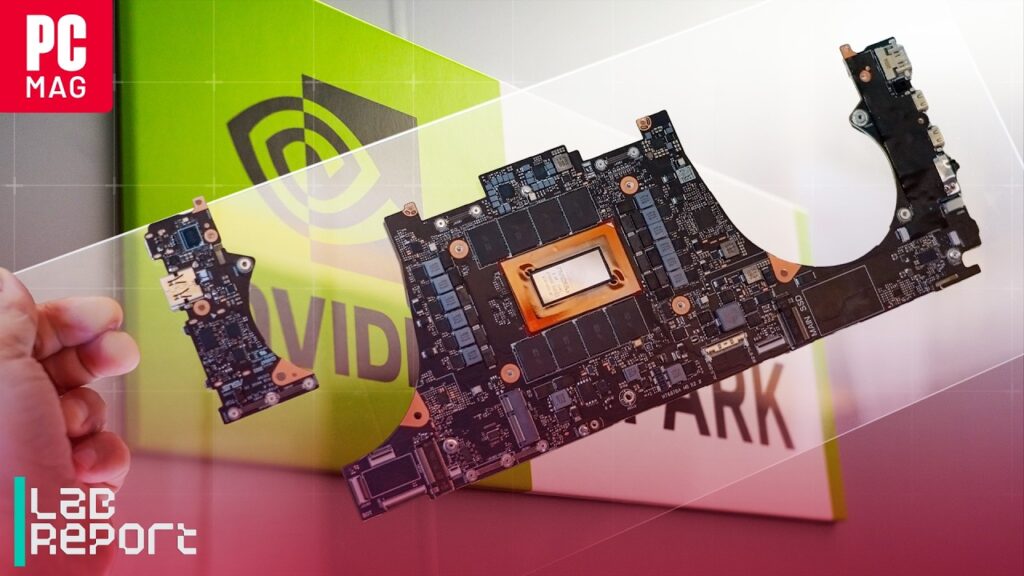
The platform is based on Nvidia’s Grace Blackwell design, which combines a 20-core CPU plus GPU with one large shared memory pool. Nvidia says RTX Spark laptops can support up to 120GB of memory, which signals that these machines are meant for memory-hungry AI and advanced creator workloads, not casual everyday use.
What does unified memory do for local AI?
Unified memory is the key enabler because it lets the CPU and GPU access the same large pool of memory instead of forcing data to move back and forth constantly. That matters when you want to run large language models locally, including multi-billion-parameter models, because the model can fit more naturally into a single shared memory space.
What does Nvidia mean by local AI first?
Local AI first means running models on your own machine instead of sending data to a cloud service every time you need an output. As PCMag’s John Burek put it, “You buy it because you want to do local AI first and foremost in a machine that, after a certain period, hits a break-even point that makes owning the hardware a better value than paying for AI.”
How does RTX Spark compare with DGX Spark?
RTX Spark is essentially the Windows laptop version of Nvidia’s DGX Spark mini desktop platform, while DGX Spark runs on Linux. DGX Spark is aimed at AI researchers, data scientists, and developers who want near data-center architecture for building and tuning LLMs on premises, and RTX Spark extends that concept to portable Windows systems.
| Platform | Form factor | Operating system | Main purpose | Price reference mentioned | Notes |
|---|---|---|---|---|---|
| RTX Spark | Laptop | Windows | Local AI on Windows laptops | Not announced | Based on Grace Blackwell; designed around unified memory |
| DGX Spark | Compact desktop mini PC | Linux | AI researchers, data scientists, and developers building and tuning LLMs | Around four grand | Private, on-premises AI work |
Why does unified memory matter for local AI?
Unified memory matters because it helps solve the biggest practical problem in running serious AI locally: fitting large models into memory without constantly shuttling data between separate CPU and GPU pools. That is why Nvidia keeps emphasizing capacity, token counts, model size, and model quantization, concepts that matter far more to AI developers and experimenters than to ordinary laptop buyers.
Who are RTX Spark laptops actually for?
These machines are aimed at AI developers, data scientists, and motivated experimenters who already understand concepts like inferencing, training, token costs, and model quantization. A smaller secondary audience may be privacy-focused power users and some creators with software that can genuinely use huge memory budgets, but Nvidia is not pitching RTX Spark as a mainstream consumer laptop.
They look like laptops. They fold like laptops. But you can’t think of them as laptops like you would think of a gaming PC or a content creation PC.
How expensive will RTX Spark laptops be?
Nvidia has not announced pricing, but the video makes clear these systems are likely to start in expensive territory, with a strong chance of landing around $3,000 and up. That is consistent with the idea that a 128GB RTX Spark machine would not be meaningfully cheaper than Nvidia’s roughly $4,000 DGX Spark mini desktop, especially when memory costs are still high.
When will RTX Spark laptops be available?
The hardware was introduced only a few days before Computex coverage, so performance details are still limited and the hype cycle is early. Nvidia says the machines are expected to arrive later this year, which means buyers will need to wait for more concrete specs, benchmarks, and pricing before making a real purchasing decision.
Why is RTX Spark being called a slow burn?
John Burek’s argument is that RTX Spark will take time to matter because most laptop buyers do not yet understand why they would pay a premium for local AI hardware, and many do not even know what they would use it for. He also points to high memory prices, the need for education, and the possibility that the market may need one or two more hardware generations before demand broadens beyond a niche.
That’s why I would argue that RTX Spark is going to be a slow burn.
What does Nvidia’s entry mean for Windows and ARM?
Nvidia joining the Windows ARM ecosystem is a big deal because it puts another heavyweight alongside Microsoft, Intel, AMD, and Qualcomm in the race to define the next generation of Windows laptops. The video suggests the real impact will not be immediate, but Nvidia’s software reach, developer relationships, and financial backing could help make local AI laptops more familiar over time.
Frequently Asked Questions
What is Nvidia RTX Spark?
It is Nvidia’s new Windows laptop platform based on Grace Blackwell, combining a 20-core CPU and GPU with shared unified memory for local AI work.
Is RTX Spark mainly for gaming or content creation?
No. The transcript says those are secondary benefits at most; the main reason to buy it is local AI.
How is RTX Spark related to DGX Spark?
RTX Spark is described as the Windows equivalent of DGX Spark, which is Nvidia’s compact desktop AI platform running Linux.
Why does unified memory matter?
Because the shared CPU-GPU memory pool can support very large models, including multi-billion-parameter LLMs, on-device.
Why does the video call RTX Spark a slow burn?
Because the platform is new, expensive, not yet well understood by most buyers, and will likely need years of education and market development before it becomes mainstream.
Based on the video Nvidia's RTX Spark Is Going to Be a Slow Burn by PCMag.