
Does the RX 560 XT GDDR5 AI GPU have enough VRAM to run a large language model with a 32k context window?
ExtremeSpec is reader-supported: some links on this page are affiliate links, and as an Amazon Associate ExtremeSpec earns from qualifying purchases at no extra cost to you. Learn more.
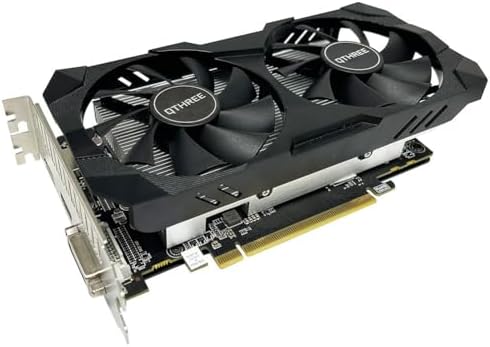
To handle that specific context window, you need 16 to 20GB of VRAM, which is the memory the processor uses to store active data. Before starting, verify your system has a power supply that can support the 150W power draw of this card.
RX 560 XT 8GB memory limits 32k context window processing
The RX 560 XT provides 8GB of GDDR5 memory, which is the dedicated memory used for graphics and AI tasks. This limit is significant because context window size—the amount of text a model can “remember” at once—scales exponentially, meaning a 32k window can quickly exceed 8GB of space. Because the model weights and the KV cache (the temporary data the model uses to track the conversation) both compete for the same space, you may find the 8GB capacity fills up before the model can process your full request. This card is an entry-level graphics card, which is a specialized hardware component that processes visual and mathematical data for your computer. We selected the RX 560 XT for this review because it represents the lower end of the 8GB memory tier we compared. Choosing a card with insufficient memory results in an Out of Memory (OOM) error, forcing you to restart your session and lose your progress.
For more specific details, see the RX 560 XT FAQ section.
What to Check Before Buying the RX 560 XT
Because AI workloads place unique demands on hardware, you must verify these specific details to ensure the card functions for your needs:
You can find the RX 560 XT performance breakdown in our full review.
- Confirm your power supply can provide at least 150W of power to the card to prevent system crashes during high-load inference.
- Check if your motherboard supports the PCIe 3.0 x16 slot required for this specific hardware.
- Determine if your software environment supports ROCm, the open-source software platform used to run models on AMD hardware.
- Account for system reserved VRAM, as your operating system will reserve some of the 8GB, leaving less for your actual model.
- Verify that your current PC case has the physical space for a dual-slot form factor.
Comparing the RX 560 XT to Other Options
The RX 560 XT is suited for users who need a basic 8GB memory capacity for light tasks. If you need to run a 13B parameter model at 4-bit quantization, you would need 10 to 12GB of VRAM, making this card insufficient for that specific requirement. Users who need to run Stable Diffusion XL or larger models should look for hardware with 12 to 16GB of memory. For those who only need to train small LoRA adapters on 7B models, the 8GB on this card is sufficient at the lower end of that requirement. If your primary goal is high-speed token processing, you may also want to look for cards with higher memory bandwidth to move data into the processor faster.
Small builds have specific requirements, so browse the best graphics card for low profile PC options.
If you only need to perform basic AI tasks or train very small models, the RX 560 XT is a viable choice. For users requiring larger context windows or bigger models, you should choose a card with a higher VRAM capacity.
More AI GPU explainers and comparisons
- Budget AI Project GPUs Under $300 Compared
- Choosing the Best GPU for Professional Workstation Under $300
- The AI GPUs That Work Best for Gaming and AI
- Which GPU Is Best for High Performance AI Under $800?
- The AI GPUs That Work Best for Small Form Factor PCs
- Which Graphics Card Is Best for a Low Profile PC?