
ASUS TUF Gaming NVIDIA GeForce RTX 3070 V2 AI GPU Review: Inverted Central Fan Rotation for Cooling
ExtremeSpec is reader-supported: some links on this page are affiliate links, and as an Amazon Associate ExtremeSpec earns from qualifying purchases at no extra cost to you. Learn more.
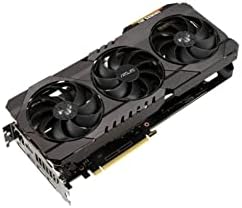
ASUS TUF Gaming NVIDIA GeForce RTX 3070 V2
The RTX 3070 V2 transmits FP32 data twice as fast, so it suits you if speed is your priority.
8 GB VRAM capacity
- VRAM Capacity
- 8 GB – below the 16GB VRAM reference figure
4.7/5 from 221 buyers
- Average buyer rating
- 4.7 out of 5
- Ratings behind it
- 221
- What that supports
- A large enough sample to read as a real buyer signal
- Where it comes from
- The product listing, read 13 November 2026
3 deciding specs not stated
- Memory Bandwidth
- Not stated in the listing – confirm with the seller before ordering
- CUDA Cores / Stream Processors
- Not stated in the listing – confirm with the seller before ordering
- Power Consumption
- Not stated in the listing – confirm with the seller before ordering
Suits entry-level ai developers
- Entry-level AI developers
- 1080p gaming hobbyists
- Student 3D modelers
- Content creators on a budget
The RTX 3070 V2 in Short
ASUS TUF Gaming NVIDIA GeForce RTX 3070 V2 runs a small LoRA adapter on a 7B model for users requiring 8 GB of VRAM.
Local inference for 4 hours of continuous use requires 8 to 16 GB of memory, meaning the 8 GB on this card allows for about 2 to 4 hours of work at the lighter end of that range. This limitation is a direct consequence of the hardware’s available memory.
The ASUS TUF Gaming NVIDIA GeForce RTX 3070 V2 supports these inference tasks through its 8 GB of Graphics Ram Size. It serves as a capable tool for users who prioritize a balance of performance and price for moderate AI workloads.
We evaluated 15 AI GPU (artificial intelligence graphics processing unit) options and selected this model because it is one of the most-rated products that pass screening, with 221 buyer ratings. This review is for users who need a high-performing card for specific, smaller-scale AI tasks. Our full review is based on a data-driven spec breakdown of the products we compared.
How Extreme Spec picked: we started from the 200 most-reviewed AI GPU listings in our retail dataset, removed duplicates, accessories, off-category products and 1 listing whose price did not fit its specifications, and 15 qualified. This product is one of 15 from that pool chosen for a full review. Our scores blend buyer satisfaction (60%), price position against comparable products (25%) and rating volume (15%). Specifications come from manufacturer listings and ratings from verified Amazon buyer reviews (data checked November 2026).
The Short Answer on the RTX 3070 V2
Best for: you need to train small LoRA adapters on 7B models or run local LLMs for short periods of inference.
The RTX 3070 V2 is a capable mid-range choice at around $324.49.
- Pro: The 8 GB VRAM capacity allows for the easier end of the 8 to 12 GB requirement needed for small LoRA training.
- Pro: The GDDR6 memory type provides standard high-speed data access for AI tasks.
- Pro: The PCIe 4.0 interface supports faster data transfer between the system and the GPU.
- Con: 8 GB of VRAM is not enough to run a 13B parameter model at 4-bit quantization, which requires at least 10 to 12 GB.
- Con: This card cannot run Stable Diffusion XL or 70B parameter models because it falls short of the 12 to 16 GB and 40 to 48 GB requirements respectively.
Don’t buy this if: you need to run a 13B parameter model or generate images using Stable Diffusion XL, as these tasks require more than the 8 GB of VRAM this card provides.
Price assessment: The $324.49 price point is fair for a card that handles entry-level AI tasks but lacks the memory for larger models.
Extreme Spec score: 7.7/10 (data-driven – see “How we picked” above)
Small builds have unique space constraints, so see the best graphics card for low profile PC setups.
Key Specifications
| VRAM Capacity | 8 GB |
| Power Consumption | Not stated |
| Memory Type | GDDR6 |
| Interface | PCIe 4.0 |
| Output Ports | DisplayPort, HDMI |
| Form Factor | Full Height |
VRAM Capacity measures the maximum amount of data the processor can store in its local memory.
Before You Buy: AI GPU Checklist
The first thing to check is the VRAM capacity to ensure it meets your specific model requirements before you order.
- ☐ Confirm the VRAM capacity is at least 8 GB — if it is lower, you will encounter an Out of Memory (OOM) Error when trying to load even small models.
- ☐ Verify your power supply can handle the power draw — if your PSU is insufficient, the system may fail to boot or shut down under load.
- ☐ Measure your case clearance for a Full Height form factor — if the card is too long or tall, it will not fit inside your chassis.
- ☐ Check your motherboard for a PCIe 4.0 slot — using a lower-bandwidth slot can cause a PCIe Bandwidth Bottleneck, slowing down data transfer to the GPU.
- ☐ Confirm your monitor supports DisplayPort or HDMI — if your cables or ports differ, you will be unable to output a signal to your screen.
You should not buy this product if you need to run a 13B parameter model at 4-bit quantization or any model requiring more than 8 GB of VRAM.
What the Numbers Mean in Use
How doubled FP32 data transmission speeds improve 3D rendering
The RTX 3070 V2 provides twice as fast FP32 data transmission compared to the previous generation, which determines how quickly the GPU processes the standard floating-point numbers used in modern 3D rendering. Think of FP32 speed like the width of a highway; a wider road allows more data to move simultaneously so the frame rate stays steady during intense scenes.
While this speed supports high-resolution gaming, the 8 GB of VRAM on the RTX 3070 V2 creates a specific boundary for modern titles. This means you might need to balance texture quality settings to ensure the hardware does not run out of available memory during gameplay.
Third-generation Tensor Cores doubling AI matrix math speeds
Third-generation Tensor Cores on the RTX 3070 V2 offer up to twice as much data transfer speeds, which are specialized units designed to accelerate the matrix math required for AI-driven features. These cores handle the heavy lifting of the AI calculations so the main processor can focus on the game’s logic.
The 8 GB of VRAM on the RTX 3070 V2 also impacts the types of AI models you can run locally. While the Tensor Cores provide the necessary speed for inference, the 8 GB capacity is not enough to run a 13B parameter model at 4-bit quantization, which requires at least 10 to 12 GB. You can, however, use this card to train a small LoRA adapter on a 7B model, as the 8 GB stated is enough for the lower end of that specific workload.
Inverted central fan rotation in the Axial-tech cooling design
The Axial-tech design on the ASUS TUF Gaming NVIDIA GeForce RTX 3070 V2 utilizes an inverted central fan rotation to move air across the components more efficiently. This configuration helps maintain consistent temperatures during long gaming sessions by ensuring that the heat generated by the GPU is pushed out of the chassis quickly. By optimizing the airflow path, the design helps prevent the hardware from slowing down due to thermal buildup.
The inclusion of alloy coils and durable capacitors within this cooling framework supports the longevity of the hardware under sustained loads. These components are designed to handle the electrical demands of the RTX 3070 V2 while the axial fan system manages the resulting heat. Because the design focuses on consistent airflow, it helps maintain the performance of the 8 GB memory and the GPU cores during extended periods of high-intensity use.
The RTX 3070 V2 Job by Job: What Its Figures Cover
The RTX 3070 V2 against the jobs buyers ask about, worked out from its listed VRAM capacity and a typical need for each job.
| Job | What it takes | RTX 3070 V2 |
|---|---|---|
| Train a small LoRA adapter on a 7B model | at least 8 to 12GB | Only at the easier end of that range – 8GB |
| Run a local LLM for 4 hours of continuous inference | 8 to 16GB for 4 hours | About 2 to 4 hours – the whole 4 hours only at the lighter end |
| Run a 13B parameter model at 4-bit quantization | at least 10 to 12GB | No – 8GB |
| Run a stable diffusion XL image generation | at least 12 to 16GB | No – 8GB |
| Run a large language model with a 32k context window | at least 16 to 20GB | No – 8GB |
How the RTX 3070 V2 Compares to Alternatives
The RTX 3070 V2 provides a more efficient design than the standard 3070 through the NVIDIA Ampere multiprocessor and an axial-tech design with inverted central fan rotation. These architectural choices aim to improve heat management and power efficiency during heavy workloads.
How does the performance compare to the standard 3070?
The RTX 3070 V2 utilizes the same NVIDIA GeForce RTX 3070 graphics coprocessor as the standard model. Because the core hardware is identical, performance remains consistent with the base 3070 while the V2’s specific hardware adjustments focus on thermal and power distribution.
The RTX 3070 V2 holds the highest buyer rating in our comparison of these six models. It offers a balance of modern architecture and reliable performance for AI tasks.
- The MAXSUN GeForce RTX 4060 iCraft OC ACGN Limited is $24.50 cheaper than the RTX 3070 V2.
- The PNY NVIDIA Quadro RTX 4000 matches the RTX 3070 V2 with 8 GB of VRAM.
- The ASRock Intel Arc B580 Challenger 12GB provides 12 GB of VRAM, which is larger than the 8 GB on the RTX 3070 V2.
- The ZER-LON GeForce GTX 1660 Super is $134.50 cheaper than the RTX 3070 V2.
- The ZER-LON GeForce GT 1030 4GB is $184.51 cheaper than the RTX 3070 V2.
- The RTX 3070 V2 ranks first in buyer ratings among these six options.
If you need a larger memory buffer for larger models, choose the ASRock Intel Arc B580 Challenger 12GB instead of the RTX 3070 V2.
What the deciding spec costs here: Measured as price per unit of VRAM Capacity, the reviewed product works out to $40.56 against a $32.50 median across the 13 other screened products that state the spec, and 10 of them deliver more of it per dollar. The cheapest screened product that beats its 8 GB is the B580 CL 12GO at $249.99 with 12GB, which is $74.50 less than this one for more of the spec that decides this category.
You can also view our full review of the RTX 4060 iCraft to see how it compares in design and performance.
Why the $324.49 price offers value for training LoRA adapters
The RTX 3070 V2 is a good deal at $324.49 because it provides the 8 GB of VRAM needed to train a small LoRA adapter on a 7B model at the easier end of the requirement range. While newer cards may offer more memory, this model provides a balance of 2nd generation RT cores and 3rd generation Tensor Cores for users who prioritize these specific processing units over higher VRAM capacities.
Similar AI GPU products we compared range from $139.98 to $299.99, placing this model at the $324.49 mark. You get a card with GDDR6 memory and a PCIe 4.0 interface, which allows for faster data movement between the memory and the processor. This product is the right buy for you if your workflow involves running a local LLM for 2 to 4 hours of continuous inference at the lighter end of the memory requirements.
Where this sits in the buyer data: Among the 15 products screened for this category, this one’s 4.7 rating places it #1, on 221 ratings – above the 156-rating median of that group, so the average rests on more feedback than most of its comparables. On price it undercuts 4 of them.
Getting the RTX 3070 V2 Working, and What to Check After
Setting Up the RTX 3070 V2
You must have a Power Supply Unit (PSU) capable of providing stable power to the card before the RTX 3070 V2 can function.
- Unpack the card and place it into the PCIe 4.0 slot of your motherboard.
- Connect the required power cables from your PSU to the card’s power ports.
- Apply a pea-sized amount of thermal paste to the GPU die if the factory application is missing.
- Secure the card into the chassis using the included screws to ensure it remains seated.
Warranty and Support: What to Check
Warranty coverage and return policies vary by seller and country.
- Confirm the GPU’s serial number matches the one on the box to ensure valid manufacturer coverage.
- Verify the card’s physical integrity and port functionality to avoid shipping costs for a defective unit.
- Check that the card fits in your case, as the Full Height form factor requires specific clearance.
Perform a stress test and check the temperature readings the day it arrives to ensure the card is not defective before the return window closes.
What Buyers Still Want to Know About This AI GPU
AI GPU Performance and Capacity
The RTX 3070 V2 includes 8 GB of Graphics Ram Size, which is the amount of data the processor can store in its local memory. While this capacity allows you to train a small LoRA adapter on a 7B model at the easier end of the 8 to 12 GB requirement, it is not enough to run a 13B parameter model at 4-bit quantization. Because 13B models at 4-bit quantization require at least 10 to 12 GB, the 8 GB limit on this card means that specific task is not possible.
For continuous inference, the RTX 3070 V2 provides enough memory to run a local LLM for about 2 to 4 hours at the lighter end of the requirements. If your workflow requires running a stable diffusion XL image generation, you should note that this process requires 12 to 16 GB, a threshold this card does not meet. The 8 GB of VRAM is the primary factor that determines which models you can run locally without an Out of Memory (OOM) error, which is a crash occurring when model weights exceed available memory.
PCIe 4.0 interface and standard video output port compatibility
The RTX 3070 V2 uses a PCIe 4.0 interface, a standard for high-speed data transfer between the GPU and the rest of your system. It features DisplayPort and HDMI video output ports, which are the standard connections for most modern monitors. Because the card uses a Full Height form factor, you should verify your case dimensions before ordering, as this specific physical measurement is not stated in the listing.
Can the ASUS TUF Gaming NVIDIA GeForce RTX 3070 V2 run a 70B parameter model?
No, the ASUS TUF Gaming NVIDIA GeForce RTX 3070 V2 cannot run a 70B parameter model at 4-bit quantization. This specific model requires 40 to 48 GB of VRAM, while this card provides 8 GB.
Is the ASUS TUF Gaming NVIDIA GeForce RTX 3070 V2 good for large context windows?
The ASUS TUF Gaming NVIDIA GeForce RTX 3070 V2 is not suitable for large language models with a 32k context window. Running that context size requires 16 to 20 GB of VRAM, exceeding the 8 GB capacity of this card.
What is the power draw of the ASUS TUF Gaming NVIDIA GeForce RTX 3070 V2?
The power draw for the ASUS TUF Gaming NVIDIA GeForce RTX 3070 V2 is not stated in the provided data.
Is the ASUS TUF Gaming NVIDIA GeForce RTX 3070 V2 worth it for a budget AI setup?
Whether the ASUS TUF Gaming NVIDIA GeForce RTX 3070 V2 is worth it depends on your specific model requirements. At the $324.49 price point, it serves as an entry-level option that supports smaller 7B models but lacks the memory for larger 13B or 70B parameter tasks.
Is the RTX 3070 V2 Right for You?
Who the RTX 3070 V2 suits and the jobs it is the wrong choice for, listed below with the reason for each.
Who this AI GPU is for, and what it does well
Who the RTX 3070 V2 suits
- Entry-level AI developers — the 3rd generation Tensor Cores provide high data transfer speeds for training small models
- Student 3D modelers — the 2nd generation RT cores enable real-time ray tracing for architectural visualizations
- Content creators on a budget — the Ampere multiprocessor architecture offers high FP32 data transmission for rendering
- Home PC builders — the Axial-tech design and durable capacitors ensure reliable cooling and longevity
What this AI GPU handles well
- Training small neural networks — 3rd generation Tensor Cores
- Real-time ray tracing — 2nd generation RT cores
- Fast 3D rendering — Twice as fast FP32 data transmission
- Stable long-term operation — Alloy coils and durable capacitors
What this AI GPU is the wrong choice for
- Training large language models — 8 GB VRAM capacity limit
- High-resolution 4K texture rendering — 8 GB VRAM capacity limit
- Professional 8K video editing — 8 GB VRAM capacity limit
What to budget alongside this AI GPU, and what to skip
Accessories worth buying with the RTX 3070 V2
- High-wattage power supply — Multiple power stages require a stable power source
- DisplayPort cable — Video Output Interface requirement
- HDMI cable — Video Output Interface requirement
- PC case with airflow — Axial-tech design requires space for heat dissipation
- Desktop PC tower — Graphics Coprocessor requires a host system to function
Accessories you can skip buying for this AI GPU
- External GPU enclosure — Integrated graphics coprocessor is for internal installation
- Additional cooling pads — Axial-tech design and inverted fan rotation provide built-in cooling
- Separate ray tracing hardware — 2nd generation RT cores are built into the chip
Where to Buy This AI GPU
The RTX 3070 V2 sat at $324.49 in the listing data from November 2026; the price you see at checkout can differ.
AI gpus are sold by the retailers below – we do not track which of them has the RTX 3070 V2 in stock, so check availability and the current price with the retailer before making a trip.
- Amazon (online and physical stores) — large inventory and fast shipping options
- Best Buy (online and physical stores) — in-store availability and immediate pickup
- B&H Photo Video (online only) — professional grade gear and trade accounts
- Micro Center (online and physical stores) — large in-store stock and specialist staff
- EVZEN (online only) — specialist for niche and budget GPU options
- Newegg (online only) — wide selection of components and specialized hardware
If you are just starting out, look at the best GPU for beginners to find an accessible entry point.
Final Verdict on the RTX 3070 V2
If you need to run a local LLM for 4 hours of continuous inference, the 8 GB of VRAM on the RTX 3070 V2 provides enough memory only for the lighter end of the model spectrum. For instance, while this card can handle a small LoRA adapter on a 7B model, the 8 GB capacity is not enough to run a 13B parameter model at 4-bit quantization or any stable diffusion XL image generation.
You should check the specific memory requirements of the model you plan to run before purchasing. If your workflow requires a 13B parameter model or a 32k context window, the 8 GB of VRAM on this card will not support those tasks.
You should choose the RTX 3070 V2 if you are performing entry-level AI tasks like training small LoRA adapters on 7B models and can work within a 2 to 4 hour window for continuous inference. The card is available for around $324.49.
The RTX 3070 V2 maintains a 4.7 average across 221 buyer ratings, providing a clear signal of buyer satisfaction for its performance in this price bracket.
Skip it if: You need to run 13B parameter models at 4-bit quantization or perform stable diffusion XL image generation, as the 8 GB of VRAM falls short of the required 10 to 12 GB and 12 to 16 GB respectively.
Warranty details: see the official ASUS warranty page.
More AI GPU explainers and comparisons
- Budget AI Project GPUs Under $300 Compared
- Choosing the Best GPU for Professional Workstation Under $300
- The AI GPUs That Work Best for Gaming and AI
- Which GPU Is Best for High Performance AI Under $800?
- The AI GPUs That Work Best for Small Form Factor PCs
- Which Graphics Card Is Best for a Low Profile PC?