
ASUS is pushing the ProArt P16 and P14 into the creator-laptop spotlight with a mix of unusually slim hardware, bright OLED displays, and a cooling system that aims to keep performance steady without turning the chassis into a wind tunnel. The standout details here are specific enough to matter to buyers comparing premium mobile workstations: a 16-inch 4K 120Hz option, a 14-inch 3K 120Hz option, and a design that leans hard into portability and practical expansion.
What are the ASUS ProArt P16 and P14 laptops powered by RTX Spark?
The ASUS ProArt P16 and P14 are creator-focused laptops powered by NVIDIA’s RTX Spark Superchip, positioned for users who want thin hardware without giving up the kinds of features creative professionals care about. In practical terms, ASUS is pairing workstation-friendly design cues with a new platform that NVIDIA wants users to follow more closely through its RTX Spark social channels.
How do the ProArt P16 and P14 differ in display size and resolution?
| Model | Display size | Resolution / refresh rate | Panel type / brightness |
|---|---|---|---|
| P16 | 16-inch | 4K, 120Hz | ASUS Lumina Pro OLED touch screen, 1600 nits peak brightness |
| P14 | 14-inch | 3K, 120Hz | ASUS Lumina Pro OLED touch screen, 1600 nits peak brightness |
How thin are these ASUS ProArt laptops and what finishes do they use?
| Feature | P16 / P14 | Details |
|---|---|---|
| Thickness | P16 | 12.9 millimeters |
| Color options | Both | Nano black and neo white |
| Chassis material | Both | Aluminum CNC chassis with a special coating that reduces fingerprints and smudges |
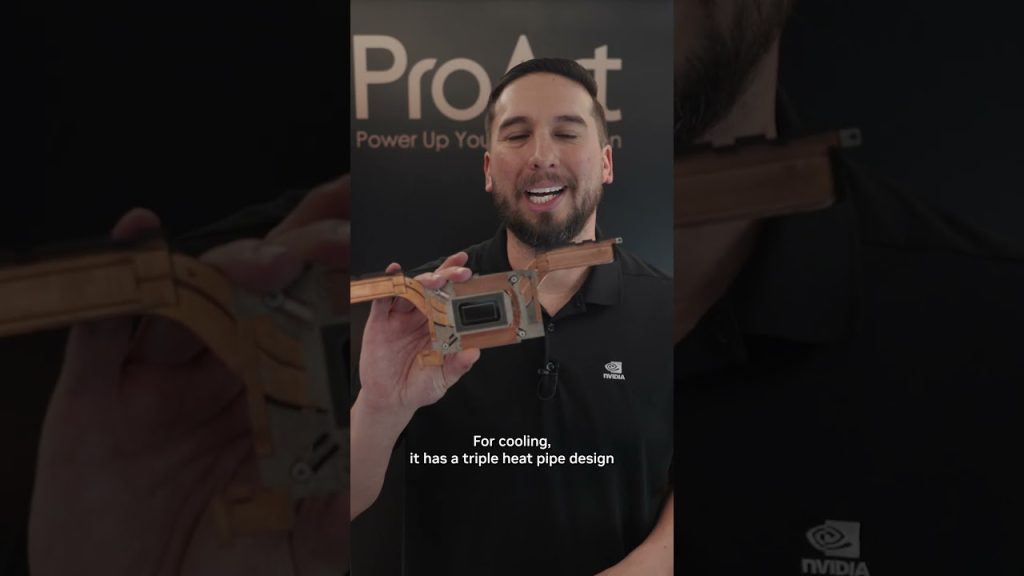
What cooling system does ASUS use in the ProArt P16 and P14?
- Triple heat pipe design
- The shared cooling approach used in both laptops.
- Woven copper mesh
- A more efficient alternative to a standard heat pipe, according to ASUS.
- Noise level
- About 40 decibels at full performance.
- Performance claim
- The RTX Spark Superchip is said to run at full performance within that noise envelope.
What ports and storage features are included?
Both laptops include a full-size SD Express card reader, which is useful for photographers and video editors who still rely on fast removable media. The P16 goes further with dual full-size Gen5 M.2 slots, a detail that should catch the eye of buyers who want high-speed internal storage expansion in a slim laptop.
What user-focused hardware touches stand out?
The haptic touchpad is one of the more practical details in the design, since it allows clicking anywhere on the surface rather than limiting activation to a physical press zone. That kind of consistency matters on a creator laptop because it can make everyday navigation feel less finicky during long editing sessions.
What matters most if you are comparing these to other creator laptops?
The main appeal is the combination of thinness, bright OLED touch displays, and creator-oriented hardware like SD Express and Gen5 M.2 support, all packed into a chassis that still claims full-performance operation at around 40 decibels. Pricing, weight, battery life, CPU details, and availability were not provided here, so those remain the key unanswered questions before the ProArt P16 and P14 can be judged against rivals like other premium creator machines from Dell, HP, Lenovo, and Apple.
Based on the video An Early Look At The ASUS ProArt P16 & P14 Laptops Powered by NVIDIA RTX Spark by NVIDIA.