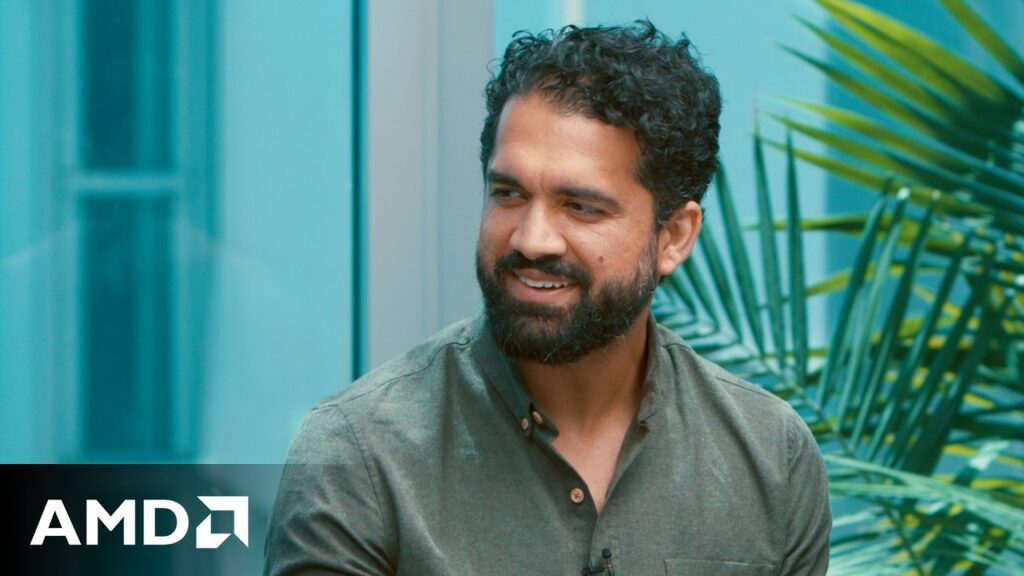
Foundation Humanoid Robots’ Phantom 2 achieves a 70 to 80 kg payload capacity, a significant leap intended for heavy industrial work rather than domestic use. Sankaet Pathak, the CEO of Foundation Future Technologies, argues that solving for “atoms”—the physical reality of torque and durability—is more critical than focusing on software-only “bits.” Logistics infrastructure planners and robotics hardware designers should act on this information, while home robotics hobbyists should skip it.
Who should buy the Foundation Humanoid Robots and who should skip it
Readers who should buy the Foundation Humanoid Robots
- Logistics infrastructure planners should pick the Foundation Humanoid Robots, as the Phantom 2 handles 70 to 80 kg in outdoor environments.
- Robotics hardware designers should pick the Foundation Humanoid Robots to study the high-torque density actuators and unified memory architecture.
- FPGA and embedded systems designers should pick the Foundation Humanoid Robots to see how the AMD platform handles low-latency hardware processing.
Readers who should skip the Foundation Humanoid Robots
- Home robotics hobbyists should skip the Foundation Humanoid Robots and look at consumer electronics news regarding home-use robots.
- Mobile app developers should skip the Foundation Humanoid Robots and look at general mobile software development guides.
Readers who should wait for the Foundation Humanoid Robots
- Potential industrial partners should wait for the official announcement of the Phantom Two robot.
What to do next about the Foundation Humanoid Robots
- Verify payload requirements to 70 to 80 kg for heavy lifting.
- Evaluate environmental tolerance for waterproof and dustproof requirements.
- Monitor production timeline to see if the scale reaches thousands in 6 to 8 months.
- Assess actuator performance for high torque density in heavy-duty use.
Foundation’s Pivot to Heavy Industrial Humanoid Robotics
Foundation Humanoid Robots differentiate themselves by targeting heavy industrial applications like port logistics, heavy payload carry, and materials handling. Sankaet Pathak states that while many companies focus on light industrial automation or at-home use, his focus is on the infrastructure and building side. The robot’s success depends on its ability to handle heavy loads in non-temperature controlled environments.
The Phantom 2 robot features a waterproof and dustproof design to survive outdoor industrial work. Sankaet Pathak claims the robot is designed for very high vibration tolerance and can take heavy falls.
Phantom 1 and Phantom 2 robots offer payload capacities of 30 to 80 kg
The Phantom 1 robot established the foundation with a 30 kg payload capacity. Sankaet Pathak notes that the second-generation Phantom 2 provides a 40 to 50 kg increase in payload capacity over the 30 kg Phantom 1, as it reaches 70 to 80 kg.
The Phantom 2 robot stands at a height of 6 feet plus. Sankaet Pathak notes the Phantom 1 measured between 5 to 8 feet. The design iteration focused on making the robot robust for heavy industrial work.
| Feature | Phantom 1 | Phantom 2 |
|---|---|---|
| Payload Capacity | 30 kg | 70 to 80 kg |
| Height | 5-8 feet | 6+ feet |
| Environmental Resistance | Standard | Waterproof, Dustproof |
| Primary Use Case | General | Heavy Industrial |
Foundation Humanoid Robots utilize a rotary actuator with the world’s highest torque density
The Foundation Humanoid Robots utilize a rotary actuator that Sankaet Pathak claims is the highest torque density actuator available in the world. These actuators are necessary because heavy industrial work requires higher operating ranges and extreme durability. The design requires co-designing a carrier board that can survive high vibration and dust.
The robot’s reliability comes from vertical integration, where Foundation builds the motors and actuators in-house. This contrasts with many humanoid companies that act primarily as system integrators. Sankaet Pathak emphasizes that building the hardware from the ground up allows for specific optimizations in torque density and environmental resistance.
How the industrial humanoid differs from the consumer humanoid
The industrial humanoid focuses on “atoms” like heavy-duty lifting and environmental resistance. Consumer humanoids often focus on “bits” or light-duty tasks in controlled environments.
- Industrial Humanoid (Foundation)
- Designed for heavy payload carry (70-80 kg), outdoor use, and port logistics in non-temperature controlled environments.
- Consumer Humanoid
- Typically restricted to light industrial automation or at-home use, focusing on non-heavy payload tasks.
Solving the Latency Problem with Unified Memory and DMA
The robot’s brain relies on a partnership with AMD to use the full portfolio from FPGA to compute boards. Sankaet Pathak explains that the system uses unified memory, which allows the CPU and GPU to cooperate on applications within a single shared memory pool. Think of unified memory as a shared workspace where both the brain (CPU) and the muscles (GPU) can reach the same tools instantly.
What is Unified Memory?
Unified memory is a memory architecture that allows both the CPU and GPU to access a single shared memory pool. It reduces latency by removing the need to copy data between different memory regions. This is critical for real-time robotics where movement must be synchronized with AI processing.
Direct memory access (DMA) is used by the robot to avoid the overhead of standard drivers. Sankaet Pathak notes that the system uses DMA to move data between memory and peripherals, which reduces noise and jitter. This architecture ensures the robot reacts instantly to sensor data.
What is Direct Memory Access?
Direct memory access (DMA) is a method of transferring data between memory and peripherals without involving the CPU. It improves efficiency and speed by avoiding the overhead of standard drivers. This ensures the robot can react to sensor inputs with minimal delay.
Foundation Humanoid Robots aim to scale from 20 to thousands in 8 months
The production roadmap for Foundation Humanoid Robots aims to scale from 20 robots to thousands in the next 6 to 8 months. Sankaet Pathak notes that the focus is now on deployment in larger numbers. This scaling depends on the reliability of the hardware and the ability of the robot to learn in the field.
Online learning allows the robot to add capabilities in the field with less and less data. Sankaet Pathak mentions that this capability is a key focus for the second-generation robot. It enables the robot to improve its performance without requiring massive new datasets for every new task.
A Logistics Manager Evaluates the Phantom 2 for Port Operations
Suppose a logistics manager named Sarah needs to automate the movement of 70 kg crates in an outdoor shipping yard that is frequently dusty. Sarah evaluates the Phantom 2 because its payload capacity (70 to 80 kg) meets her requirements and its waterproof, dustproof design ensures it can survive the outdoor environment. The robot is selected because it handles the weight and environment that lighter, indoor-focused humanoids cannot. If Sarah only needed to move 10 kg boxes in a clean warehouse, the Phantom 1 might have been a more cost-effective choice.
Foundation Humanoid Robots leaves these details unconfirmed
- Foundation Future Technologies has not announced the official release date for the Phantom 2.
Potential buyers should check the manufacturer’s website for the upcoming Phantom Two announcement to confirm pricing and shipping availability.
The robot’s success is limited by its ability to operate in the harshest environments. If the torque density requirements for a specific port change, the current actuator design may need re-evaluation. For most industrial applications, however, the 80 kg limit provides a significant ceiling for automation.
Frequently Asked Questions
What is the maximum payload of the Phantom 2 robot?
The Phantom 2 robot is designed to carry a payload of close to 70 to 80 kg. This capacity allows it to handle heavy industrial tasks like port logistics and materials handling.
Can these robots work outdoors in dusty or wet conditions?
The Phantom 2 robot works outdoors in dusty or wet conditions because it has been made waterproof and dustproof. This makes it suitable for infrastructure construction and outdoor port work.
How does the hardware architecture reduce latency?
The hardware architecture reduces latency by using unified memory and direct memory access (DMA). These features allow the CPU and GPU to cooperate while bypassing the overhead of standard drivers.
How do the robots improve their performance over time?
The robots improve their performance over time through online learning, which allows them to add capabilities in the field with less and less data. This reduces the need for extensive retraining before deployment.
The Foundation Humanoid Robots represent a specialized leap into heavy-duty industrial automation, where the success of the machine is defined by its physical torque and environmental resilience.
Source: Foundation CEO Sankaet Pathak Discusses Building Humanoid Robots with AMD (AMD).