
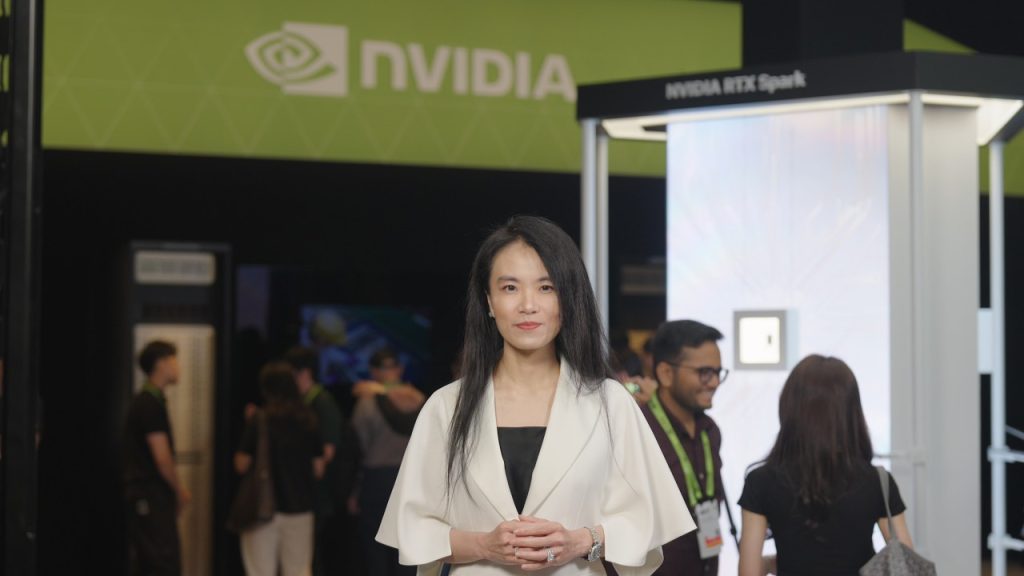
NVIDIA’s GTC Taipei 2026 recap is less about a single product launch and more about a new direction for AI infrastructure. The company used the stage to frame the rise of agentic AI, then tied that shift to Vera Rubin, the Vera CPU, and DSX—the hardware and power-management pieces it says data centers will need next.
What did NVIDIA announce at GTC Taipei 2026?
NVIDIA positioned GTC Taipei 2026 around three big ideas: agentic AI is now the target workload, Vera Rubin is the data center platform built for it, and DSX is the efficiency layer meant to fit more performance into fixed power budgets. The company also highlighted a large Taiwan-based manufacturing and engineering ecosystem, saying that bringing these systems to market depends on partners such as Foxconn, Quanta, Wistron, ASUS, GIGABYTE, Pegatron, and Wiwynn.
| Announcement | What NVIDIA says it is for | Key claim |
|---|---|---|
| Vera Rubin | Agentic AI and AI factories | 10 times the agent throughput of Blackwell |
| Vera CPU | CPUs built for agents | 1.8x faster on agentic workflow |
| DSX | Data center optimization and power efficiency | Safely deploy more GPUs within the same power budget |
| Taiwan partner ecosystem | Manufacturing and co-design | 150 partners, millions of square feet, hundreds of sites |
Why is NVIDIA calling this the agentic era?
NVIDIA says the industry has moved from generative AI, which creates text, images, code, and answers, into reasoning models and now into agentic systems. In this framing, agents do more than respond: they understand intent, plan tasks, use tools, take action, and keep working autonomously at machine speed, which is why infrastructure design matters so much.
For the past few years, we’ve been amazed by what AI can generate.
Agents don’t just answer questions, they understand your intent. They plan, they use tools, they take action, and they get work done continuously, autonomously, at a speed no human can catch.
The company backed up that shift with usage signals, including a claim that software commits tripled in early 2026 after years of flat growth. NVIDIA also said AI agents are already generating $9 of economic output from what used to be $3 in human engineering work, which it used to argue that agents are not a future concept but a current workload.
What is Vera Rubin and what makes it different?
Vera Rubin is NVIDIA’s new AI data center platform for agentic AI, and the company says it is already in full production. Rather than being framed as a general-purpose inference system, it is described as an end-to-end supercomputer built from silicon to data center floor for running agents at pod scale.
This is why Vera Rubin exists.
That pod-scale framing matters because the workload NVIDIA is targeting is not just one large model serving requests, but thousands of concurrent agent workflows looping through models, tools, and outputs at high speed. In other words, Vera Rubin is being positioned as infrastructure for AI factories, not just another accelerator family.
How much faster is Vera Rubin than Blackwell?
NVIDIA says Vera Rubin delivers 10 times the agent throughput of Blackwell, which is the clearest performance claim in the recap. The company did not publish a full benchmark table here, so the safest reading is that it is an architectural and platform-level throughput claim aimed at agent workloads rather than a single synthetic benchmark result.
Even so, the implication is straightforward: if agentic AI multiplies the number of actions, tool calls, and model passes per workflow, then higher throughput per pod translates directly into more workload capacity. That is why NVIDIA keeps connecting the platform to revenue and scale rather than only raw performance numbers.
What is the Vera CPU and who is using it?
The Vera CPU is NVIDIA’s pitch for a CPU category that did not exist before: a processor designed for agents instead of humans. NVIDIA says it is 1.8x faster on agentic workflow and that Anthropic, OpenAI, Oracle, and Cohere have already adopted it.
- Vera CPU
- A CPU NVIDIA says is built for agents, not humans.
- Agentic workflow performance
- 1.8x faster, according to NVIDIA’s claim.
- Named adopters
- Anthropic, OpenAI, Oracle, and Cohere.
That matters because most CPUs in the market are still designed around traditional server scheduling and human-interactive workloads. NVIDIA is arguing that agentic systems need a different balance of performance, orchestration, and efficiency, which is why it describes the Vera CPU as the start of a new market.
How does DSX help data centers in a power-constrained world?
DSX is NVIDIA’s data center optimization platform, and the message behind it is simple: power is the hard limit, not just chip availability. NVIDIA says a 1-gigawatt facility is still only a 1-gigawatt facility, and that today’s AI factories may be over-provisioning power by up to 40%.
Throughput per watt is your revenue.
By optimizing how that power is used, DSX is presented as a way to safely deploy more GPUs inside the same power budget and unlock more revenue from infrastructure that already exists. For operators, the appeal is not theoretical efficiency; it is squeezing more usable compute out of a fixed electrical envelope.
Which partners are bringing Vera Rubin to life?
NVIDIA placed unusual emphasis on the manufacturing ecosystem behind these systems, naming Foxconn, Quanta, Wistron, ASUS, GIGABYTE, Pegatron, and Wiwynn as part of the effort. The company said the buildout spans 150 partners, millions of square feet, and hundreds of sites, which is why it called the work an extreme co-design effort.
We call it the most remarkable manufacturing partnership this industry has ever seen.
For readers tracking AI infrastructure, that scale matters because advanced platforms are no longer just chip stories; they are supply-chain and systems-integration stories too. The Taiwan partner network is central to turning Vera Rubin from an announcement into shipped hardware.
Frequently Asked Questions
What is NVIDIA’s DSX platform for?
DSX is NVIDIA’s data center optimization platform, presented as a way to use power more efficiently in AI factories and safely deploy more GPUs inside the same power budget.
What is special about Vera Rubin?
NVIDIA says Vera Rubin is in full production, built from the ground up for agentic AI, deployed at pod scale, and delivers 10 times the agent throughput of Blackwell.
How does the Vera CPU differ from a normal CPU?
The transcript says it is designed for agents rather than humans, and claims it is 1.8x faster on agentic workflow.
Based on the video NVIDIA Data Center Partners Recap | GTC Taipei 2026 Recap by NVIDIA.