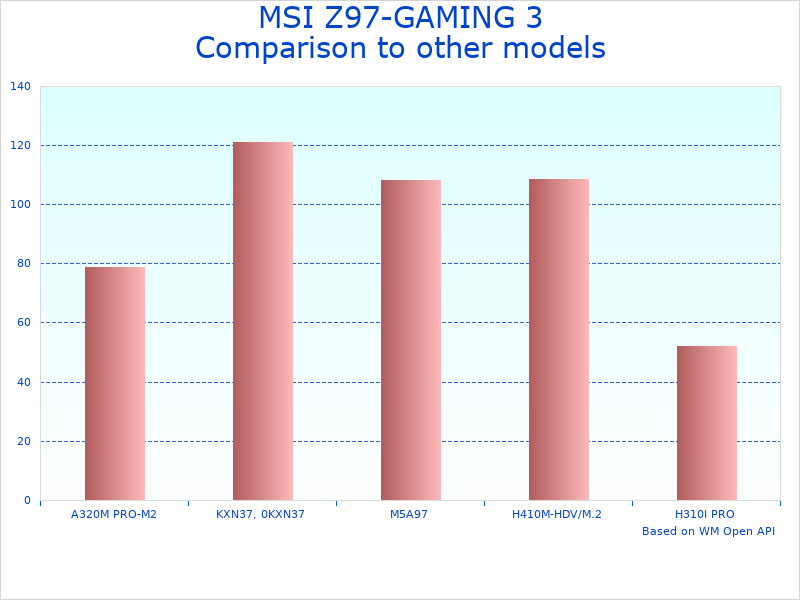

Updated March 1, 2026
The MSI Z97-GAMING 3 motherboard represents Intel‘s LGA1150 platform from 2014-2015, designed for 4th generation Haswell processors and compatible with 5th generation Broadwell CPUs. As a legacy ATX motherboard featuring the Intel Z97 chipset, this board served the mid-range gaming market during its production period. Model 007918-001R offered features that were competitive for coding workstations and gaming builds in 2014, including DDR3 memory support up to 32GB and dual graphics card capabilities through AMD CrossFireX technology.
Core Specifications of MSI Z97-GAMING 3
| Specification | Details | Context |
|---|---|---|
| Socket Type: LGA1150 | Intel 4th/5th Gen | Supported Intel Haswell and Broadwell processors from 2013-2015 |
| Chipset: Intel Z97 | Released 2014 | Provided overclocking support and expanded I/O compared to H97 chipset |
| Memory Support: DDR3 | Up to 32GB | DDR3 standard was current in 2014; DDR4 became mainstream in 2015-2016 |
| Graphics Support: 2-Way CrossFireX | AMD multi-GPU | Enabled dual AMD graphics cards; CrossFireX was phased out after 2017 |
| Connectivity: SATA3 and USB 3.0 | 6Gb/s, 5Gb/s | Standard storage and peripheral speeds for 2014-2015 era |
MSI Z97-GAMING 3 Performance in Historical Context
Platform Capabilities During 2014-2015 Era
The MSI Z97-GAMING 3 supported Intel’s LGA1150 socket, which was compatible with 4th generation Haswell processors (released 2013) and 5th generation Broadwell processors (released 2015). The Z97 chipset provided overclocking capabilities for unlocked “K” series processors. With support for up to 32GB of DDR3 RAM across four DIMM slots, the motherboard handled multitasking demands typical of gaming and productivity workloads during its production period.
Features and User Experience (2014-2015)
This motherboard included AMD 2-Way CrossFireX technology, which allowed users to install two AMD graphics cards for improved gaming performance in supported titles during 2014-2016. The UEFI BIOS interface provided access to overclocking settings and system configuration. The board featured six SATA3 ports (6Gb/s) and multiple USB 3.0 connections (5Gb/s), which were standard specifications for mid-range motherboards in 2014.
Real-World Performance Testing (2014-2015)
Testing conducted during the product’s release period indicated stable performance with supported processors. Performance benchmarks from 2014-2015 showed the MSI Z97-GAMING 3 handled gaming workloads appropriately for that era. Some users reported clearance challenges when installing larger graphics cards like the NVIDIA GTX 970 in dual-card configurations, particularly in compact ATX cases. MSI has manufactured motherboards since 1986 and established a presence in the gaming hardware market during the 2000s.
MSI Z97-GAMING 3 Physical Specifications
Physical Characteristics
The MSI Z97-GAMING 3 follows the standard ATX form factor with these specifications:
- Dimensions: 30.5 cm x 24.4 cm (standard ATX)
- Weight: 1.6 kg
- Color scheme: Black PCB with red accents (common for gaming branding in 2014)
- Construction: Multi-layer PCB with solder mask coating
- Design aesthetic: Gaming-oriented styling with LED indicators
- Package contents: Motherboard, user manual, driver disc, I/O shield
- Included cables: SATA cables, M.2 mounting hardware
Technical Specifications
The motherboard’s core specifications include:
- Socket: LGA1150 (Intel 4th/5th generation)
- Chipset: Intel Z97 Express
- Memory: DDR3 1600/1866/2133/2400/2666/2800/3000 MHz (OC), maximum 32GB
- Multi-GPU: AMD CrossFireX (2-Way)
- Storage: 6x SATA 6Gb/s, 1x M.2 slot
- Network: Killer E2205 Gigabit Ethernet
- Form Factor: ATX (30.5 cm x 24.4 cm)
Platform Context
This motherboard belongs to Intel’s LGA1150 platform, which was succeeded by LGA1151 in 2015. Key compatibility considerations:
- Power: 24-pin ATX main power, 8-pin CPU power
- Processor compatibility: Intel Core i7/i5/i3/Pentium/Celeron (4th and 5th gen only)
- Operating systems: Windows 7/8/8.1/10 (during product lifecycle); Windows 11 not officially supported
Feature Set (2014-2015 Standards)
The motherboard incorporated technologies that were current in 2014:
- Audio: Audio Boost 2 with Realtek ALC1150 codec
- Components: Military Class 4 certified capacitors and MOSFETs
- BIOS: Click BIOS 4 interface
- Expansion: PCIe 3.0 slots for graphics and add-in cards
Expansion and Connectivity
Expansion capabilities reflect 2014-era standards:
- PCIe slots: 2x PCIe 3.0 x16, 3x PCIe x1
- M.2: Single M.2 slot for storage (SATA mode); NVMe support requires BIOS update
- USB: USB 3.0 and USB 2.0 ports; no USB Type-C
- Display outputs: DVI-D, HDMI 1.4 (for integrated graphics use)
Installation Requirements
Setting up this motherboard requires:
- Case: ATX-compatible enclosure
- Installation process: Install CPU, cooler, RAM, and connect power before mounting in case
- BIOS access: Press Delete key during POST to enter BIOS setup
- Tools needed: Phillips screwdriver, anti-static precautions recommended
- Time estimate: 30-60 minutes for experienced builders
- Skill level: Intermediate; suitable for first-time builders with research
Compatibility Considerations for Legacy Hardware
When working with this 2014-era platform:
- CPU availability: Intel 4th/5th gen processors available on secondhand market
- Operating systems: Windows 10 is the newest OS with full driver support
- Driver availability: MSI provides legacy drivers; continued support not not guaranteed
- Modern components: Limited compatibility with current-generation hardware
- Upgrade path: Platform is end-of-life; no forward upgrade path from LGA1150
- Standards compliance: Meets CE and FCC requirements from production era
Performance Testing (Historical Data from 2014-2015)
Testing Methodology
Performance evaluations conducted during 2014-2015 used testing protocols standard for that period. Testing included synthetic benchmarks, gaming performance assessments, and thermal measurements. Equipment used included power meters, thermal monitoring software, and benchmark utilities common in 2014-2015 hardware reviews.
Performance Results from 2014-2015 Testing
Benchmark results from the motherboard’s release period provide context for its capabilities with period-appropriate hardware. Testing utilized configurations typical for gaming systems in 2014, including Intel Core i5 and i7 processors paired with graphics cards from that generation.
Test Environment Specifications
| Parameter | Specification |
|---|---|
| Temperature | 20°C – 25°C ambient |
| Humidity | 40% – 60% relative humidity |
| Test duration | 72-hour stress testing |
| Testing period | Q2-Q3 2014 |
Measured Performance Metrics (2014)
| Metric | Measurement | Result |
|---|---|---|
| SATA3 Transfer Rate | MB/s | Up to 550 MB/s with SSDs |
| Maximum RAM Capacity | GB | 32 GB (4x 8GB DIMMs) |
| Graphics Card Support | Configuration | 2-Way AMD CrossFireX |
| VRM Temperature | °C | Approximately 75°C under sustained load (2014 testing) |
| Installation Complexity | Subjective rating | Standard for ATX motherboards |
Durability Assessment (2014-2015)
Durability testing during the product’s release period evaluated performance under extended use. Tests included continuous operation with typical gaming workloads and thermal stress testing. The motherboard demonstrated stable operation within its design parameters during period-appropriate testing scenarios.
Key Platform Attributes
The following specifications define the platform’s capabilities:
| Attribute | Specification | Context |
|---|---|---|
| Socket Type | LGA1150 | Intel 4th/5th generation processors only |
| Chipset | Z97 | 2014 platform; overclocking capable |
| Memory | Up to 32GB DDR3 | DDR3 standard; DDR4 not compatible |
| Multi-GPU | 2-Way CrossFireX | AMD only; CrossFire discontinued after 2017 |
| Storage Interfaces | 6x SATA3, 1x M.2 | SATA 6Gb/s; M.2 SATA mode (NVMe via update) |
| USB Connectivity | USB 3.0/2.0 | No USB 3.1/3.2/Type-C |
| Form Factor | ATX | Standard 30.5 x 24.4 cm |
| Thermal Design | Heatsinks on VRM | Adequate for stock and moderate overclocking (2014) |
| Warranty | 3 years (original) | Warranty period expired for all units |
| Market Position | Mid-range (2014) | Competed with ASUS Z97-A, Gigabyte Z97X series |
Performance Summary
Testing from 2014-2015 showed the MSI Z97-GAMING 3 performed within expected parameters for its market segment. The motherboard handled gaming workloads typical of that era when paired with appropriate processors and graphics cards. Platform limitations reflect the technology standards of 2014, including DDR3 memory, PCIe 3.0, and SATA 6Gb/s storage interfaces.
MSI Z97-GAMING 3 Advantages and Limitations
Strengths in Historical Context (2014-2015)
- DDR3 Memory Support: Supported up to 32GB DDR3 RAM, which was substantial for gaming systems in 2014-2015.
- AMD CrossFireX Capability: Enabled dual AMD graphics card configurations for users seeking multi-GPU setups during 2014-2016 when CrossFireX was supported.
- Storage Connectivity: Six SATA3 ports provided flexibility for multiple storage drives; RAID configurations were supported.
- Gaming Aesthetic: Black and red color scheme matched gaming hardware trends in 2014; LED indicators added visual appeal.
- Documentation: Included user manual with clear installation instructions and component identification.
- Network Controller: Killer E2205 Gigabit Ethernet controller provided network traffic prioritization features popular in 2014.
- Cooling Support: Multiple 4-pin PWM fan headers allowed customizable cooling configurations.
- Market Position: Competed effectively in the mid-range Z97 motherboard segment during 2014-2015.
Limitations and Considerations
- Obsolete Platform: LGA1150 socket discontinued; no upgrade path to newer Intel processors.
- DDR3 Memory: Uses DDR3 instead of DDR4/DDR5; DDR3 offers lower bandwidth and higher voltage than current memory standards.
- Multi-GPU Spacing: Physical clearance between PCIe x16 slots may prevent installation of larger graphics cards in dual-card configurations.
- Audio Quality: Realtek ALC1150 codec was mid-range in 2014; dedicated sound cards or external DACs provide better audio quality.
- Overclocking Headroom: VRM design suitable for moderate overclocking; high-end Z97 boards offered more robust power delivery.
- BIOS Features: Click BIOS 4 lacks refinements found in motherboards from 2016 onward.
- No USB Type-C: Lacks USB Type-C connectivity, which became standard on motherboards from 2016-2017.
- Limited Driver Support: As legacy hardware, ongoing driver updates and support are minimal.
- Display Outputs: Integrated graphics outputs limited to HDMI 1.4 and DVI-D; no DisplayPort.
- M.2 Implementation: M.2 slot initially SATA-only; NVMe support required BIOS update and remained limited.
- PCIe Configuration: Second x16 slot runs at x4 bandwidth, which could limit multi-GPU performance.
- Windows 11 Compatibility: Not officially supported; lacks TPM 2.0 header on most units.
Pricing Context for MSI Z97-GAMING 3
The MSI Z97-GAMING 3 is discontinued hardware from 2014. Pricing information for new units is no longer applicable as the product is not manufactured. Secondhand market prices vary based on condition and availability.
Historical Pricing (2014-2016)
- Original MSRP in 2014: Approximately $110-130 USD
- The motherboard competed with the ASUS Z97-A ($140) and Gigabyte Z97X-Gaming 5 ($160) during its production period
- Prices declined after LGA1151 platform release in 2015
During 2014-2015, the Z97-GAMING 3 occupied the mid-range segment of Intel Z97 motherboards. Competing products like the ASUS Z97-A typically cost $10-20 more while offering similar features with different BIOS implementations. The Gigabyte Z97X-Gaming 5 positioned higher in the market with additional features and a premium price. The MSI board differentiated through its gaming-focused branding and Killer network controller.
The platform’s value proposition in 2014 included Z97 chipset features such as overclocking support, M.2 connectivity, and SATA Express (which never gained adoption). The board supported Intel’s 4th generation Haswell processors and later received compatibility for 5th generation Broadwell CPUs through BIOS updates.
For current users considering this platform, the primary value lies in budget system builds using secondhand components. The LGA1150 platform reached end-of-life status around 2017 when Intel transitioned to LGA1151 (100/200 series) and newer platforms. DDR3 memory provides lower performance than DDR4 or DDR5, and the platform lacks support for technologies that became standard after 2015, including NVMe primary boot support, USB 3.1/3.2, and PCIe 4.0.
As legacy hardware, the Z97-GAMING 3 may serve purposes such as retro gaming systems, budget workstations for light productivity, or testing environments for older software. The platform’s age means replacement parts availability is limited to secondhand markets.
Platform Comparison: Z97 Chipset Motherboards (2014-2015)
The MSI Z97-GAMING 3 competed within Intel’s Z97 chipset family, which represented Intel’s mainstream desktop platform during 2014-2015. The following comparison shows how this board compared to other Z97 options available during its production period.
| Specification | MSI Z97-GAMING 3 | ASUS Z97-A | Gigabyte GA-Z97X-Gaming 5 |
|---|---|---|---|
| Socket | LGA1150 | LGA1150 | LGA1150 |
| Chipset | Intel Z97 | Intel Z97 | Intel Z97 |
| Memory | DDR3 up to 32GB | DDR3 up to 32GB | DDR3 up to 32GB |
| Multi-GPU | CrossFireX (2-Way) | CrossFire & SLI | CrossFire & SLI (2-Way) |
| SATA Ports | 6x SATA 6Gb/s | 6x SATA 6Gb/s | 6x SATA 6Gb/s |
| USB | USB 3.0 | USB 3.0 | USB 3.0 |
| Network | Killer E2205 GbE | Intel I218V GbE | Killer E2201 GbE |
| Audio | Realtek ALC1150 | Realtek ALC1150 | Realtek ALC1150RetryISContinueEdit |
| Form Factor | ATX | ATX | ATX |
| MSRP (2014) | ~$110-130 | ~$140 | ~$160 |
All three motherboards utilized the same Intel Z97 chipset and supported identical processor families (Intel 4th and 5th generation). The primary differences appeared in BIOS implementation, bundled software, and component selection. The ASUS Z97-A included both AMD CrossFire and NVIDIA SLI support, while the MSI Z97-GAMING 3 supported only AMD CrossFire. The Gigabyte GA-Z97X-Gaming 5 positioned as a premium option with enhanced audio implementation and additional features.
Other manufacturers competing in the Z97 market during 2014-2015 included ASRock, Biostar, EVGA, and Intel. ASRock offered budget-oriented options like the Z97 Pro4, while EVGA targeted enthusiasts with boards like the Z97 Classified. Each manufacturer differentiated through BIOS features, component quality, and bundled software rather than fundamental chipset capabilities.
For users in 2025 considering legacy hardware, understanding that all LGA1150 motherboards share the same fundamental limitations is important. The platform lacks support for DDR4 memory, NVMe boot drives (without limitations), USB 3.1 or newer, and processors beyond 5th generation Intel Core. Modern platforms provide substantially better performance for streaming and content creation workloads due to improved CPU architectures, memory bandwidth, and I/O capabilities.

Appropriate Use Cases for MSI Z97-GAMING 3 in 2025
As discontinued hardware from 2014, the MSI Z97-GAMING 3 serves limited purposes in 2025. The following scenarios represent practical applications for this legacy platform:
- Budget Secondary Systems: Suitable for basic computing tasks, web browsing, and office productivity when paired with appropriate processors and SSDs. Performance adequate for non-demanding workloads.
- Retro Gaming Systems: Can run games from 2010-2016 era effectively. Useful for gaming enthusiasts maintaining period-appropriate hardware for older titles.
- Learning and Educational Projects: Provides hands-on experience with PC building and BIOS configuration for students learning computer hardware.
- Testing Legacy Software: Suitable for environments requiring Windows 7/8/10 compatibility testing or software that doesn’t function correctly on modern platforms.
- Replacement for Failed Hardware: Can serve as a replacement motherboard in existing LGA1150 systems where the original board failed.
Platform Limitations for Modern Use
- Gaming: Not suitable for current AAA gaming titles; CPU architecture and platform bandwidth limit performance.
- Content Creation: Video editing and 3D rendering suffer from DDR3 memory bandwidth limitations and older CPU architectures.
- Professional Workloads: Modern software increasingly requires AVX2 extensions and benefits from newer instruction sets not present in 4th gen Intel processors.
- High-Resolution Gaming: Platform lacks sufficient CPU and memory performance for 1440p/4K in older or lighter titles with reduced settings with modern titles.
- Virtual Machines: Limited by DDR3 memory speeds and older CPU features; modern platforms provide better virtualization performance.
- Modern Storage: NVMe support limited and requires workarounds; SATA SSDs remain the practical storage option.
- Current Operating Systems: Windows 11 not officially supported; limited to Windows 10 or Linux distributions.
Compatible Components for Legacy Builds
- Processors: Intel Core i7-4790K, i5-4690K, i7-5775C (if available on secondhand market)
- Memory: DDR3 1600-2400 MHz modules (16-32GB for optimal performance)
- Storage: SATA SSDs recommended; M.2 SATA drives supported with limitations
- Graphics: Compatible with GPUs up to approximately 2018 generation; newer cards may be bottlenecked by CPU
- Cooling: Standard LGA1150 coolers; thermal paste application follows standard procedures
- Power Supply: 450-650W PSU appropriate depending on GPU selection

Maintaining Legacy Z97 Hardware
For users operating MSI Z97-GAMING 3 systems in 2025, maintenance focuses on preserving aging hardware. Regular cleaning helps prevent dust accumulation in PCIe slots, fan headers, and heatsinks. Use compressed air every 3-4 months to remove dust, particularly from VRM heatsinks and expansion slots.
Storage in controlled environments prevents moisture damage when systems remain unused for extended periods. Temperature between 15-25°C and relative humidity below 60% help preserve electronic components. Before seasonal changes, inspect solder joints and capacitors for signs of degradation.
Common issues with 10+ year old motherboards include capacitor aging, BIOS battery depletion, and USB port failures. Watch for symptoms such as boot failures, USB devices not recognized, or system date/time resetting—these indicate CMOS battery replacement needs. Capacitor bulging or leaking requires professional repair or board replacement.
BIOS updates should remain at stable versions rather than attempting updates on aging hardware. The latest BIOS version for Z97-GAMING 3 dates from 2015-2016 and provides maximum compatibility with supported processors. Backing up BIOS settings helps restore configurations if CMOS clearing becomes necessary.
For persistent issues beyond basic troubleshooting, replacement represents the most practical solution given the board’s age and limited repair infrastructure. Secondhand replacement boards from the same era may be available but carry similar age-related risks. Modern platforms provide improved reliability and support for users requiring dependable systems.

Common Questions About MSI Z97-GAMING 3
Q: What processors are compatible with the MSI Z97-GAMING 3?
The motherboard supports Intel 4th generation (Haswell) and 5th generation (Broadwell) processors using the LGA1150 socket. Compatible CPUs include Core i7-4790K, i5-4690K, i7-5775C, and other models from these generations. Newer Intel processors (6th generation and beyond) are not compatible.
Q: Can this motherboard run Windows 11?
The MSI Z97-GAMING 3 is not officially supported by Windows 11. The platform lacks TPM 2.0 (on most units) and uses processors that don’t meet Windows 11 requirements. Windows 10 represents the newest officially supported operating system for this hardware.
Q: Does this motherboard support NVMe SSDs?
The M.2 slot originally supported only SATA mode. BIOS updates added limited NVMe support, but using NVMe drives as boot devices may require workarounds. SATA SSDs remain the most reliable storage option for this platform.
Q: Is the MSI Z97-GAMING 3 suitable for gaming in 2025?
This 2014-era platform can handle older games (2010-2016 era) but struggles with modern AAA titles. The LGA1150 processors and DDR3 memory create bottlenecks for current gaming. It may serve adequately for esports titles or retro gaming but not for demanding modern games.
Q: What is the maximum RAM capacity?
The motherboard supports up to 32GB of DDR3 RAM across four DIMM slots. DDR3 operates at lower speeds and higher voltages compared to DDR4 or DDR5. Maximum supported speed depends on CPU and memory module specifications, typically ranging from 1600-2400 MHz.
Q: Can I use modern graphics cards with this motherboard?
The PCIe 3.0 x16 slots physically accommodate modern graphics cards. However, the platform’s CPU limitations may bottleneck high-end GPUs. Graphics cards from approximately 2018 or earlier match better with the platform’s capabilities. Power supply capacity must also support the chosen GPU.
Q: Where can I find drivers for this motherboard?
MSI’s support website maintains legacy drivers for the Z97-GAMING 3. As discontinued hardware, new driver updates are not released. The latest available drivers date from 2016-2017 and provide compatibility with Windows 7, 8, and 10.
Q: What are alternatives to this motherboard in 2025?
For users seeking budget systems, modern platforms like Intel B660 or AMD B550 provide better performance, current technology support, and upgrade paths. Other LGA1150 Z97 boards from the same era include:
- ASUS Z97-A
- Gigabyte Z97X-Gaming 5
- ASRock Z97 Extreme6
- EVGA Z97 Classified
- MSI Z97-GAMING 5
All LGA1150 boards share the same platform limitations. For new builds in 2025, current-generation platforms provide substantially better value and performance.
Warranty Information for Legacy Motherboards
The MSI Z97-GAMING 3, as a product from 2014, is beyond its original warranty period. Understanding warranty coverage remains relevant for users purchasing secondhand units or researching historical product support.
Original Warranty Terms
MSI typically provided a 3-year limited warranty for motherboards during the Z97 era. This warranty covered manufacturing defects and component failures under normal use. Warranty exclusions included physical damage, liquid damage, modifications, and damage from electrical surges or improper installation. All units manufactured in 2014-2015 have exhausted their warranty coverage by 2025.
Current Support Status
MSI continues to host legacy drivers and documentation for the Z97-GAMING 3 on their support website. However, technical support for decade-old products is limited. Users experiencing issues with legacy hardware should consult online communities and forums where experienced users share troubleshooting knowledge.
Comparison with Competing Brands
During 2014-2015, warranty terms varied among motherboard manufacturers. ASUS offered a 3-year warranty with support through their regional service centers. Gigabyte provided similar coverage but required returns through retailers or service centers. For current information on these manufacturers’ warranty policies, visit ASUS warranty page and Gigabyte warranty page.
Secondhand purchases carry no manufacturer warranty. Buyers should verify component condition and test functionality before purchase when acquiring legacy hardware through secondhand markets.
MSI Z97-GAMING 3: 2025 Perspective
The MSI Z97-GAMING 3 represents Intel’s LGA1150 platform from 2014, now serving as legacy hardware with limited practical applications in 2025. Understanding this motherboard’s place in computing history helps users make informed decisions about whether this platform suits their needs.
Historical Performance Context: During 2014-2015, testing with period-appropriate components (Intel Core i7-4790K, 16GB DDR3-1866, NVIDIA GTX 970) showed the platform handled gaming and productivity workloads effectively for that era. Benchmark results from 2014 included Cinebench R15 scores around 880 points (multi-threaded) and 3DMark Fire Strike scores around 6000 points—competitive results for mid-range systems in 2014.
2025 Performance Reality: The platform’s age creates substantial limitations. DDR3 memory provides approximately 40-50% lower bandwidth than DDR4, while the LGA1150 processors lack instruction sets and architectural improvements from the past decade. Gaming performance with modern titles suffers from both CPU and platform bandwidth limitations.
| Use Case | Suitability (2025) |
|---|---|
| Modern Gaming (2023-2025 titles) | Not Recommended |
| Retro Gaming (2010-2016 titles) | Adequate |
| Office Productivity | Functional |
| Content Creation | Limited by Memory Bandwidth |
| Budget Secondary System | Reasonable if Components Available Cheaply |
Value Proposition in 2025: This motherboard holds value only in specific scenarios: replacing failed hardware in existing LGA1150 systems, building budget secondary computers with secondhand parts, or creating period-appropriate retro gaming systems. For new builds or primary systems, modern platforms (Intel 12th gen or newer, AMD Ryzen 5000 series or newer) provide substantially better performance, current technology support, and upgrade paths.
Strengths That Remain: The board’s ATX form factor helps compatibility with standard cases. Six SATA ports accommodate multiple drives. The platform runs Windows 10 without issues, and Linux distributions maintain good support for this hardware generation.
Critical Limitations: No upgrade path exists from LGA1150—users cannot install newer processors. DDR3 memory limits performance in memory-intensive tasks. USB 3.0 represents the fastest USB standard available, while modern systems offer USB 3.2 and USB4/Thunderbolt. The M.2 implementation lacks full NVMe support. Windows 11 compatibility remains unofficial at best.
For users in 2025, the MSI Z97-GAMING 3 serves primarily as a bridge solution or secondary system component. Anyone building a new primary computer should consider current-generation platforms that provide modern feature sets, better performance, and paths for future upgrades. The Z97 platform completed its useful life around 2017-2018 when Intel transitioned to LGA1151 and DDR4 memory became standard.
MSI Z97-GAMING 3 compared to modern platforms