
Our Top 3 Picks
The picks are right below, in order. Everything after them is the reasoning, if you want it.

#1 – ASRock Intel Arc B580 Challenger 12GB OC
Best for: users needing enough VRAM to run 7B parameter models at 4-bit quantization.
- 12GB GDDR6 memory
- $249.99 (entry)
- 4.5 from 356 ratings
- Editorial score: 7.9/10
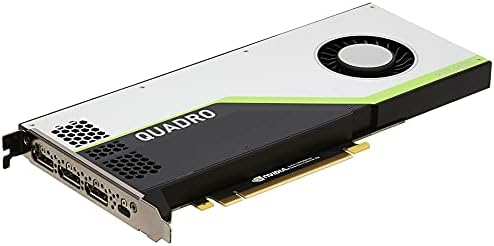
#2 – PNY NVIDIA Quadro RTX 4000
Best for: professional workflows requiring NVIDIA Turing architecture and 36 RT cores.
- NVIDIA RTX technology
- $257.04 (mid)
- 4.2 from 212 ratings
- Editorial score: 7.2/10

#3 – maxsun GeForce RTX 4060 iCraft OC
Best for: budget-conscious users who need modern Ada Lovelace features and DLSS 3.5.
- 8GB GDDR6 memory
- $299.99 (mid)
- 4.3 from 56 ratings
- Editorial score: 6.9/10
We provide a detailed look at how the RX 9070 XT performs in high-demand scenarios.
How Extreme Spec picked: we started from the 200 most-reviewed GPU for AI listings in our retail dataset, removed duplicates, accessories and off-category products, and 15 qualified. The picks on this page were selected from those 15 candidates against this topic’s requirements. Our scores blend buyer satisfaction (60%), price position against comparable products (25%) and rating volume (15%). Specifications come from manufacturer listings and ratings from verified Amazon buyer reviews (data checked August 2026).
Our Verdict and How We Chose
The ASRock Intel Arc B580 Challenger 12GB OC is the best budget GPU for AI because it provides 12GB of VRAM to clear the 8GB threshold required to run 7B parameter models at 4-bit quantization.
The right GPU for AI ensures that your local inference remains stable and fast enough to be productive during development or testing. It allows you to run models locally without the latency or privacy concerns of cloud-based APIs.
The ASRock Intel Arc B580 Challenger 12GB OC provides the necessary 12GB of memory to handle 7B parameter models effectively. Alternatively, the PNY NVIDIA Quadro RTX 4000 is the better fit for professional environments needing NVIDIA’s ecosystem, while the maxsun GeForce RTX 4060 iCraft OC serves those who need DLSS 3.5 support.
At Extreme Spec, we evaluated the GPU for AI options we track against this topic’s criteria. These options range from $249.99 to $299.99, with a median price of $257.04.
For mobile setups, you can compare top GPUs for laptop with Thunderbolt 3 connectivity.
The findings in brief
- Top pick: ASRock Intel Arc B580 Challenger 12GB OC at $249.99 (VRAM Capacity: 12GB).
- Also picked: PNY NVIDIA Quadro RTX 4000 at $257.04; maxsun GeForce RTX 4060 iCraft OC at $299.99.
- We compared 4 GPUs for AI, from $125 to $299.99, median $257.04.
- Best buyer rating in the comparison: ASRock Intel Arc B580 Challenger 12GB OC at 4.5/5 from 356 ratings.
- Not covered by these picks: Run 70B models locally without heavy offloading – needs 24GB VRAM, and nothing on this page reaches it.
Full Comparison Table
| Product | Price | Rating | VRAM Capacity | Memory Type |
|---|---|---|---|---|
| ASRock Intel Arc B580 Challenger 12GB OC | $249.99 | 4.5 (356 ratings) | 12GB | GDDR6 |
| PNY NVIDIA Quadro RTX 4000 | $257.04 | 4.2 (212 ratings) | Not stated | Not stated |
| maxsun GeForce RTX 4060 iCraft OC | $299.99 | 4.3 (56 ratings) | 8 GB | GDDR6 |
| PNY NVIDIA Quadro K5000 | $125 | 3.9 (59 ratings) | 4GB | GDDR5 |
Prices are approximate and move frequently – check the current price before deciding. “Not stated” means the manufacturer listing does not give that figure – we do not estimate it.
The ASRock Intel Arc B580 Challenger 12GB OC offers the strongest price-to-spec ratio because its 12GB of VRAM provides the largest memory buffer for workstation tasks at the $249.99 price point.
The Picks Reviewed in Detail
The 3 picks below run from $249.99 to $299.99, reviewed in rank order.
ASRock Intel Arc B580 Challenger 12GB OC
The ASRock Intel Arc B580 Challenger 12GB OC made this list because it provides a high VRAM capacity for professional workloads at a budget-friendly price point.
What we like: This card features 12GB of GDDR6 memory, which clears the 8GB VRAM threshold required to run a 7B parameter model at 4-bit quantization. It includes Xe Matrix Extensions (XMX) for accelerated AI tasks and a 19 Gbps memory clock for efficient data throughput.
Keep in mind: The 12GB of VRAM falls short of the 16GB threshold needed for 13B or 30B models with heavy quantization. You should verify if your specific workflow requires the CUDA software ecosystem, as this card uses Intel’s proprietary architecture.
PNY NVIDIA Quadro RTX 4000
The PNY NVIDIA Quadro RTX 4000 is included for its specialized NVIDIA architecture and reliable performance in professional environments.
What we like: This card utilizes the NVIDIA Turing GPU architecture, providing access to the NVIDIA software libraries and CUDA ecosystem required by many AI frameworks. It features 36 RT cores to handle rendering and shading tasks efficiently.
Keep in mind: The Quadro RTX 4000 does not list a specific VRAM capacity in the provided data; you must check the manufacturer’s technical specifications to ensure it meets your specific model size requirements. It is a professional-tier card that may have a higher price premium than consumer alternatives.
maxsun GeForce RTX 4060 iCraft OC
The maxsun GeForce RTX 4060 iCraft OC provides a high-performance consumer alternative for users who need modern features on a strict budget.
What we like: The 4060 features the Ada Lovelace architecture and supports NVIDIA DLSS 3.5 for optimized performance. It includes 8GB of GDDR6 memory, which meets the 8GB VRAM threshold for running 7B parameter models at 4-bit quantization.
Keep in mind: With 8GB of VRAM, this card falls short of the 16GB threshold for larger models and the 24GB threshold for 70B models. It is best suited for users running smaller LLMs or stable diffusion rather than large-scale local inference.
If you are starting from scratch, explore the best budget GPU for AI development to find your ideal entry point.
The Specs That Decide This Purchase
VRAM Capacity
VRAM capacity determines which models you can load into memory without encountering an Out of Memory (OOM) error. You need at least 8GB VRAM to run a 7B parameter model at 4-bit quantization, which the maxsun GeForce RTX 4060 iCraft OC meets exactly. If you need to run 13B or 30B models with heavy quantization, you should prioritize a card that hits the 16GB VRAM threshold, as the ASRock Intel Arc B580 Challenger 12GB OC and the maxsun GeForce RTX 4060 iCraft OC both fall short of that requirement. For local 70B model inference without heavy offloading to system RAM, you require 24GB VRAM, a threshold none of the evaluated GPU for AI options reach.
CUDA Core Count
CUDA core count influences how quickly your GPU can process training and inference tasks. While the PNY NVIDIA Quadro RTX 4000 features 36 RT cores for ray tracing and rendering, the specific tensor core count for the Intel Arc B580 or maxsun GeForce RTX 4060 iCraft OC is not listed in the data. You should check the manufacturer’s specifications for the specific tensor core count to ensure the card provides enough parallel processing power for your specific training speed requirements.
Memory Bandwidth
Memory bandwidth dictates how quickly data moves between the VRAM and the GPU cores during heavy workloads. The ASRock Intel Arc B580 Challenger 12GB OC utilizes a 19 Gbps memory clock and a 192-bit bus to manage data flow. When comparing the GPU for AI products, the memory architecture and clock speeds separate the field as the primary drivers of throughput for large language models.
TDP Power Draw
TDP power draw determines if your current power supply can handle the card or if you need an infrastructure upgrade. Because the specific wattage for these cards is not provided in the data, you must check the TDP rating on the manufacturer’s site before purchasing. A common mistake is assuming a budget GPU will fit into any power supply; always verify that your PSU wattage exceeds the card’s maximum draw plus a margin for your CPU and other components.
Driver Support
Driver support is critical for AI stability, specifically regarding the choice between NVIDIA’s CUDA and AMD’s ROCm ecosystems. The PNY NVIDIA Quadro RTX 4000 and maxsun GeForce RTX 4060 iCraft OC support NVIDIA’s proprietary software environment, which is the standard for most current AI libraries. The ASRock Intel Arc B580 Challenger 12GB OC uses Intel’s Xe2-HPG architecture, so you should confirm your specific software stack supports Intel’s drivers before purchasing.
You can also view our full RX 550 4GB review to see how this older hardware handles basic tasks.
Make sure to understand AI GPU terms and specs before making your final purchase decision.
Which One Is Right for You
For the budget-conscious AI hobbyist
If you need to run a 7B parameter model at 4-bit quantization but cannot justify a high-end card, the maxsun GeForce RTX 4060 iCraft OC is the best choice. Buyers often overlook that the 8GB limit prevents running 13B models, so verify your model’s memory requirements before purchasing.
For the professional content creator
If you are upgrading from an older card to handle 1440p content creation, the ASRock Intel Arc B580 Challenger 12GB OC offers the best balance of modern architecture and capacity. It features 12GB GDDR6 memory and Xe Matrix Extensions (XMX) for specialized workloads. You should prioritize the 12GB VRAM over the 8GB found in some lower-tier cards to ensure smoother processing of larger assets.
For the stable workstation user
If you require a reliable GPU for professional rendering and need a stable ecosystem, the PNY NVIDIA Quadro RTX 4000 is the most consistent option. It features 36 RT cores and the NVIDIA Turing architecture for predictable performance in professional software.
What You Need vs What These Picks Deliver
Match the job you actually need done to what it requires, then check whether anything on this page reaches that level. Where nothing does, the row says so.
| What you want to do | What that needs | What clears it here |
|---|---|---|
| Handle professional workstation tasks with high VRAM | 12GB VRAM | Intel Arc B580 Challenger 12GB OC |
| Run 70B models locally without heavy offloading | 24GB VRAM | None of these; a card with 24GB VRAM or more is required |
| Run 13B or 30B models with heavy quantization | 16GB VRAM | None of these; a card with 16GB VRAM or more is required |
Thresholds are the levels this category is generally held to, not manufacturer claims. Check them against your own workload before buying.
Who Buys GPUs for AI, and What It Really Costs
Who buys a GPU for AI, and what each one needs
- Computer Science students — 8GB VRAM to run a 7B parameter model at 4-bit quantization
- Independent content creators — 16GB VRAM to run 13B models or 30B models with heavy quantization
- Data science hobbyists — 8GB VRAM to avoid an Out of Memory (OOM) Error during basic inference
- Small startup developers — 16GB VRAM to balance inference speed and model accuracy using INT8
- Academic researchers — 8GB VRAM to begin local testing before moving to an NVIDIA H100/H200
What to budget for on top of the GPU for AI
- Power supply — to provide sufficient wattage for high-performance GPU power draw
- System RAM — to prevent a PCIe Bandwidth Bottleneck when offloading layers
- Cooling solution — to manage the high thermal output during sustained inference tasks
- Motherboard — to ensure compatibility with the physical dimensions and PCIe lanes
What you can leave out of the budget
- High-end external storage — internal NVMe drives are sufficient for loading model weights
- Specialized AI software licenses — most open-source libraries are free to use
- Premium aesthetic lighting — does not contribute to VRAM capacity or inference speed
Where this kind of product is normally sold
- Online electronics marketplaces — offers competitive pricing but requires careful verification of warranty terms
- Specialized PC hardware stores — provides expert advice on compatibility and local warranty handling
- Major big-box retailers — offers easy returns and physical availability but often lacks technical support
Buying Questions Answered
Which GPU should I choose for my specific workstation workload?
The ASRock Intel Arc B580 Challenger 12GB OC provides a balance of 12GB GDDR6 memory and Xe Matrix Extensions (XMX) for hardware-accelerated tasks. If you prioritize professional stability and CUDA compatibility for specific software, the PNY NVIDIA Quadro RTX 4000 offers a reliable architecture with 36 RT cores. For users on a strict budget who need modern features like DLSS 3.5, the maxsun GeForce RTX 4060 iCraft OC provides 8GB GDDR6 and 7680 x 4320 resolution support for around $299.99.
Can these GPUs handle 24/7 rendering or training without overheating?
The ASRock Intel Arc B580 Challenger 12GB OC includes Striped Axial Fan technology and 0dB Silent Operation to manage heat during sustained loads. The maxsun GeForce RTX 4060 iCraft OC features a dual-fan design and an anime-themed backplate to assist with thermal dissipation. For the PNY NVIDIA Quadro RTX 4000, you should check the specific thermal output and cooling requirements of your workstation chassis, as the provided data does not list a specific thermal threshold.
Will these GPUs run a 70B parameter model?
No, none of these options reach the 24GB VRAM threshold required to run a 70B model locally without heavy offloading to system RAM. The ASRock Intel Arc B580 Challenger 12GB OC provides 12GB of memory, while the maxsun GeForce RTX 4060 iCraft OC provides 8GB.
How do I avoid common mistakes when choosing a budget GPU for AI?
Buyers often select a card that lacks the minimum memory needed for specific model sizes, such as the 8GB VRAM threshold required to run a 7B parameter model at 4-bit quantization. All three selected models, including the maxsun GeForce RTX 4060 iCraft OC, clear this 8GB requirement, but you must verify your specific model’s quantization needs before purchasing.
Selecting the right hardware requires you to analyze power consumption for AI GPUs to ensure your system stays stable.
Who Should Skip These GPUs for AI
You may find that these GPU for AI options do not meet your requirements if you need to run 70B models locally without heavy offloading. This specific task requires 24GB VRAM, and none of the options on this page reach that threshold.
If you require 16GB VRAM to run 13B or 30B models with heavy quantization, you should look toward high-end enthusiast cards or enterprise-grade hardware. For specialized builds where space is a constraint, see best GPU for small form factor PC.