
Updated March 1, 2026
The GTX860M is a mid-range laptop graphics card from NVIDIA’s GeForce GTX 800M series, designed for gaming laptops and portable workstations. This older graphics solution provides decent gaming performance at 1080p resolution and basic productivity tasks, though it struggles with modern demanding games at higher settings. The GTX860M features the Maxwell architecture and typically includes configurations with different memory amounts. As a discontinued product, it’s primarily found in used laptops or refurbished systems, making pricing highly variable depending on the specific laptop model and condition.
What Is the GTX860M Graphics Card and Its Core Capabilities
The GTX860M Graphics Card represents NVIDIA’s mid-tier mobile graphics solution from the GeForce GTX 800M generation. It works by using dedicated graphics processing separate from your laptop’s integrated graphics, providing better performance for games and graphics-intensive applications. The importance of this card lies in its ability to handle gaming and creative work that integrated graphics cannot manage effectively.
Key Specifications and Technical Features
The GTX860M Graphics Card operates on NVIDIA’s Maxwell architecture, offering improved power efficiency compared to previous generations. Key technical aspects include support for DirectX 11, NVIDIA GameWorks technologies, and hardware-accelerated video encoding. The card typically connects through a dedicated MXM slot in gaming laptops, not user-upgradeable in most systems.
Understanding GTX860M Performance Characteristics
| Feature | Capability | User Benefit |
|---|---|---|
| Gaming Performance | Handles most games at medium-high settings at 1080p | Smooth gameplay experience for popular titles |
| Multiple Display Support | Can drive external monitors via HDMI/DisplayPort | Extended desktop or gaming on larger screens |
| Video Acceleration | Hardware encoding/decoding for streaming | Better performance in video editing and streaming |
| Power Management | NVIDIA Optimus for battery conservation | Automatic switching between integrated and dedicated graphics |
| Thermal Design | Optimized for laptop cooling systems | Maintains performance while managing heat |
How the GTX860M Graphics Card Works in Modern Laptops
Performance Expectations for Different Use Cases
The GTX860M Graphics Card delivers adequate performance for mainstream gaming, particularly with titles released during its era. It works best at 1080p resolution with medium to high settings, though newer demanding games may require lower settings for playable frame rates. Creative professionals can use it for photo editing, basic video work, and 3D modeling, though render times will be longer compared to modern graphics cards.
When Should You Consider the GTX860M Graphics Card
You should consider the GTX860M when purchasing a used gaming laptop on a tight budget, particularly if you primarily play older games or less demanding titles. The best time to choose this card is when you need dedicated graphics performance but don’t require the latest features or maximum performance. It’s suitable for students, casual gamers, or professionals doing light creative work who want to avoid the higher costs of modern gaming laptops.
Limitations and Realistic Expectations
The limitations of the GTX860M include its age-related compatibility issues with newer games, limited VR capability, and lack of modern features like ray tracing or DLSS. Common challenges include thermal throttling during extended gaming sessions, limited memory bandwidth for high-resolution textures, and driver support that may become increasingly sparse as NVIDIA focuses on newer generations.
The card’s performance varies significantly depending on the specific variant (some models include different memory configurations) and the laptop’s cooling system. Modern AAA games may only run at low settings or may not run acceptably at all, making this card better suited for older gaming libraries or less demanding indie titles.
Understanding GTX860M Graphics Card Specifications and Design
Physical Integration in Laptop Systems
The GTX860M Graphics Card integrates into laptops through a dedicated MXM slot, making it a permanent component that cannot be upgraded by users in most cases. The card’s physical design prioritizes power efficiency and thermal management within the constraints of laptop form factors. Here are the key integration characteristics:
- Form Factor: MXM Type-A or Type-B depending on specific implementation
- Power Draw: Typically ranges from 45W to 75W depending on variant
- Cooling Requirements: Requires dedicated heat sink and fan system
- Installation: Factory-installed, not user-replaceable in most laptops
- Compatibility: Works with Intel and AMD mobile platforms
- Driver Support: Requires NVIDIA GeForce drivers for optimal performance
- BIOS Integration: Needs proper VBIOS for laptop-specific optimizations
Technical Architecture and Memory Configuration
The GTX860M Graphics Card utilizes NVIDIA’s Maxwell architecture in most variants, providing improved performance per watt compared to previous Kepler-based cards. Understanding the technical specifications helps users set appropriate expectations:
- Architecture: Maxwell (GM107/GM108) or Kepler (GK104) depending on variant
- Memory Types: GDDR5 in various configurations
- Memory Interface: Typically 128-bit or 192-bit depending on model
- DirectX Support: DirectX 11 with some DirectX 12 features
- CUDA Cores: Varies by specific model variant
- Base Clock Speeds: Manufacturer and thermal design dependent
- Boost Technologies: GPU Boost for dynamic clock adjustment
Gaming and Professional Application Performance
This graphics solution balances gaming capability with professional application support within laptop power constraints. Performance characteristics include:
- Gaming Sweet Spot: 1080p resolution at medium-high settings for most titles
- Professional Workloads: Basic CAD, photo editing, and video encoding
- Rendering Capability: Adequate for learning 3D software but not production work
- Multi-Monitor Support: Can drive multiple external displays
- Video Encoding: Hardware-accelerated H.264 encoding for streaming
- Compute Performance: Basic CUDA support for compatible applications
- VR Readiness: Limited VR capability, not recommended for modern VR headsets
Power Management and Thermal Considerations
The GTX860M Graphics Card incorporates several technologies to manage power consumption and heat generation in laptop environments:
- NVIDIA Optimus: Automatic switching between integrated and dedicated graphics
- Dynamic Clock Scaling: Adjusts performance based on workload and thermal conditions
- Thermal Throttling: Reduces performance to prevent overheating
- Power States: Multiple power levels for different usage scenarios
- Fan Control: Works with laptop cooling systems for thermal management
- Battery Impact: Significant battery drain when active compared to integrated graphics
Software and Driver Requirements
The GTX860M Graphics Card requires specific software and drivers for optimal performance. Setup considerations include:
- Driver Installation: NVIDIA GeForce Experience for driver management
- Operating System: Windows support primarily, limited Linux support
- Game Optimization: GeForce Experience provides game-specific settings
- Monitoring Tools: GPU-Z, MSI Afterburner for performance monitoring
- BIOS Settings: May require discrete graphics mode selection
- Power Management: Windows power plans affect graphics performance
- Update Frequency: Driver updates less frequent for older generations
System Requirements and Compatibility
The GTX860M Graphics Card works within specific system requirements and compatibility parameters:
- Platform Support: Intel and AMD mobile chipsets from compatible generations
- Power Supply: Requires adequate laptop power adapter (typically 120W+)
- Cooling System: Needs dedicated thermal solution with heat pipes
- System Memory: Benefits from 8GB+ system RAM for optimal performance
- Storage: SSD recommended for faster game loading times
- Display: Works with various panel types and resolutions
- External Connectivity: HDMI, DisplayPort, or VGA depending on laptop design
Evaluating GTX860M Graphics Card Performance and Capabilities
Performance Testing Methodology and Approach
Evaluating the GTX860M Graphics Card requires understanding its position as a mid-range mobile graphics solution from an earlier generation. Performance assessment focuses on realistic gaming scenarios and productivity tasks that match the card’s intended use cases. Testing methodologies consider thermal constraints, power limitations, and the varying implementations across different laptop models.
Real-World Gaming Performance Analysis
The GTX860M Graphics Card performs adequately in gaming scenarios appropriate to its generation and power class. Performance varies significantly based on game optimization, settings used, and the specific laptop’s cooling implementation. Thermal management becomes crucial during extended gaming sessions, with most systems implementing dynamic clock scaling to maintain safe operating temperatures.
Performance Considerations for GTX860M Graphics Card
| Performance Area | Expected Capability | Testing Approach | User Impact |
|---|---|---|---|
| 1080p Gaming | Medium-High settings for most titles | Popular game benchmarking | Smooth gameplay experience in target resolution |
| Graphics Rendering | Basic 3D rendering and modeling | Professional software testing | Adequate for learning and light professional work |
| Thermal Performance | Manages heat within laptop constraints | Extended load testing | Stable performance during longer sessions |
| Power Efficiency | Reasonable battery life impact | Power consumption monitoring | Balanced performance and portability |
| Display Output | Multiple monitor support | Multi-display configuration testing | Extended desktop and presentation capabilities |
| Video Processing | Hardware-accelerated encoding | Streaming and encoding tests | Better performance in content creation |
| Driver Stability | Mature driver support | Compatibility and stability testing | Reliable operation across applications |
| Overclocking Potential | Limited due to thermal constraints | Thermal and stability testing | Minimal performance gains possible |
| VR Capability | Basic VR support only | VR headset compatibility testing | Limited VR experience quality |
| Longevity | Adequate for older game libraries | Long-term performance assessment | Good value for retro and indie gaming |
GTX860M Graphics Card Technical Characteristics
| Technical Aspect | Specification Range | Evaluation Method | User Relevance |
|---|---|---|---|
| Graphics Architecture | Maxwell or Kepler variants | Architecture identification | Determines feature set and efficiency |
| Memory Configuration | Various GDDR5 amounts | Memory bandwidth testing | Affects performance at higher resolutions |
| Display Connectivity | HDMI, DisplayPort options | Output compatibility testing | Determines external display options |
| Video Memory Bandwidth | Varies by implementation | Memory throughput measurement | Impacts texture loading and game performance |
| Cooling Integration | Laptop-specific solutions | Thermal design evaluation | Affects sustained performance capability |
| Power Consumption | Mid-range mobile power draw | Power usage monitoring | Influences battery life and heat generation |
| Manufacturing Variant | Different chip configurations | Specification verification | Performance varies between laptop models |
| API Support | DirectX 11 primarily | Graphics API compatibility | Determines game and software compatibility |
| Compute Capability | Basic CUDA support | Compute workload testing | Limited acceleration for professional applications |
| Driver Maturity | Stable legacy support | Driver compatibility assessment | Reliable operation with established driver base |
Advantages and Limitations of the GTX860M Graphics Card
Key Strengths of the GTX860M Graphics Card
-
Solid 1080p Gaming Performance:
The GTX860M Graphics Card handles most games well at 1080p resolution with medium to high settings. It provides smooth gameplay for popular titles from its generation and many current less demanding games.
-
Mature Driver Support:
This graphics solution benefits from stable, well-tested drivers that provide reliable performance across various applications. Driver-related issues are rare due to the mature software ecosystem.
-
Multiple Display Connectivity:
The card supports external monitors through HDMI and DisplayPort connections, allowing users to expand their workspace or enjoy games on larger screens without compatibility issues.
-
Balanced Power Consumption:
Compared to high-end graphics cards, the GTX860M offers reasonable power efficiency for laptop use, providing dedicated graphics performance without extremely short battery life.
-
Affordable Entry Point:
Found in used gaming laptops, the GTX860M provides an accessible entry point into dedicated graphics gaming without the premium pricing of modern systems.
Notable Limitations of the GTX860M Graphics Card
-
Limited Modern Game Performance:
The GTX860M struggles with newer AAA games, often requiring low settings or unacceptable performance levels. Modern games released after 2018 may not run satisfactorily.
-
Outdated Feature Set:
The card lacks modern graphics features like ray tracing, DLSS, or advanced VR support, limiting its usefulness for contemporary gaming experiences and technologies.
-
Thermal Constraints:
Extended gaming sessions often lead to thermal throttling, where the card reduces performance to prevent overheating, resulting in decreased frame rates during longer play periods.
-
Limited 4K Capability:
While the card can output 4K resolution, gaming performance at this resolution is generally unacceptable for most titles, limiting its usefulness for high-resolution gaming.
-
Aging Architecture:
Based on older GPU technology, the GTX860M cannot take advantage of newer game optimizations and may struggle with DirectX 12 titles designed for more modern hardware.

GTX860M Graphics Card Market Value and Pricing Considerations
The GTX860M Graphics Card pricing varies significantly in the used laptop market, as this graphics solution is no longer manufactured new. Pricing depends heavily on the specific laptop model, overall system condition, and regional availability.
GTX860M Graphics Card Market Analysis
- Current market pricing for laptops with GTX860M varies widely based on overall system specifications and condition.
- Used gaming laptops featuring this graphics card typically range from budget to mid-range pricing.
- Regional availability affects pricing, with some markets having better selection than others.
The value proposition of GTX860M-equipped laptops depends on intended use and expectations. For casual gaming, older titles, and basic creative work, systems with this graphics card can provide reasonable value. The performance level suits users who don’t need cutting-edge graphics capability but want dedicated graphics acceleration.
When considering a laptop with GTX860M Graphics Card, factors like overall system age, battery condition, and thermal design become important value considerations. The graphics performance remains adequate for specific use cases, but buyers should have realistic expectations about gaming capability with modern titles.
Market trends show that older gaming laptops with GTX860M cards maintain some value due to their ability to handle less demanding games and professional applications. However, the rapid advancement in graphics technology means these systems depreciate steadily as newer alternatives become more accessible.
Seasonal availability can affect pricing for used systems, with back-to-school periods sometimes offering better selection as students upgrade to newer laptops. Buyers should carefully evaluate the total cost of ownership, including potential repair needs and limited upgrade potential.
The longevity value of GTX860M systems depends on intended use cases. For users focused on older game libraries, indie titles, or basic productivity work, these systems can provide several years of useful service at an affordable entry point.
GTX860M Graphics Card market trends
Comparing GTX860M Graphics Card with Alternative Mobile Graphics Solutions
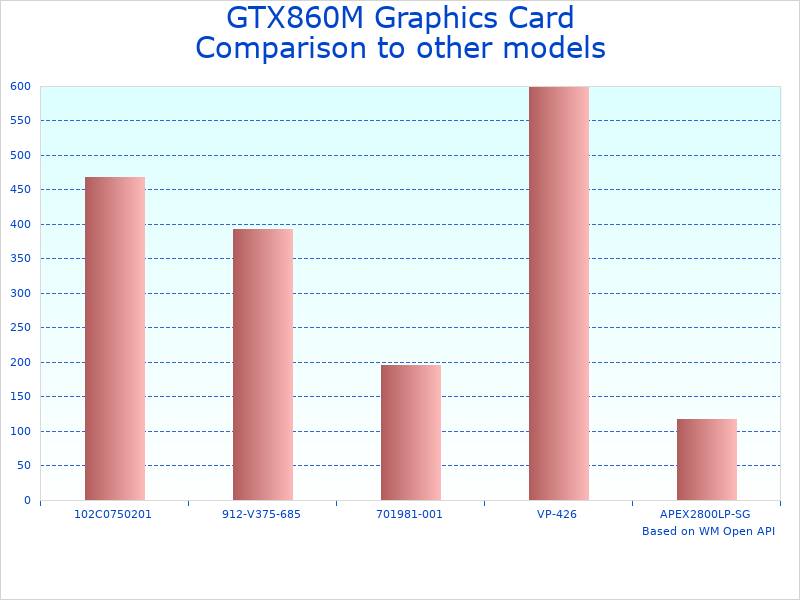
The GTX860M Graphics Card represents a specific generation of mobile graphics technology that competes with other mid-range solutions from its era. Understanding how it compares with alternatives like the AMD Radeon R9 M370X and NVIDIA GeForce GTX 950M helps users make informed decisions about used gaming laptops and understand the performance trade-offs between different mobile graphics solutions.
| Feature | GTX860M | AMD Radeon R9 M370X | NVIDIA GeForce GTX 950M |
|---|---|---|---|
| Architecture Generation | Maxwell/Kepler variants | GCN 1.2 | Maxwell Gen 2 |
| Target Resolution | 1080p medium-high settings | 1080p medium settings | 1080p high settings |
| Connectivity Options | HDMI, DisplayPort | HDMI, DisplayPort | HDMI, DisplayPort |
| Memory Technology | GDDR5 | GDDR5 | GDDR5 |
| Power Efficiency | Moderate | Lower | Better |
The comparison reveals important differences in how these graphics solutions handle various tasks. The GTX860M offers balanced performance for its generation, while the R9 M370X typically provides slightly different performance characteristics depending on the specific application. The GTX 950M, being a newer generation, generally offers better power efficiency and slightly improved performance, though it’s found in different laptop price ranges.
When considering broader alternatives, other notable mobile graphics solutions include the GTX 765M (predecessor), GTX 960M (successor), and various AMD Radeon options like the R9 M280X and R7 M370. Each solution targets specific market segments and use cases. The GTX 765M offers lower performance but better availability in budget systems, while the GTX 960M provides improved performance at higher system costs. AMD alternatives often provide different performance characteristics and may excel in specific workloads while offering varying power consumption profiles.
Practical Applications for GTX860M Graphics Card
Gaming Use Cases and Performance Expectations
- Casual Gaming:
The GTX860M handles popular online games like League of Legends, Counter-Strike, and similar titles at high settings with smooth frame rates, making it suitable for competitive gaming in these categories.
- Indie Game Performance:
Excellent performance with indie titles and smaller games that don’t require cutting-edge graphics power, providing great experiences with games from Steam’s extensive indie catalog.
- Retro Gaming:
Outstanding performance with older AAA titles and emulated games, allowing users to enjoy classic gaming libraries with enhanced settings and smooth performance.
- Strategy Gaming:
Well-suited for strategy games and simulation titles that rely more on CPU performance than raw graphics power, providing smooth gameplay in complex scenarios.
- MMO Gaming:
Adequate performance for most MMORPGs and online multiplayer games, though newer titles may require medium settings for optimal performance.
Professional and Creative Applications
- Photo Editing: Provides hardware acceleration for photo editing software, improving responsiveness and rendering times for basic to intermediate photo manipulation tasks.
- Basic Video Editing: Supports hardware-accelerated video encoding and basic video editing workflows, suitable for YouTube content creation and similar applications.
- 3D Learning: Adequate for learning 3D modeling and animation software, though render times will be longer compared to modern professional graphics cards.
- CAD Work: Handles basic CAD applications and 2D design work effectively, providing smooth viewport performance for most engineering and architectural tasks.
- Programming: Supports developers working with graphics programming, game development tools, and applications requiring hardware acceleration.
- Digital Art: Provides good performance for digital painting and illustration software with pressure-sensitive input and real-time brush effects.
- Web Development: Excellent for web developers needing to test graphics-intensive web applications and modern browser features.
- Education: Well-suited for students learning graphics programming, game development, or digital media creation without requiring expensive hardware.
- Streaming: Capable of handling basic game streaming and recording tasks, though quality settings may need adjustment for optimal performance.
- Multi-tasking: Supports running multiple applications simultaneously, including games alongside streaming or recording software.
Optimal Complementary Hardware and Software
- System Memory: Benefits significantly from 8GB or more system RAM to prevent bottlenecks during gaming and creative applications.
- Storage Solutions: Pairs well with SSD storage for faster game loading times and improved overall system responsiveness.
- External Monitors: Works effectively with 1080p external monitors, providing expanded workspace or larger gaming displays.
- Cooling Solutions: Laptop cooling pads can help maintain optimal performance during extended gaming or rendering sessions.
- Audio Equipment: Compatible with high-quality headphones or speakers to complete the gaming and multimedia experience.
- Game Controllers: Supports various gaming controllers and input devices for console-style gaming experiences.
- Video Capture: Can work with basic video capture devices for content creation, though performance depends on specific requirements.
- Development Tools: Compatible with popular game engines and development environments for learning and hobby projects.
- Design Software: Works well with most 2D design applications and basic 3D software for creative projects.
- Productivity Suites: Provides hardware acceleration for office applications and productivity tools that support GPU acceleration.
Maintaining and Optimizing GTX860M Graphics Card Performance
Essential Maintenance Practices
Proper maintenance helps the GTX860M Graphics Card maintain optimal performance throughout its operational life. Regular cleaning of laptop vents and fans prevents dust accumulation that can cause overheating and thermal throttling. Use compressed air every few months to blow out dust from cooling systems, paying particular attention to fan intakes and heat sink fins. Keep the laptop on hard, flat surfaces to help proper airflow, and avoid blocking ventilation areas during use.
Performance Optimization and Troubleshooting
Optimizing GTX860M performance involves managing both hardware and software factors. Keep graphics drivers updated through NVIDIA GeForce Experience or manual downloads from NVIDIA’s website. Monitor temperatures during gaming sessions using tools like MSI Afterburner or GPU-Z to identify potential thermal issues early. Adjust game settings appropriately for the card’s capabilities, prioritizing frame rate stability over maximum visual quality.
Common Issues and Solutions
The most common challenges include thermal throttling during extended gaming sessions, driver compatibility issues with newer games, and gradual performance degradation over time. What are the solutions for these problems? Solutions include undervolting the GPU to reduce heat generation, using older driver versions for better compatibility with specific games, and performing regular maintenance to prevent dust buildup.
What are the warning signs of potential problems? Warning signs include unusual fan noise, sudden performance drops, graphical artifacts, or system crashes during graphics-intensive tasks. When should professional service be considered? Professional service becomes necessary when cleaning doesn’t resolve thermal issues, when hardware problems develop, or when the laptop requires internal component replacement.

Frequently Asked Questions About GTX860M Graphics Solutions
Q: What specific performance can I expect from the GTX860M Graphics Card?
The GTX860M Graphics Card typically provides smooth gaming at 1080p resolution with medium to high settings for most games from its era. Modern demanding games may require lower settings or may not run acceptably. Performance varies based on the specific laptop’s cooling system and power management.
Q: How does the GTX860M compare to modern integrated graphics?
The GTX860M still outperforms most integrated graphics solutions in gaming scenarios, though modern integrated graphics like Intel Iris Xe have closed the gap significantly for lighter gaming and general use.
Q: What are the limitations I should know about?
The limitations include poor performance with modern AAA games, lack of ray tracing or DLSS support, limited VR capability, and potential thermal throttling during extended gaming sessions. Driver support may also become limited over time.
Q: When should I choose a laptop with GTX860M over alternatives?
You should choose the GTX860M when budget is a primary concern, you primarily play older or less demanding games, or you need basic graphics acceleration for creative work without requiring cutting-edge performance.
Q: Who benefits most from using this graphics card?
Students, casual gamers, retro gaming enthusiasts, and users doing basic creative work benefit most. It’s also suitable for those learning graphics programming or 3D modeling without professional requirements.
Q: What maintenance does the GTX860M require?
Regular cleaning of laptop vents and fans is essential to prevent overheating. Keep drivers updated, monitor temperatures during use, and help proper ventilation during gaming sessions.
Q: Can the GTX860M handle 4K in older or lighter titles with reduced settings or VR?
While the card can output 4K resolution, gaming performance at 4K is generally unacceptable. VR capability is very limited and not recommended for modern VR headsets that require higher frame rates and processing power.
Q: How does pricing compare to other options?
Laptops with GTX860M are typically found in the used market at budget to mid-range prices. Pricing varies significantly based on overall system condition, age, and regional availability compared to these alternatives:
- GTX 950M laptops – Usually slightly higher priced with better performance
- AMD R9 M370X systems – Similar pricing with different performance characteristics
- GTX 765M laptops – Lower pricing but reduced performance capabilities
- Intel Iris systems – Often newer but variable graphics performance
- Modern budget laptops – Higher initial cost but current generation features
- Refurbished workstations – Professional features but potentially higher cost
- Gaming laptop alternatives – Wide price range depending on specifications
- Used high-end systems – Better performance but higher maintenance risks
- New budget gaming – Current features but limited performance
- Previous generation alternatives – Similar positioning with different trade-offs
The GTX860M offers reasonable value for specific use cases, particularly for users with modest gaming requirements and budget constraints.

GTX860M Graphics Card Support and Service Considerations
Understanding Support for Older Graphics Solutions
Support for the GTX860M Graphics Card varies depending on the laptop manufacturer and the age of the specific system. Since this graphics card is no longer in active production, warranty coverage typically comes from the laptop manufacturer rather than NVIDIA directly. Most laptops containing the GTX860M are now outside their original warranty periods, making understanding available support options important for potential buyers.
Driver Support and Software Maintenance
NVIDIA continues to provide driver support for the GTX860M through their legacy driver program, though new features and optimizations focus on current generation hardware. Game-specific optimizations may not be available for newer titles, and some modern games may require older driver versions for optimal compatibility. Users should expect gradually decreasing driver update frequency as the hardware ages.
Service and Repair Considerations
What are the service options for GTX860M systems? Service options include laptop manufacturer support (if still available), independent repair services, and component-level repair for experienced technicians. The limitations are that replacement parts become increasingly scarce, and repair costs may exceed the system’s value.
When comparing support options, consider that ASUS typically provided comprehensive support during warranty periods with good documentation, while MSI offered responsive customer service but varying repair availability. Other manufacturers like Dell, HP, and Lenovo have different support structures for their gaming laptop lines. For current information about specific warranty terms, users should consult manufacturer websites directly, as support policies and availability change over time.
GTX860M Graphics Card: Final Assessment and Recommendations
Overall Performance Summary
The GTX860M Graphics Card represents a capable mid-range mobile graphics solution from an earlier generation that still offers value for specific use cases. Performance evaluation shows it handles 1080p gaming well with older and less demanding titles, while struggling with modern AAA games that require more processing power and newer graphics features.
Value Proposition and Market Position
The GTX860M’s value lies in its accessibility through the used laptop market rather than raw performance compared to modern alternatives. It provides an affordable entry point into dedicated graphics gaming and basic creative work. The graphics card delivers consistent performance for its intended market segment while maintaining reasonable power consumption for laptop use.
Ideal User Scenarios
The GTX860M Graphics Card excels in scenarios involving older game libraries, indie gaming, basic creative work, and educational applications. Users who primarily play competitive online games, strategy titles, or retro games will find it perfectly adequate. Creative professionals doing photo editing, basic video work, or learning 3D software can also benefit from its capabilities.
Who Should Consider This Graphics Solution
Students on tight budgets, casual gamers, retro gaming enthusiasts, and users learning creative software represent the ideal audience for GTX860M-equipped systems. It’s particularly suitable for those who understand its limitations and have realistic expectations about modern gaming performance.
Strengths and Weaknesses Assessment
What are the key strengths of the GTX860M? The strengths include reliable 1080p gaming for appropriate titles, mature driver support, reasonable power consumption, and affordable market availability. What are the main limitations? The limitations include poor modern game performance, lack of current graphics features, thermal constraints in some laptops, and decreasing software optimization for newer titles.
The GTX860M continues to provide value for users with specific needs and realistic expectations. While it cannot compete with modern graphics solutions for cutting-edge gaming, it maintains relevance for budget-conscious users, students, and those focused on older gaming libraries. The key insight is that this graphics card serves as a functional stepping stone into dedicated graphics computing rather than a high-performance gaming solution.
GTX860M Graphics Card positioned in current market