
Intel and AMD are both leading processor manufacturers that design CPU architectures for computers, servers, and mobile devices. Intel typically excels in single-core performance and power efficiency, while AMD offers superior multi-core performance and value pricing. Both companies serve different user needs, with Intel targeting premium laptops and business systems, while AMD focuses on gaming rigs and workstations.
Table of Contents
- What Makes Intel and AMD Different Processor Manufacturers?
- How do Intel and AMD processor generations compare?
- What Challenges Do Intel and AMD Face in the Market?
- How do supply chain issues affect processor availability?
- How Does Intel’s Processor Performance Compare to AMD?
- What tasks do AMD processors handle better than Intel?
- Why Are Integrated Graphics Important for Intel and AMD?
- What makes integrated graphics architectures different?
- How Do Intel’s Manufacturing Processes Compare with TSMC?
- What are the cost benefits of different manufacturing approaches?
- How Do Intel and ARM Architectures Work in Mobile Devices?
- Can ARM processors compete with traditional x86 processors?
- How Does Intel’s Graphics Technology Compare to NVIDIA?
- What are Intel’s strengths in integrated graphics?
- What Environmental Initiatives Do Intel and AMD Support?
- How do processor manufacturers reduce environmental impact?
What Makes Intel and AMD Different Processor Manufacturers?
Intel is a processor manufacturer that specializes in x86 architecture designs, primarily targeting business computing and premium consumer markets. The company operates using an integrated device manufacturing model, which means Intel designs and produces its own chips in dedicated fabrication facilities. Intel’s Core series processors, including the i3, i5, i7, and i9 lines, are designed for laptops, desktops, and workstations.
AMD is a processor company that focuses on high-performance computing and value-oriented solutions for gaming and professional workloads. AMD designs its processors using a fabless manufacturing model, partnering with foundries like TSMC to produce its chips. The company’s Ryzen processors offer competitive multi-core performance, while its EPYC series targets data centers and enterprise applications.
The benefits of Intel processors include excellent single-core performance, power efficiency in mobile devices, and strong compatibility with enterprise software. Intel processors typically consume less power during light workloads and offer integrated graphics solutions that work well for office work and basic computing tasks.
The benefits of AMD processors include superior multi-core performance for the price, better value in mid-range and budget segments, and strong gaming performance. AMD’s Ryzen processors typically offer more cores and threads than comparable Intel models, making them ideal for content creation, streaming, and multitasking workloads.
How do Intel and AMD processor generations compare?
Intel and AMD release new processor generations approximately every one to two years, with each generation bringing architectural improvements and performance enhancements. Intel’s current generation includes 13th Gen Core processors, while AMD offers Ryzen 7000 series processors based on the Zen 4 architecture.
The processor generations differ in manufacturing process nodes, with newer generations typically using smaller transistor sizes that improve performance and efficiency. Both companies have moved toward advanced process nodes, though the specific technologies and naming conventions vary between manufacturers and their foundry partners.
What Challenges Do Intel and AMD Face in the Market?
The limitations of modern processor development include increasing manufacturing complexity, rising development costs, and physical constraints of silicon technology. Both Intel and AMD face challenges in continuing performance improvements as transistor sizes approach atomic scales, requiring innovative approaches like 3D chip architectures and new materials.
Market challenges include intense competition, supply chain dependencies, and the need for continuous innovation in a rapidly evolving technology landscape. The semiconductor industry requires massive capital investments in research and development, with each new generation of processors requiring billions of dollars in development costs.
Supply chain constraints affect processor availability, particularly during periods of high demand or global disruptions. Both companies must balance production capacity with market demand while managing relationships with foundry partners and component suppliers.
How do supply chain issues affect processor availability?
Supply chain disruptions can cause processor shortages that affect system builders and consumers, leading to increased prices and longer wait times for new computers. Both Intel and AMD have experienced periods where demand exceeded production capacity, particularly for high-performance gaming and data center processors.
Manufacturing capacity is limited by the number of advanced fabrication facilities capable of producing modern processors. Building new fabs requires substantial time and investment, typically taking several years from planning to production.
Key Differences Between Intel and AMD Processors
- Intel focuses on single-core performance optimization
- AMD emphasizes multi-core performance and value
- Intel uses integrated device manufacturing
- AMD operates as a fabless chip designer
- Intel targets premium and business markets
- AMD focuses on gaming and content creation
- Both companies offer desktop and mobile processors
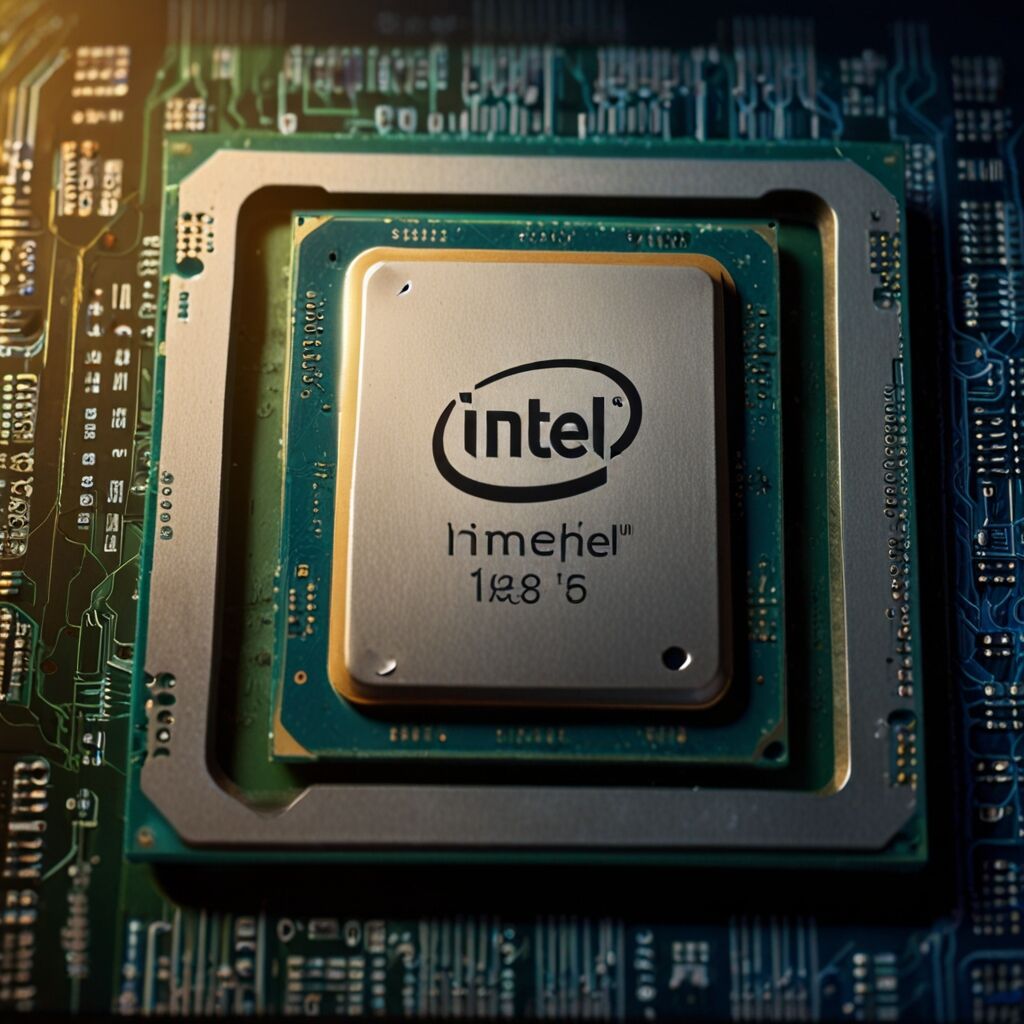
Intel and AMD logos on a tech background
How Does Intel’s Processor Performance Compare to AMD?
Intel processor performance typically excels in single-threaded applications, which benefits tasks like gaming at high frame rates and professional software that relies on single-core speed. Intel’s architecture optimizations focus on instruction per clock improvements and advanced branch prediction technologies.
AMD processor performance strengths lie in multi-threaded workloads, where the company’s processors often provide more cores and threads at similar price points. AMD’s Zen architecture delivers competitive performance per watt and excels in applications that can utilize multiple processor cores simultaneously.
The performance differences between Intel and AMD vary significantly based on the specific task, processor model, and price segment. Both companies offer processors that excel in different scenarios, making the choice dependent on individual user requirements and budget considerations.
What tasks do AMD processors handle better than Intel?
AMD processors outperform Intel in multi-threaded workloads such as video encoding, 3D rendering, and software compilation. These tasks benefit from having more processor cores working simultaneously, where AMD typically offers better value through higher core counts.
Content creation tasks like streaming, video editing, and music production often favor AMD processors due to their strong multi-core performance. AMD’s Ryzen processors can handle music production workloads effectively while maintaining competitive pricing.
Gaming performance with AMD processors is competitive, particularly when paired with high-end graphics cards where the processor is less likely to become a bottleneck. AMD processors often provide excellent value for gaming builds focused on high refresh rate displays.
Why Are Integrated Graphics Important for Intel and AMD?
Integrated graphics capabilities allow processors to handle visual output without requiring a separate graphics card, which reduces system cost and power consumption. Both Intel and AMD include graphics processing units within their processor designs to serve mainstream computing needs.
Intel’s integrated graphics, including Iris Xe technology, provide adequate performance for office productivity, web browsing, and light gaming. Intel’s graphics solutions emphasize power efficiency and compatibility with business applications.
AMD’s integrated graphics, found in their APU products, typically offer stronger gaming performance than Intel’s integrated solutions. AMD leverages its discrete graphics expertise to create integrated graphics that can handle more demanding visual tasks and casual gaming.
What makes integrated graphics architectures different?
Integrated graphics architectures differ in their processing unit configurations, memory bandwidth utilization, and software optimization approaches. Intel’s integrated graphics focus on efficiency and broad compatibility, while AMD’s designs emphasize performance and gaming capabilities.
The graphics processing capabilities vary between manufacturers, with AMD’s integrated graphics generally offering more compute units and higher performance for gaming applications. Intel’s integrated graphics provide reliable basic functionality with excellent power management for mobile devices.
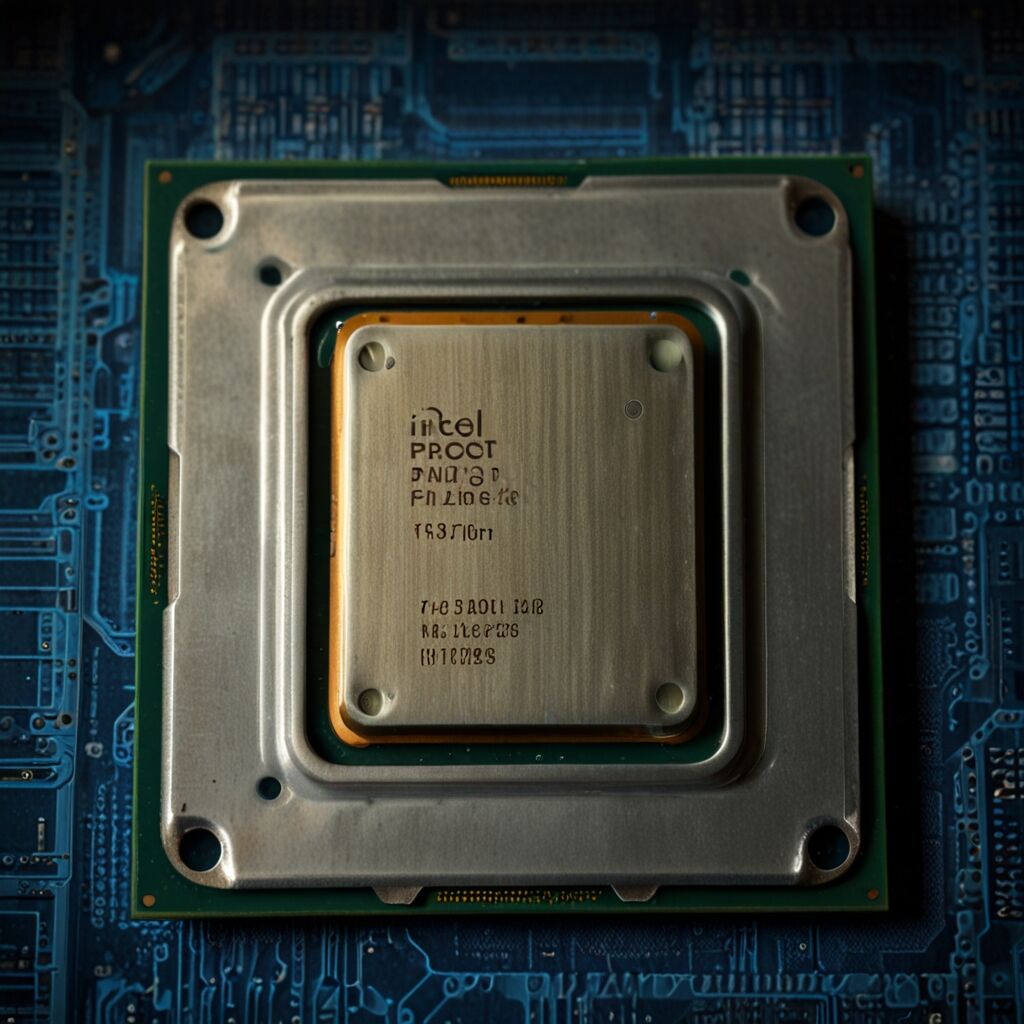
Close-up of a modern processor chip
Intel vs AMD Processor Comparison: Key Characteristics
| Aspect | Intel | AMD | Best Use Cases | Considerations |
|---|---|---|---|---|
| Single-Core Performance | Excellent | Very Good | Gaming, productivity | Application dependency |
| Multi-Core Performance | Good | Excellent | Content creation | Software optimization |
| Power Efficiency | Excellent | Good | Mobile devices | Workload dependent |
| Integrated Graphics | Good | Better | Budget builds | Gaming requirements |
| Price/Performance | Good | Excellent | Budget conscious | Feature needs |
| Business Features | Extensive | Good | Enterprise | IT requirements |
How Do Intel’s Manufacturing Processes Compare with TSMC?
Intel’s manufacturing approach involves designing and producing processors in its own fabrication facilities, providing direct control over the production process. This integrated approach allows Intel to optimize manufacturing for its specific processor designs and maintain quality control throughout production.
TSMC operates as a contract manufacturer that produces processors for various companies, including AMD, NVIDIA, and Apple. TSMC’s foundry model allows it to focus exclusively on manufacturing efficiency and process node advancement while serving multiple clients.
Manufacturing process innovations drive improvements in processor performance, power efficiency, and cost reduction. Advanced process nodes enable smaller transistors that can operate faster while consuming less power, benefiting both Intel and AMD processor designs.
What are the cost benefits of different manufacturing approaches?
Manufacturing costs vary between integrated and foundry models, with each approach offering distinct advantages depending on production volume and design requirements. Intel’s integrated approach provides control but requires substantial capital investment in fabrication facilities.
Foundry services like TSMC can achieve cost efficiencies through serving multiple clients and specializing in manufacturing processes. This model allows companies like AMD to access advanced manufacturing without building their own expensive fabrication facilities.
How Do Intel and ARM Architectures Work in Mobile Devices?
Intel’s x86 architecture in mobile devices provides compatibility with traditional desktop software and excellent performance for demanding applications. Intel’s mobile processors focus on balancing performance with battery life for laptops and tablets.
ARM architecture dominates smartphones and tablets due to its power efficiency and optimized design for battery-powered devices. ARM processors excel in extending battery life while providing adequate performance for mobile applications and operating systems.
The architecture differences affect software compatibility, with x86 processors running traditional desktop applications natively, while ARM processors require specifically designed mobile applications or emulation for desktop software.
Can ARM processors compete with traditional x86 processors?
ARM processors challenge traditional x86 designs in specific use cases, particularly in mobile computing and increasingly in lightweight laptops. ARM’s power efficiency advantages make it attractive for devices where battery life is crucial.
The competitive landscape includes ARM processors gaining performance while maintaining efficiency advantages, and x86 processors improving efficiency while maintaining compatibility benefits. Both architectures continue evolving to address different computing needs and user requirements.
How Does Intel’s Graphics Technology Compare to NVIDIA?
Intel’s graphics technology focuses on integrated solutions that provide basic to moderate graphics performance while maintaining excellent power efficiency. Intel’s Arc discrete graphics cards represent the company’s entry into dedicated GPU markets.
NVIDIA specializes in high-performance discrete graphics cards for gaming, professional visualization, and artificial intelligence applications. NVIDIA’s graphics technology emphasizes maximum performance and advanced features for demanding visual computing tasks.
The competitive positioning differs significantly, with Intel targeting mainstream and efficiency-focused markets while NVIDIA focuses on performance and professional applications. Intel’s integrated graphics serve different needs than NVIDIA’s discrete graphics solutions.
What are Intel’s strengths in integrated graphics?
Intel’s integrated graphics excel in power management, driver stability, and broad software compatibility across different operating systems and applications. Intel’s graphics solutions work well for streaming applications that require reliable performance without excessive power consumption.
The graphics capabilities of Intel processors provide adequate performance for business applications, web browsing, and light content consumption while maintaining excellent battery life in mobile devices.
Employees working in a high-tech office space
Benefits of Understanding Processor Technologies
- Make informed decisions about computer purchases
- Understand performance characteristics for specific tasks
- Evaluate cost-effectiveness of different processor options
- Recognize appropriate processors for different use cases
- Anticipate future technology trends and upgrades
- Optimize system configurations for specific workloads
- Understand compatibility requirements for software and hardware
What Environmental Initiatives Do Intel and AMD Support?
Environmental sustainability efforts in the processor industry include reducing manufacturing energy consumption, implementing recycling programs, and developing more efficient processor designs. Both Intel and AMD participate in industry initiatives to minimize the environmental impact of semiconductor production.
The limitations of environmental initiatives include the inherent energy requirements of advanced semiconductor manufacturing and the global scale of processor production. Manufacturing modern processors requires significant energy and resources, though efficiency improvements continue reducing environmental impact per chip.
Processor efficiency improvements help reduce overall system power consumption, benefiting both users through lower electricity costs and the environment through reduced energy demand. More efficient processors require less cooling and generate less heat, contributing to overall system efficiency.
How do processor manufacturers reduce environmental impact?
Sustainability initiatives in processor manufacturing include adopting renewable energy sources for fabrication facilities, implementing water recycling systems, and reducing chemical waste in production processes. Both companies work toward improving manufacturing efficiency and reducing resource consumption.
Energy-efficient processor designs help reduce the environmental impact of computing by requiring less power to perform the same tasks. Improvements in processor efficiency directly translate to reduced electricity consumption across millions of computers worldwide.
Silhouette of a microchip with circuit patterns
Similar posts:
- ASUS H61M-PRO Review, Features and Testing Performance
- AMD Kaveri New Details Online
- GIGABYTE GeForce GTX 770 WINDFORCE 3X 450W Review, Design and Testing Performance
- Dissecting the GeForce GTX 770 Lightning: Unveiling its Design, Testing, and Performance
- GIGABYTE GA-H81-D3 Motherboard Review, Design and Testing Performance
Understanding the differences between Intel and AMD processors helps users make informed decisions based on their specific computing needs, budget constraints, and performance requirements. Both companies offer competitive solutions that serve different market segments and use cases effectively.
When choosing between Intel and AMD processors, consider factors such as intended use, budget, power requirements, and compatibility with existing hardware and software. For coding and development work, both manufacturers offer excellent options depending on specific programming requirements and development environments.
The processor market continues evolving with both companies advancing their technologies, improving performance, and addressing new computing challenges. Future developments will likely focus on efficiency improvements, specialized computing capabilities, and continued competition that benefits consumers through better products and competitive pricing.