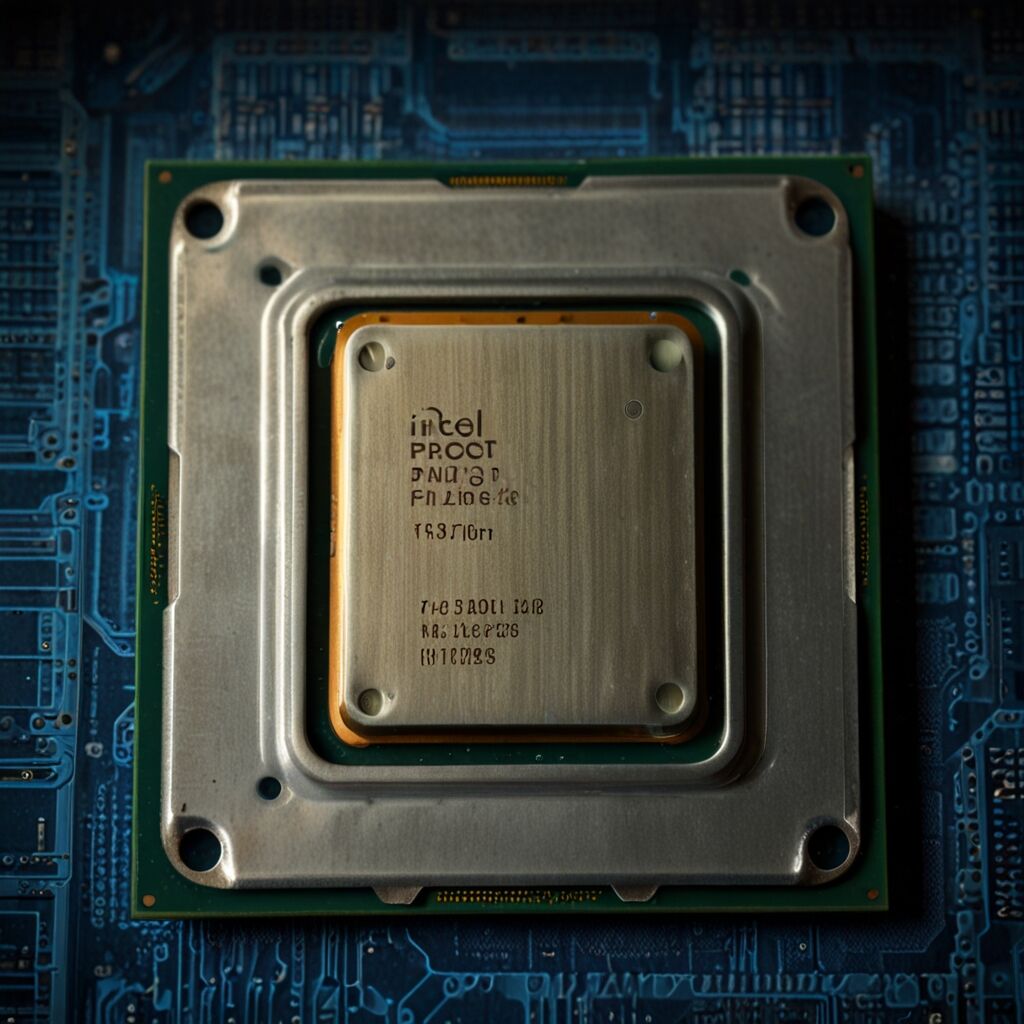
AMD Kaveri APU is a 2014 processor combining quad-core CPU and integrated Radeon graphics with up to 8 compute units, 95W TDP, and HSA architecture support. This APU integrates Steamroller CPU cores with Graphics Core Next (GCN) architecture to deliver balanced performance for gaming and productivity tasks. While newer processors have since surpassed Kaveri’s capabilities, it established important foundations for modern integrated graphics and heterogeneous computing approaches.
Table of Contents
- Integrated Graphics Evolution Since Kaveri Launch
- Multi-core APU Architecture Fundamentals
- AMD Kaveri APU Graphics and Computing Specifications
- Kaveri APU Compute Units and Graphics Cores
- HSA Foundation Technology in Kaveri APU
- HSA Architecture Impact on AMD Product Development
- Kaveri APU Performance Benchmarks and Capabilities
- Kaveri APU TDP and Power Consumption Analysis
- APU Energy Efficiency Design Principles
- Sustainable Computing Technology Development
- Kaveri APU Legacy and Historical Significance
- Kaveri APU PCIe Lane Configuration Details
Integrated Graphics Evolution Since Kaveri Launch
Integrated graphics technology has advanced significantly since AMD Kaveri APU’s 2014 introduction. Modern integrated solutions now deliver performance levels that rival entry-level discrete graphics cards from Kaveri’s era.
Current integrated graphics processors achieve 3-4x better performance than Kaveri’s Radeon R7 graphics. This improvement stems from architectural refinements, increased compute units, and enhanced memory bandwidth utilization.
Gaming capabilities have expanded from 720p medium settings in 2014 to 1080p high settings for many titles today. Power efficiency improvements allow these performance gains while maintaining similar or lower power consumption.
Multi-core APU Architecture Fundamentals
APU multi-core design enables parallel processing by distributing computational tasks across multiple CPU cores simultaneously. This architecture improves overall system responsiveness and multitasking capabilities compared to single-core designs.
Kaveri APU featured four Steamroller CPU cores operating at base frequencies between 3.1-3.9 GHz depending on the model. Each core included dedicated L1 cache and shared L2 cache for efficient data access.
The integrated approach allows CPU and GPU components to share system memory efficiently. This unified memory architecture reduces data transfer bottlenecks between processing components.
AMD Kaveri APU Graphics and Computing Specifications
Kaveri APU implemented Graphics Core Next (GCN) architecture in its integrated Radeon graphics component. This represented a significant advancement over previous integrated graphics solutions available in 2014.
Graphics performance varied by model, with higher-end variants featuring up to 512 stream processors. Clock speeds typically ranged from 720-866 MHz depending on thermal and power constraints.
Computing performance combined quad-core CPU capabilities with GPU acceleration through HSA (Heterogeneous System Architecture). This allowed applications to leverage both CPU and GPU resources simultaneously for improved efficiency.
Kaveri APU Compute Units and Graphics Cores
Kaveri APU integrates up to 8 Graphics Core Next compute units depending on the specific model variant. Each compute unit contains 64 stream processors, contributing to the APU’s graphics rendering capabilities.
The compute units support DirectX 11.2 and OpenGL 4.3 standards that were current during 2014. These specifications enabled compatibility with contemporary gaming and professional graphics applications.
Parallel processing across multiple compute units allows efficient handling of graphics workloads. The architecture distributes rendering tasks to maximize throughput while maintaining reasonable power consumption levels.
- Quad-core Steamroller CPU architecture
- Integrated Radeon R7 graphics with GCN
- HSA heterogeneous computing support
- DirectX 11.2 and OpenGL 4.3 compatibility
- 95W TDP for desktop variants
- Dual-channel DDR3 memory controller
- PCIe 3.0 connectivity for expansion
AMD Kaveri APU Model Specifications Comparison
| Specification | A10-7850K | A10-7700K | A8-7600 | Graphics Cores | TDP |
|---|---|---|---|---|---|
| CPU Base Clock | 3.7 GHz | 3.4 GHz | 3.1 GHz | 512 | 95W |
| CPU Boost Clock | 4.0 GHz | 3.8 GHz | 3.8 GHz | 384 | 65W |
| GPU Clock | 720 MHz | 720 MHz | 756 MHz | 384 | 65W |
| Compute Units | 8 | 8 | 6 | 384 | 65W |
| L2 Cache | 4 MB | 4 MB | 4 MB | 384 | 65W |
| Memory Support | DDR3-2133 | DDR3-2133 | DDR3-1866 | 384 | 65W |
HSA Foundation Technology in Kaveri APU
HSA (Heterogeneous System Architecture) Foundation collaboration with AMD introduced revolutionary computing concepts in the Kaveri APU generation. This technology enabled seamless cooperation between CPU and GPU components within the same processor package.
The HSA implementation allows applications to distribute workloads dynamically between CPU cores and graphics compute units. This flexibility optimizes performance based on the specific computational requirements of different software tasks.
Kaveri represented one of the first consumer processors to implement HSA principles commercially. While adoption was limited initially, these concepts influenced subsequent APU and processor development across the industry.
HSA Architecture Impact on AMD Product Development
HSA architecture influenced AMD’s subsequent processor designs beyond the Kaveri generation. The unified memory model and heterogeneous computing concepts became foundational elements in later APU developments.
Modern AMD Ryzen processors with integrated graphics incorporate evolved versions of HSA principles. These implementations provide improved efficiency and performance compared to the original Kaveri implementation.
The technology established AMD’s competitive position in integrated graphics markets. This foundation enabled the company to develop more advanced APU solutions in subsequent product generations.
Kaveri APU Performance Benchmarks and Capabilities
Kaveri APU performance in 2014 delivered competitive results for integrated graphics solutions. Gaming performance typically achieved 30-45 FPS in popular titles at 1080p medium settings.
Computing workloads benefited from the quad-core CPU design and GPU acceleration capabilities. Video encoding, photo processing, and productivity applications showed notable performance improvements over previous integrated solutions.
Compared to contemporary offerings, Kaveri provided superior graphics performance while maintaining competitive CPU capabilities. However, dedicated graphics cards still offered significantly better gaming performance for high-end applications.
Kaveri APU TDP and Power Consumption Analysis
Kaveri APU desktop variants typically featured 95W TDP (Thermal Design Power) ratings. This specification represents the maximum sustained power consumption under typical operating conditions.
Actual power consumption varies based on workload characteristics and system configuration. Idle power consumption typically ranges from 15-25W, while peak gaming loads approach the full TDP rating.
Mobile variants offered lower TDP options ranging from 19W to 45W. These configurations enabled laptop implementations while maintaining reasonable battery life expectations for portable computing devices.
- Supports up to four display outputs simultaneously
- Features 256-512 Radeon graphics stream processors
- Delivers approximately 856 GFLOPS peak compute performance
- Integrates HSA heterogeneous computing architecture
- Operates within 95W thermal design power envelope
- Supports dual-channel DDR3 memory up to 2133 MHz
- Compatible with FM2+ socket motherboards
- MSI FM2 A85XA G65 Motherboard Maximizes AMD APU Gaming Performance
- AMD RDNA 4 Graphics Cards Revolutionize Gaming Performance and Market Competition
- Gigabyte Z87X SLI Motherboard Masters Multi GPU Gaming Performance
- HIS 7790 IcoolerX2 Graphics Cards Deliver Powerful CrossFire Performance
- MSI Z87I Motherboard Powers Compact Gaming Systems With Full Features
APU Energy Efficiency Design Principles
APU designs prioritize energy efficiency through integrated architecture approaches that reduce overall system power consumption. Combining CPU and GPU functions eliminates separate graphics card power requirements for many computing tasks.
Modern APU implementations achieve better performance-per-watt ratios compared to discrete component solutions. This efficiency improvement benefits both desktop systems seeking lower electricity costs and mobile devices requiring extended battery life.
Thermal management improvements in APU designs reduce cooling requirements and system noise levels. These benefits contribute to more environmentally sustainable computing solutions across various application scenarios.
Sustainable Computing Technology Development
Sustainable computing initiatives focus on extending hardware lifecycles through efficient design and reduced material consumption. APU integration represents one approach to achieving these environmental objectives in processor development.
Manufacturing efficiency improvements reduce the environmental impact of processor production processes. Advanced fabrication techniques minimize waste generation while improving performance characteristics across product generations.
Recycling programs and material recovery initiatives help minimize electronic waste from obsolete computing hardware. These programs become increasingly important as computing device replacement cycles accelerate globally.
Kaveri APU Legacy and Historical Significance
AMD Kaveri APU established important foundations for modern integrated graphics and heterogeneous computing development. While current processors offer superior performance, Kaveri’s innovations influenced subsequent industry developments.
The HSA architecture concepts introduced with Kaveri continue to influence processor design approaches. Modern implementations provide enhanced efficiency and performance compared to the original 2014 specifications.
For historical computing enthusiasts, Kaveri represents a significant milestone in APU evolution. However, contemporary users should consider current-generation processors that offer substantially improved performance and efficiency characteristics.
Kaveri APU PCIe Lane Configuration Details
Kaveri APU supports 16 PCIe 3.0 lanes for graphics card and expansion device connectivity. This configuration enables single high-performance graphics card installation or multiple lower-bandwidth expansion cards.
The PCIe lane allocation can be configured as one x16 slot or two x8 slots depending on motherboard design. This flexibility accommodates various system configuration requirements and expansion preferences.
Connectivity options include support for discrete graphics cards, high-speed storage devices, and network adapters. The PCIe 3.0 standard provides sufficient bandwidth for most expansion requirements in mainstream computing applications.