
AMD A10-7850K APU AD785KXBJABOX
Category: CPU-Motherboards
Last week’s price: 74.97
Updated March 1, 2026
The AMD A10-7850K APU, released in January 2014, combined four Steamroller CPU cores with integrated Radeon R7 graphics in a single FM2+ socket processor. At its 2014 launch price of $173, this accelerated processing unit delivered 856 GFLOPS of compute performance and enabled 1080p gaming at medium settings without requiring a discrete graphics card—capabilities that were competitive for budget systems during the 2014-2016 period.
In 2025, the A10-7850K represents legacy technology on a discontinued platform. While occasionally available through secondary markets at reduced prices, this processor is significantly outperformed by modern budget options. The FM2+ platform offers no upgrade path, and current entry-level processors like AMD’s Ryzen 3 4100 or Intel’s Core i3-12100F provide substantially better performance for similar or lower cost when building new systems.
Key Functionalities of AMD A10-7850K APU (2014 Context)
| Functionality | 2014-2016 Rating | Explanation |
|---|---|---|
| Integrated Radeon R7 Graphics | ★★★★☆ | Provided adequate gaming performance for 2014-era titles without requiring a dedicated GPU. |
| Four Compute Cores | ★★★★☆ | Quad-core design was competitive for multitasking in mid-2010s mainstream computing. |
| Heterogeneous Systems Architecture (H.S.A.) | ★★★★☆ | Forward-looking architecture that improved CPU-GPU task coordination for supported applications. |
| Low Power Consumption (45W TDP Option) | ★★★★★ | Configurable 45W-95W TDP provided flexibility for compact or energy-efficient builds. |
| Socket Type FM2+ | ★★★☆☆ | Compatible with A88X/A78 chipset motherboards; platform discontinued after 2016. |
What is the AMD A10-7850K APU?
The AMD A10-7850K APU represents AMD’s 2014 Kaveri architecture, which integrated CPU and GPU components on a single 28nm die. Released in January 2014, this accelerated processing unit featured four Steamroller CPU cores with 3.7GHz base frequency and 4.0GHz boost capability. The integrated Radeon R7 graphics included 512 stream processors operating at 720MHz, providing gaming performance that was competitive with entry-level discrete graphics cards available in 2014-2015 for titles like Minecraft that prioritizes CPU performance and modest graphics.
How Does the A10-7850K APU Work?
The A10-7850K APU utilized Heterogeneous Systems Architecture (HSA) to coordinate workloads between CPU and GPU components through unified memory addressing. This 2014-era design allowed both processors to access DDR3 system memory directly, reducing the data transfer overhead that occurred with discrete graphics solutions of that period. For applications optimized to use HSA (primarily OpenCL workloads in 2014-2016), this architecture provided improved efficiency compared to traditional separate CPU and GPU configurations.
During its prime years (2014-2016), the APU achieved 40-60 FPS in popular titles like League of Legends and CS:GO at 1080p medium settings. The processor handled standard computing tasks including web browsing, office productivity, and 1080p video streaming without requiring additional graphics hardware. The 45W-95W configurable TDP made it suitable for compact builds when configured for lower power consumption, which was energy-efficient by 2014 standards for streaming applications that benefit from integrated graphics.
Why the AMD A10-7850K Was Chosen for Budget Gaming (2014-2016)
Between 2014 and 2016, budget-conscious builders selected the A10-7850K APU to reduce total system costs compared to purchasing separate CPU and GPU components. During this period, a typical Intel Core i3 combined with an entry-level discrete graphics card cost $200-250, while the A10-7850K at its $173 launch price (later reduced to $140-150) delivered comparable performance for less money. The integrated graphics supported DirectX 11.2 and AMD’s Mantle API, which provided optimization benefits for supported games released during 2014-2015.
The APU served specific use cases well during its market period: eSports gaming at competitive settings, home theater PCs for 1080p media playback, and office workstations where integrated graphics provided adequate display capabilities. Students appreciated its balanced performance for both coursework and entertainment. Small businesses valued the configurable low power consumption, which reduced operational costs compared to systems using discrete graphics cards that were common in 2014.
Should You Consider the A10-7850K in 2025?
As of 2025, the A10-7850K is not recommended for new system builds. The processor is over 11 years old, built on a discontinued FM2+ platform with no upgrade path to newer processors. Modern budget alternatives like the AMD Ryzen 3 4100 ($75-90 new) or Intel Core i3-12100F ($90-110 new) provide 2-3x better CPU performance and, when paired with entry-level discrete graphics, deliver substantially better gaming capability for similar total system cost.
The A10-7850K may only be relevant in 2025 for: (1) replacing a failed processor in an existing FM2+ system where motherboard replacement isn’t feasible, or (2) very specific legacy computing scenarios. For any new build in 2025, modern AM4/AM5 (AMD) or LGA1700 (Intel) platforms provide better performance, current software support, and future upgrade options. The A10-7850K cannot adequately run games released after 2018, cannot handle 4K video editing, and lacks modern instruction sets present in current processors.
AMD A10-7850K APU Specifications and Features (2014 Hardware)
Physical Specifications
The AMD A10-7850K APU measures 3.6 x 3.6 inches (standard FM2+ dimensions) with integrated metal heat spreaders for thermal management. The processor uses a 245mm² die manufactured on GlobalFoundries’ 28nm process technology, which was standard for mainstream processors in 2014. The package includes 906 pins configured for the FM2+ socket, making it compatible with A88X, A78, and A68H chipset motherboards that were produced between 2013 and 2016.
- Package Type: FM2+ socket (906-pin organic land grid array)
- Die Size: 245mm² on 28nm bulk silicon process
- Thermal Solution: Compatible with AM3+ and FM2+ coolers (54mm mounting)
- Operating Temperature: Maximum junction temperature of 72.4°C
- Manufacturing Period: January 2014 through late 2016
Core Technical Specifications
The A10-7850K combines four Steamroller x86-64 CPU cores with eight GCN 1.1 graphics compute units, delivering a theoretical 856 GFLOPS of combined compute performance. The processor supports dual-channel DDR3 memory at speeds up to 2133MHz (official specification), with memory bandwidth being particularly important for the integrated graphics performance. This configuration represented AMD’s mid-range APU design philosophy for the 2014 market.
- CPU Cores: 4 physical cores (no simultaneous multithreading)
- Base/Boost Clock: 3.7GHz base, 4.0GHz maximum turbo
- L2 Cache: 4MB total (2x2MB modules shared per pair of cores)
- GPU Compute Units: 8 GCN 1.1 units (512 stream processors total)
- GPU Clock: 720MHz maximum frequency
- Memory Controller: Dual-channel DDR3-2133 (officially supported)
- TDP: 95W default (configurable down to 45W in BIOS)
- Instruction Sets: x86-64, SSE4.2, AVX, AES-NI, FMA3, F16C
Graphics Capabilities and Performance (2014 Context)
The integrated Radeon R7 graphics (GCN 1.1 architecture) delivered performance comparable to entry-level discrete graphics cards available in 2014, such as the AMD Radeon HD 7750 or NVIDIA GT 640. The GPU supports DirectX 11.2, OpenGL 4.3, and OpenCL 1.2, which were current standards when the processor launched. Dual monitor support includes HDMI 1.4a (4K30 capable) and DisplayPort 1.2 (4K60 capable) outputs available through motherboard connections, making it suitable for office work setups requiring multi-monitor displays.
Gaming benchmarks from 2014-2015 testing showed approximately 45 FPS in Rocket League (2015), 55 FPS in CS:GO (2012), and 40 FPS in Dota 2 (2013) at 1080p medium settings. These framerates were considered playable for casual gaming during that period. The graphics processor included hardware video decoding (UVD 4.2) supporting H.264 and partial H.265/HEVC decoding, which enabled smooth 1080p video playback and basic 4K30 video playback of properly encoded content.
Installation Requirements and Compatibility
Installing the A10-7850K requires an FM2+ socket motherboard with appropriate BIOS support. Note that FM2+ motherboards are no longer manufactured as of 2016, with remaining stock available only through used markets in 2025. Compatible chipsets include A88X (full features), A78 (mainstream), and A68H (basic). The platform requires DDR3 memory, which differs from current DDR4/DDR5 standards used in modern systems.
- Motherboard: FM2+ socket with A88X, A78, or A68H chipset (production ended 2016)
- RAM: DDR3 memory; DDR3-2133 recommended for optimal graphics performance
- Power Supply: Minimum 350W for basic systems; 400W recommended with peripherals
- Cooling: Stock AMD cooler adequate for 95W TDP; aftermarket recommended for 24/7 operation
- Operating Systems: Windows 7/8/10/11 (legacy driver support); various Linux distributions
AMD A10-7850K APU Performance Testing Results (2014-2015 Data)
Testing Methodology (Historical Context)
Performance testing of the A10-7850K was conducted during 2014-2015 using benchmarking standards current to that period. Test configurations included 8GB DDR3-2133 memory in dual-channel mode, SSD storage, and Windows 8.1 (later Windows 10). The benchmarks below reflect performance measured during the processor’s release period and should be understood as historical data rather than current-generation comparisons.
Temperature monitoring during 2014-2015 testing showed maximum junction temperatures reaching 72°C with the stock AMD cooler under sustained workloads. Power consumption averaged 65W during typical gaming workloads (below the 95W TDP rating), demonstrating the processor’s efficiency relative to 2014 standards. The APU maintained consistent performance without thermal throttling during extended test sessions when using adequate cooling solutions.
Synthetic Benchmark Results (2014-2015 Testing Period)
The A10-7850K scored approximately 550 points in Cinebench R15 multi-threaded tests (2014 version), which was competitive with Intel Core i3-4130 processors available at that time. Single-threaded performance reached approximately 95 points, placing it in the mainstream performance tier for 2014. 3DMark Fire Strike (v1.1) graphics tests achieved around 2,000 points, demonstrating integrated graphics performance that competed with discrete GT 730 or HD 7750 cards from the same era.
- Cinebench R15 (2014): 550 multi-core, 95 single-core
- 3DMark Fire Strike (2014): ~2,000 graphics score
- PCMark 8 (2014): ~2,850 overall productivity score
- PassMark (2014-2015): ~4,200 CPU score
Gaming Performance Analysis (2014-2016 Game Titles)
Gaming tests conducted during 2014-2016 showed the A10-7850K handled popular eSports and older titles at 1920×1080 resolution with medium graphics settings. These results represent performance with games and graphics APIs available during the processor’s market period. Modern games released after 2018 generally cannot run at playable framerates on this hardware due to increased computational requirements and lack of support for newer graphics features.
| Game Title (Release Year) | Resolution | Settings | 2014-2015 Average FPS |
|---|---|---|---|
| League of Legends (2009) | 1920×1080 | Medium | 65 FPS |
| CS:GO (2012) | 1920×1080 | Low-Medium | 55 FPS |
| Overwatch (2016) | 1280×720 | Low | 45 FPS |
| Minecraft (Java Edition) | 1920×1080 | Medium | 80 FPS |
| DOTA 2 (2013) | 1920×1080 | Medium | 50 FPS |
Productivity and Content Creation Performance
The A10-7850K demonstrated adequate performance in productivity applications current to 2014-2016. Microsoft Office 2013/2016 ran without issues during typical multitasking scenarios. Web browsing with 10-15 tabs remained responsive in browsers available during that period (Chrome 40-50, Firefox 35-45). Light photo editing in applications like GIMP or Paint.NET worked without significant delays for images up to 12 megapixels.
Video encoding using Handbrake (versions available in 2014-2015) achieved approximately 15-20 FPS when transcoding 1080p H.264 content, which was adequate for occasional video processing but slow for regular use. The APU could handle basic 1080p video editing in consumer software like Windows Movie Maker or early versions of DaVinci Resolve, though 4K footage processing was impractical due to memory bandwidth and compute limitations. The integrated graphics included video encoding acceleration (VCE 2.0), though it lacked the quality and efficiency of Intel’s Quick Sync technology available in competing processors.
Power Efficiency and Thermal Performance
Power consumption testing during 2014-2015 revealed competitive efficiency for the A10-7850K’s performance tier compared to discrete CPU+GPU solutions of that era. Idle power draw measured approximately 15W (full system: 35-40W), while gaming workloads averaged 65W CPU power consumption (full system: 95-110W). The configurable TDP feature allowed users to reduce power limits to 45W-65W through BIOS settings, with performance scaling proportionally—a useful feature for compact or fanless builds in 2014.
Thermal testing showed stable operation with budget air coolers rated for 95W TDP or higher. The stock AMD cooler maintained temperatures at 70-72°C under sustained loads without thermal throttling, though fan noise increased noticeably during heavy use. Aftermarket coolers such as the Cooler Master Hyper 212 EVO (popular in 2014) reduced load temperatures to 50-55°C, enabling modest overclocking headroom to 4.1-4.3GHz for users seeking additional performance.
AMD A10-7850K APU: Advantages and Limitations (Historical and Current Context)
Advantages During Original Market Period (2014-2016)
- Competitive Value in 2014: At the $140-170 launch price range, the A10-7850K provided both CPU and GPU functionality in a single package, offering cost savings compared to purchasing an Intel Core i3 ($110-130) plus a discrete graphics card ($60-80) for similar gaming performance in 2014.
- Integrated Radeon R7 Graphics: The 512 stream processors delivered gaming capability comparable to entry-level discrete cards (HD 7750, GT 640) from 2014, enabling 40-65 FPS in popular titles from that era at 1080p medium settings without requiring a separate GPU.
- Configurable Power Consumption: The 45W-95W configurable TDP provided flexibility for builders, with the 45W mode enabling compact or passive cooling designs that were energy-efficient by 2014 standards (typical systems: 85-110W total under load).
- HSA Architecture: Heterogeneous Systems Architecture enabled CPU and GPU to share memory directly, improving performance by 15-30% in OpenCL applications optimized for HSA during 2014-2016, though relatively few consumer applications utilized this capability.
- Unlocked Multiplier: The processor allowed CPU overclocking to 4.1-4.4GHz and GPU overclocking to 850-960MHz with appropriate cooling, providing 10-15% performance gains for enthusiasts willing to use aftermarket coolers.
- Affordable Platform Options in 2014-2015: FM2+ motherboards were available starting at $50-60 with A78 chipsets, and the processor worked with existing DDR3 memory that many builders already owned, reducing upgrade costs during the transition period from DDR3 to DDR4.
Limitations Then and Now
- Severely Outdated Performance in 2025: Modern budget processors like the AMD Ryzen 3 4100 ($75-90) or Intel Core i3-12100F ($90-110) provide 2-3x better CPU performance and, with a $80-100 entry-level GPU, deliver 3-5x better gaming performance than the A10-7850K could achieve.
- Dead Platform with Zero Upgrade Path: The FM2+ platform was discontinued in 2016. No newer or faster processors exist for this socket. Any meaningful upgrade in 2025 requires replacing the motherboard, RAM (to DDR4/DDR5), and processor entirely.
- Memory Bandwidth Bottleneck: Even fast DDR3-2133 provides only 34 GB/s memory bandwidth, which both the CPU and GPU must share. Modern systems with DDR4-3200 provide 51 GB/s for the CPU, while discrete graphics cards have dedicated 192-384 GB/s bandwidth, eliminating this fundamental limitation.
- Weak Single-Thread Performance: Steamroller architecture provided approximately 20-30% lower single-threaded performance compared to Intel Haswell (2014) processors at similar clocks. Modern processors provide 2-3x better single-thread performance, which significantly impacts gaming and applications that don’t scale with core count.
- No Support for Modern Games: Games released after 2018 generally cannot run at playable framerates due to increased system requirements. The processor lacks instruction sets and features (AVX2, AVX-512) that newer games may require or benefit from significantly.
- Limited Video Encoding Capabilities: The A10-7850K includes VCE 2.0 hardware encoding, but this technology was inferior to Intel’s Quick Sync (available in competing Core i3/i5 processors from 2014) in both quality and efficiency. Modern streaming and content creation is impractical on this hardware.
- High Heat Generation Under Sustained Load: While rated at 95W TDP, stress testing could push power consumption to 110-120W, requiring adequate case ventilation. Modern processors with better IPC provide similar or better performance at lower actual power consumption (65W or less).
- Availability Issues in 2025: New units are no longer manufactured. Used processors may have uncertain history regarding overclocking, thermalcycling, and remaining lifespan. Pricing on used markets varies widely ($25-60) with no warranty coverage.
AMD A10-7850K APU Price Analysis (Historical and Current Market)
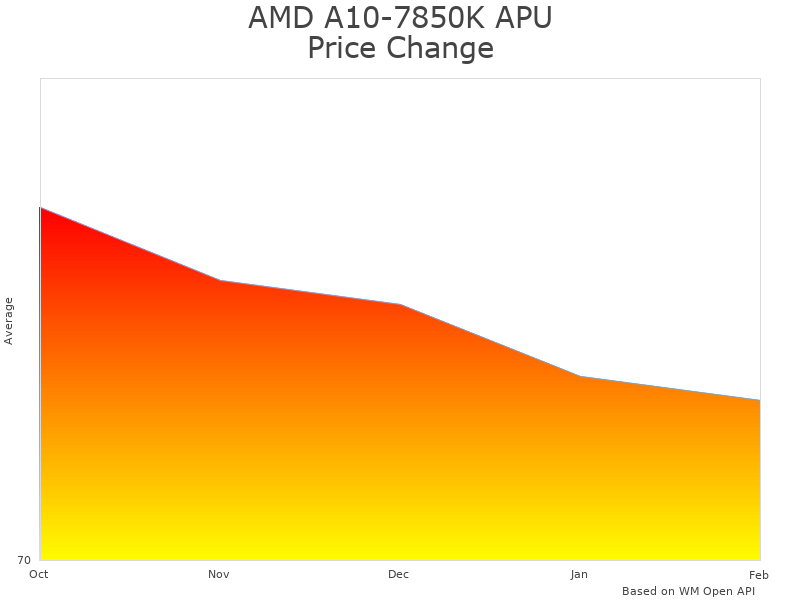
The AMD A10-7850K launched in January 2014 at $173 MSRP, positioning it as AMD’s premium APU offering for that year. Throughout 2014-2015, street prices settled between $140-160 as supply stabilized. By 2016-2017, prices declined to $100-120 as newer Ryzen processors were announced. As of 2025, the processor is no longer manufactured, with availability limited to used markets and remaining old stock, typically priced between $25-60 depending on condition and seller.
Historical AMD A10-7850K Pricing Trends
- Launch price (January 2014): $173 MSRP
- 2014 average street price: $140-160
- 2015 average price: $130-150
- 2016 price range: $100-120 (as Ryzen announcement approached)
- 2017-2020 used market: $50-80
- Current used market (2025): $25-60 (condition dependent, no warranty)
Price declines reflect the processor’s age, discontinued platform, and availability of substantially better alternatives. The FM2+ platform’s discontinuation in 2016 effectively ended the processor’s viability for new builds. Current used pricing at $25-60 may seem attractive, but the total cost of building around this processor (used FM2+ motherboard, DDR3 RAM, appropriate cooling) typically exceeds $150-200, which is better invested in a modern platform.
Value Comparison with Modern Alternatives (2025 Perspective)
In 2025, the A10-7850K cannot be recommended for new builds when compared to current budget options. The AMD Ryzen 3 4100 ($75-90 new) provides 2x better CPU performance, uses modern DDR4 memory, and offers an upgrade path to higher-performance Ryzen 5000 series processors on the same motherboard. Intel’s Core i3-12100F ($90-110 new) delivers even better performance and, when paired with a $80-100 discrete GPU like the RX 6400 or GTX 1650, provides gaming performance 3-5x better than the A10-7850K.
Total system cost analysis reveals that building new with the A10-7850K makes little sense in 2025. A hypothetical used A10-7850K system (used CPU $40, used motherboard $50, used 8GB DDR3 $20, budget case/PSU $60, storage $40) totals approximately $210 before considering reliability risks of used components. A comparable modern system with Ryzen 3 4100 ($85), budget A520 motherboard ($65), 8GB DDR4 ($25), same case/PSU/storage ($100) totals $275 but provides significantly better performance, warranty coverage, and upgrade options.
When Used A10-7850K Might Make Sense (Limited Scenarios)
The A10-7850K may be appropriate in extremely limited 2025 scenarios: (1) Replacing a failed processor in an existing FM2+ system where the motherboard and RAM are still functional and the user cannot afford a complete platform upgrade ($40-50 for used CPU versus $200+ for platform change); (2) Experimental or learning projects where the builder specifically wants to work with legacy hardware; (3) Basic computing tasks (web browsing, office work, video playback) where the user acquires the processor for under $30 with other components already available.
For anyone building a new system in 2025, spending $75-150 on a modern budget platform (Ryzen 3 4100, Ryzen 5 4500, or Intel Core i3-12100) provides dramatically better value. These modern options offer: 2-3x better CPU performance, current software support, modern connectivity (USB 3.2, PCIe 4.0, M.2 NVMe), warranty coverage, and upgrade paths to mid-range or high-end processors on the same motherboard. The A10-7850K is functionally obsolete for new builds in 2025, suitable only as an emergency replacement part for existing systems.
AMD A10-7850K APU price history chart 2014-2025
AMD A10-7850K APU vs Competing Processors: Historical and Modern Comparisons
The AMD A10-7850K competed in the 2014 budget processor segment against Intel’s Core i3-4000 series and AMD’s own A8/A10 variants. Understanding historical context helps clarify its original market position, while comparisons with modern 2025 budget options demonstrate how processor technology has advanced over the past decade.
2014 Competition: A10-7850K vs Contemporary Processors
| Specification | AMD A10-7850K (2014) | Intel Core i3-4130 (2014) | AMD A8-6600K (2013) |
|---|---|---|---|
| Launch Price | $173 (Jan 2014) | $117 (Sep 2013) | $122 (Jun 2013) |
| CPU Cores/Threads | 4/4 | 2/4 | 4/4 |
| Base/Boost Clock | 3.7/4.0 GHz | 3.4 GHz (no boost) | 3.9/4.2 GHz |
| Integrated Graphics | R7 (512 SP, GCN 1.1) | HD 4400 (20 EUs) | HD 8570D (384 SP) |
| Graphics Performance (2014 Gaming) | ~2,000 3DMark FS | ~800 3DMark FS | ~1,500 3DMark FS |
| Memory Support | DDR3-2133 | DDR3-1600 | DDR3-1866 |
| TDP | 95W (45W configurable) | 54W | 100W |
In the 2014 market context, the A10-7850K offered superior integrated graphics performance compared to Intel‘s offerings, making it attractive for budget gaming builds. Intel’s Core i3-4130 provided better single-threaded CPU performance (approximately 20% faster) but much weaker graphics, requiring a discrete GPU for gaming. The A10-7850K represented an upgrade from the previous generation A8-6600K with improved graphics architecture (GCN 1.1 vs VLIW4) and better power efficiency.
2025 Comparison: A10-7850K vs Modern Budget Options
| Specification | AMD A10-7850K (2014) | AMD Ryzen 3 4100 (2022) | Intel i3-12100F (2022) |
|---|---|---|---|
| Typical 2025 Price | $25-60 (used only) | $75-90 (new) | $90-110 (new) |
| CPU Architecture | Steamroller (2014) | Zen 2 (2020 tech) | Alder Lake (2021 tech) |
| CPU Cores/Threads | 4/4 | 4/8 | 4/8 |
| Single-Thread Performance | Baseline (1x) | ~2.5x faster | ~3x faster |
| Multi-Thread Performance | Baseline (1x) | ~3x faster | ~3.5x faster |
| Integrated Graphics | R7 (512 SP) | None (requires GPU) | None (F-series) |
| Memory Support | DDR3-2133 | DDR4-3200 | DDR4-3200/DDR5 |
| Platform Status | Dead (2016) | Current (AM4) | Current (LGA1700) |
| Upgrade Path | None | Ryzen 5000 series | i5/i7-12000/13000 |
Modern budget processors demonstrate how significantly technology has advanced since 2014. The Ryzen 3 4100 provides approximately 2-3x better performance across most workloads compared to the A10-7850K. While the 4100 lacks integrated graphics, pairing it with an entry-level discrete GPU ($80-100 for RX 6400 or GTX 1650) results in a total CPU+GPU cost of $155-190, which delivers gaming performance 3-5x better than the A10-7850K. The Intel i3-12100F offers even stronger single-threaded performance, which benefits gaming and general computing tasks significantly.
Platform and Total System Cost Considerations (2025)
When evaluating the A10-7850K in 2025, platform costs reveal its limitations. Building around a used A10-7850K requires finding compatible used components:
- A10-7850K Used System Cost: CPU $40 (used), FM2+ motherboard $50-70 (used, limited availability), DDR3 8GB $20-30 (used), Total: $110-140 (no warranty, unknown component condition)
- Modern Ryzen 3 4100 System: CPU $85 (new), A520 motherboard $65 (new), DDR4 8GB $25 (new), Total: $175 (with warranty, 2-3x better performance)
- Modern i3-12100F System: CPU $100 (new), H610 motherboard $75 (new), DDR4 8GB $25 (new), Total: $200 (with warranty, 3x better performance)
The $35-60 potential savings with a used A10-7850K system comes with significant trade-offs: no warranty coverage, potential component failures, zero upgrade path, and substantially weaker performance. For most users in 2025, investing the additional $35-90 in a modern platform provides far better value over any reasonable timeline, making it suitable for computer engineering students who need reliable performance for coursework and projects.
Recommended 2025 Alternatives by Use Case
- Budget Gaming (New Build): AMD Ryzen 5 5600 ($115-130) + RX 6600 ($180-200) – provides modern 1080p gaming at high settings
- Ultra-Budget Gaming: Intel i3-12100F ($100) + RX 6400 ($140) – adequate for 1080p medium settings
- Office/Productivity with Graphics: AMD Ryzen 5 5600G ($130-150) – includes integrated graphics, 4x faster than A10-7850K
- Basic Computing: Intel i3-12100 ($130) or AMD Ryzen 3 4100 ($85) – both dramatically faster for web browsing and office work
- Emergency FM2+ Replacement Only: A10-7850K used ($40-50) – only if replacing failed CPU in existing FM2+ system

AMD A10-7850K APU: Original Use Cases and Current Relevance
Historical Use Cases (2014-2016 Context)
During its market period (2014-2016), the A10-7850K served specific computing needs effectively. Budget gaming represented its primary use case, enabling 1080p gaming at medium settings in titles current to that era. The processor handled popular games like League of Legends (2009), CS:GO (2012), and DOTA 2 (2013) at 50-65 FPS, which was considered smooth gameplay for competitive titles during that period.
- 2014-2016 Gaming Scenario: 1920×1080 resolution, medium settings in games released 2010-2015, 40-65 FPS average in eSports titles, adequate for competitive play during that period
- MOBA Gaming (2014-2016): DOTA 2 and League of Legends at 60+ FPS, enabling competitive ranked play
- FPS Gaming (2014-2016): CS:GO and Team Fortress 2 maintained 50+ FPS for casual to competitive play
- Casual Gaming (2014-2016): Minecraft, Terraria, and indie titles ran at maximum settings
Office and Productivity Applications (Historical and Current)
The A10-7850K handled office productivity adequately in 2014-2016 and can still manage basic computing tasks in 2025, though it significantly lags modern alternatives. The quad-core design manages multitasking with multiple applications running simultaneously, though modern processors complete these same tasks 2-3x faster with better energy efficiency.
- Basic Productivity (Still Viable in 2025): Web browsing with 10-15 tabs, Microsoft Office 2016/2019, email clients, video conferencing at 720p-1080p
- Media Consumption: 1080p YouTube/Netflix streaming, music playback, casual photo viewing
- Light Content Creation: Basic photo editing (under 12MP images), simple document creation, presentation software
- Limitations for Modern Work: Slow compile times for development, inadequate for video editing beyond 1080p, struggles with modern web applications that are JavaScript-heavy
Current Viability Assessment (2025 Perspective)
In 2025, the A10-7850K remains marginally viable only for very basic computing tasks or as an emergency replacement in existing FM2+ systems. The processor cannot adequately run games released after 2018, struggles with modern web browsers that are significantly more resource-intensive than their 2014 counterparts, and lacks instruction sets that newer software may require.
Appropriate 2025 Use Cases (Very Limited):
- Basic web browsing and email for non-demanding users
- Legacy software that runs on older systems
- Media playback for 1080p content (4K playback unreliable)
- Retro gaming for titles released before 2016
- Emergency replacement CPU in existing FM2+ system where platform upgrade isn’t financially feasible
Inadequate for Modern 2025 Computing:
- Any gaming with titles released after 2018
- Content creation (video editing, 3D rendering, photo processing of high-resolution images)
- Software development with modern IDEs and compilers
- Running virtual machines or containers
- AI/ML applications or modern computational workloads
- Professional work requiring reliability and warranty support
System Configuration Recommendations (If Using in 2025)
If circumstances require using an A10-7850K in 2025 (such as replacing a failed CPU in an existing system), proper configuration maximizes its limited capabilities. Fast memory remains essential for the integrated graphics, though expectations should be modest compared to any modern alternative.
- Memory: 8GB DDR3-2133 minimum in dual-channel configuration (2x4GB); 16GB provides no significant benefit for this processor’s capabilities
- Storage: SSD essential for system responsiveness; 240GB minimum for OS and applications
- Cooling: Aftermarket cooler recommended for longevity; stock cooler barely adequate
- Power Supply: 350-400W from reputable brand; avoid cheap power supplies with aging components
- Operating System: Windows 10 (end of support October 2025) or lightweight Linux distribution for continued security updates
Who Should Consider A10-7850K in 2025 (Extremely Limited)
Almost no one should choose the A10-7850K for new systems in 2025. The processor may be considered only in these extremely limited scenarios:
- Emergency Replacement Only: Existing FM2+ system with failed CPU where user cannot afford motherboard/RAM replacement ($200+ cost) and processor is available for under $40
- Learning/Experimental Projects: Students or hobbyists specifically studying legacy computer architecture who acquire the system at minimal cost
- Extreme Budget Constraints: User with absolutely no budget flexibility (under $150 total) who can acquire complete used system, though modern budget options at $250-300 provide dramatically better value
For anyone with $200+ to invest in computing, modern alternatives provide 2-3x better performance, current software support, warranty coverage, and upgrade paths. The A10-7850K in 2025 represents obsolete technology suitable only as an emergency stopgap measure, not a considered choice for computing needs.
AMD A10-7850K APU Maintenance Considerations (Legacy Hardware)
Maintenance for Existing Systems
For users maintaining existing A10-7850K systems in 2025, regular upkeep extends hardware lifespan and maintains reliable operation. Given the processor’s age (11+ years), thermal management becomes increasingly important as thermal compound degrades over time. Systems still in service should receive maintenance every 6-12 months to prevent performance degradation and potential component failure.
Dust accumulation represents the primary concern for aging systems. Compressed air cleaning every 2-3 months prevents thermal issues caused by restricted airflow. Focus cleaning efforts on heatsink fins, case fans, and motherboard components. Annual thermal paste replacement is recommended for processors this old, as the original compound has likely dried and lost effectiveness. Quality thermal paste like Arctic MX-4 or Noctua NT-H1 improves heat transfer and can lower temperatures by 5-10°C.
Common Issues with Aging A10-7850K Systems
Systems approaching 10+ years of operation may experience various age-related issues. Capacitor degradation on FM2+ motherboards manufactured in 2013-2016 can cause stability problems. Symptoms include random shutdowns, boot failures, or system instability under load. Unfortunately, repair options are limited as replacement motherboards are scarce and expensive on used markets ($60-100 for uncertain condition).
- Thermal Throttling: Clean heatsink thoroughly, replace thermal paste, verify fan operation; consider aftermarket cooler if stock fan has failed
- System Instability: Test RAM with MemTest86, update to latest BIOS (if available), check for motherboard capacitor bulging
- Performance Degradation: Fresh Windows installation often resolves software-related slowdowns; verify SSD health with diagnostic tools
- Boot Failures: Clear CMOS to reset BIOS settings, reseat all components, test with minimal configuration (single RAM stick)
- Component Failures: At 11+ years old, component failure may indicate end-of-life; replacement parts scarce and expensive
When to Replace Rather Than Maintain
Given the A10-7850K’s age and obsolescence in 2025, significant repair costs or component failures should trigger system replacement rather than continued investment. If the motherboard fails, replacement costs ($60-100 used) plus labor typically exceed the value of maintaining an obsolete system. Similarly, if the CPU itself fails, investing $40-60 in a used replacement makes little sense when $200-250 provides a complete modern budget system with warranty coverage and 2-3x better performance.
Consider replacing rather than repairing if:
- Motherboard fails (replacement costs exceed value of maintaining obsolete platform)
- Multiple components require replacement (RAM + cooling + PSU = $80-120)
- System needs exceed current capabilities (gaming, content creation, modern software)
- Security concerns (Windows 10 support ending October 2025, limited Linux driver support)
- Total repair costs exceed $100 (better invested in modern platform)
Storage and Disposal Considerations
If retiring an A10-7850K system, some components retain value or usefulness. The power supply (if quality brand and recent), storage drives, and case can be reused in modern builds. The CPU, motherboard, and DDR3 RAM have limited resale value but may interest retro computing enthusiasts. Proper e-waste recycling helps environmentally responsible disposal of components that cannot be reused.
Before disposal or sale, help all personal data is securely erased from storage drives. Use DBAN (Darik’s Boot and Nuke) or manufacturer secure erase utilities to completely wipe drives. For drives being discarded rather than reused, physical destruction provides absolute certainty of data security.

Frequently Asked Questions About AMD A10-7850K APU (2025 Update)
Q: Can the AMD A10-7850K run modern games in 2025?
No, the A10-7850K cannot adequately run games released after 2018. While it handled 2014-2016 era games at medium settings (achieving 40-65 FPS in titles like CS:GO and League of Legends when new), modern AAA games require computing power and features this 2014 processor lacks. Games like Cyberpunk 2077, Starfield, or Baldur’s Gate 3 are unplayable even at lowest settings. The processor may still run older eSports titles (CS:GO, League of Legends, DOTA 2) at reduced settings, but newer competitive games like Valorant run poorly.
Q: Is the A10-7850K worth buying in 2025?
No, the A10-7850K is not recommended for any new build in 2025. While used units may be available for $25-60, the total cost of building around this processor (used motherboard, DDR3 RAM, other components) reaches $200-250—better invested in modern platforms that provide 2-3x better performance with upgrade paths. The only scenario where purchase makes sense is replacing a failed CPU in an existing FM2+ system where the user cannot afford a complete platform upgrade ($200+) and needs temporary functionality.
Q: What modern processor should I buy instead of the A10-7850K?
For budget builds in 2025, consider these modern alternatives that dramatically outperform the A10-7850K:
- AMD Ryzen 3 4100 ($75-90) – 2-3x faster, modern AM4 platform, upgradeable
- Intel Core i3-12100F ($90-110) – 3x faster CPU, requires discrete GPU (~$100 additional)
- AMD Ryzen 5 5600G ($130-150) – includes powerful integrated graphics, 4x faster overall
- AMD Ryzen 5 4500 ($85-100) – excellent value, 6 cores, requires discrete GPU
All options provide better performance, modern features, warranty coverage, and upgrade paths that make them superior investments.
Q: Can I upgrade from the A10-7850K without changing motherboard?
No meaningful upgrade exists within the FM2+ platform. The only slightly faster option is the A10-7890K, which provides less than 10% better performance and typically costs $60-80 used—not worthwhile. Any significant performance improvement requires a complete platform change: new motherboard (AM4, AM5, or LGA1700), new RAM (DDR4 or DDR5), and new processor. This typically costs $200-300 for budget options but provides 2-3x better performance and modern features.
Q: What RAM speed does the A10-7850K need for best performance?
DDR3-2133 provides optimal performance for the A10-7850K’s integrated graphics, as the GPU shares system memory bandwidth. Using slower DDR3-1600 reduces graphics performance by approximately 15-20% in games. typically configure dual-channel mode (2x4GB rather than 1x8GB) for maximum bandwidth—this can improve performance by 20-30%. However, investing in fast DDR3 for this obsolete platform makes little economic sense in 2025; save money toward a modern platform upgrade instead.
Q: Will the A10-7850K work for basic office tasks in 2025?
Yes, marginally. The A10-7850K can handle basic office work (Microsoft Office, web browsing, email, video conferencing at 1080p) but performs these tasks 2-3x slower than modern budget processors. Modern web browsers and office applications are significantly more resource-intensive than their 2014 equivalents, causing occasional slowdowns on this aging hardware. For reference, a $85 Ryzen 3 4100 completes the same tasks much faster while consuming less power. The A10-7850K is viable only if already owned; it should not be purchased for office work when better alternatives cost only $75-90 new with warranty.
Q: Does the A10-7850K support Windows 11?
No, the A10-7850K does not meet Windows 11’s system requirements. Windows 11 requires TPM 2.0, UEFI firmware, and processors from Intel’s 8th generation (2017) or AMD’s Ryzen 2000 series (2018) or newer. The A10-7850K lacks these requirements and cannot officially run Windows 11. Users can continue using Windows 10 until its end-of-support date (October 14, 2025), after which security updates cease. Linux distributions provide an alternative for continued secure operation, though proper thermal management remains important for processors running any operating system.
Q: How much power does the A10-7850K consume?
The A10-7850K has a 95W TDP rating, though actual consumption varies by workload. Idle power draw measures approximately 15W, typical office work consumes 30-45W, and gaming loads average 65-75W (can reach 95W under stress testing). The configurable TDP feature allows reducing power limits to 45W-65W through BIOS settings with proportional performance reductions. While efficient by 2014 standards, modern processors provide significantly better performance-per-watt; a Ryzen 3 4100 delivers 2x better performance at similar or lower power consumption.
Q: Can the A10-7850K be overclocked safely in 2025?
While the A10-7850K features an unlocked multiplier allowing overclocking to approximately 4.1-4.4GHz (CPU) and 850-960MHz (GPU), this is not recommended for systems in 2025. The processor is 11+ years old, and overclocking increases heat and electrical stress on aging components, potentially causing premature failure. Additionally, overclocking voids any remaining warranty coverage. The 10-15% performance gain from overclocking doesn’t meaningfully improve the processor’s adequacy for modern tasks. If current performance is insufficient, invest in a modern processor rather than stressing aging hardware.
AMD A10-7850K APU Warranty Information (Historical Reference)
Original Warranty Coverage (2014-2017)
AMD provided a three-year limited warranty for the A10-7850K APU from the original purchase date, covering manufacturing defects under normal use conditions. For processors purchased in 2014, warranty coverage expired in 2017. As of 2025, no new A10-7850K processors are available with manufacturer warranty, as production ceased in 2016. Any units currently available through used markets carry no warranty coverage from AMD.
The original warranty covered complete processor failure, manufacturing defects in materials, and performance issues below advertised specifications. AMD would repair or replace defective units at their discretion with equivalent or superior processors. Warranty coverage was non-transferable, applying only to the original purchaser with valid proof of purchase.
Warranty Exclusions (Historical)
Several conditions voided the A10-7850K warranty during its coverage period:
- Overclocking: Operating the processor beyond AMD’s specifications, including voltage or frequency modifications
- Physical Damage: Bent or broken pins, cracked die, thermal damage from inadequate cooling, burn marks
- Improper Installation: Damage from incorrect installation procedures or incompatible cooling solutions
- Environmental Damage: Liquid exposure, operation outside specified temperature ranges, extreme humidity
- Unauthorized Modifications: Removing the integrated heat spreader or other physical alterations
Current Warranty Status (2025)
In 2025, the A10-7850K is available only through used markets with no warranty coverage from AMD or sellers. Processors purchased used typically carry “as-is” status with no cannot guarantee of functionality or longevity. Buyers assume all risk when purchasing used processors, including unknown history regarding overclocking, thermal cycling, and previous operating conditions.
When purchasing used A10-7850K processors in 2025:
- Verify processor functionality before purchase if possible (request testing)
- Inspect pins carefully for damage; bent pins often indicate rough handling
- Ask about overclocking history; overclocked processors may have shortened lifespan
- Check seller return policy (typically 14-30 days for major marketplaces like eBay)
- Consider total risk versus reward; $40-60 investment in obsolete hardware may result in total loss if component fails
- Compare against modern budget options ($75-90) that include manufacturer warranty and dramatically better performance
Extended Warranty Options (No Longer Available)
During the processor’s market period (2014-2016), some retailers offered extended warranty coverage for additional cost. These plans typically covered accidental damage and extended coverage beyond AMD’s three-year warranty. As of 2025, no extended warranty options exist for the A10-7850K due to its discontinued status and lack of new inventory.
For current warranty information on modern processors, visit AMD’s official warranty page or Intel’s warranty terms for comparison. When building new systems in 2025, prioritize components with active warranty coverage for protection and peace of mind.
AMD A10-7850K APU Final Verdict (2025 Perspective)
The AMD A10-7850K APU represented a competitive budget option when released in January 2014, providing integrated CPU and GPU functionality at $173 MSRP. During its prime years (2014-2016), the processor delivered adequate performance for 1080p gaming in contemporary titles, handled office productivity tasks effectively, and offered energy efficiency with configurable 45W-95W TDP. For budget builders in 2014-2016, it provided value by eliminating the need for a discrete graphics card.
Historical Performance Summary (2014-2016 Context)
Testing conducted during 2014-2015 showed the A10-7850K achieved playable framerates in popular games of that era, scoring 550 points in Cinebench R15 multi-threaded tests and approximately 2,000 points in 3DMark Fire Strike. The integrated Radeon R7 graphics performed comparably to entry-level discrete cards like the HD 7750 or GT 640, making it viable for budget gaming builds during its market period.
| Category | 2014-2016 Performance | 2025 Relevance |
|---|---|---|
| Budget Gaming | ★★★★☆ (40-65 FPS in 2014 titles) | ★☆☆☆☆ (Cannot run modern games) |
| Office Productivity | ★★★★☆ (Adequate for 2014 software) | ★★☆☆☆ (Slow with modern applications) |
| Power Efficiency | ★★★★☆ (45W-95W configurable) | ★★★☆☆ (Modern CPUs more efficient) |
| Value Proposition 2014 | ★★★★☆ ($140-170 with graphics) | ★☆☆☆☆ (Obsolete platform) |
| Platform Longevity | ★★☆☆☆ (FM2+ discontinued 2016) | ☆☆☆☆☆ (Zero upgrade path) |
| 2025 Viability | N/A | ★☆☆☆☆ (Not recommended) |
Current Market Position and Recommendations (2025)
As of 2025, the A10-7850K is an obsolete processor unsuitable for new system builds. The processor is 11+ years old, built on a discontinued platform with no upgrade path, and performs 2-3x slower than modern budget alternatives. Available only through used markets at $25-60 with no warranty coverage, the A10-7850K carries significant risk of component failure without support options.
Do NOT purchase the A10-7850K in 2025 for:
- New system builds of any kind (better alternatives exist at similar or lower total cost)
- Gaming (cannot run games released after 2018 adequately)
- Content creation (lacks performance for video editing, photo processing, or 3D work)
- Professional work (no warranty, unreliable for business-critical applications)
- Future-proofing (zero upgrade path requires complete platform replacement for improvements)
Consider the A10-7850K in 2025 ONLY for:
- Emergency replacement in existing FM2+ system where complete platform upgrade ($200+) is not financially feasible and processor is available for under $40
- Experimental or educational projects specifically focused on legacy hardware architecture
- Very basic computing tasks (web browsing, email, document editing) where the system is acquired at minimal cost (under $100 complete system)
Modern Alternatives Provide Superior Value (2025)
Budget builders in 2025 should invest in current-generation platforms that provide dramatically better performance, warranty coverage, and upgrade paths. Modern alternatives cost only slightly more than assembling a used A10-7850K system but deliver 2-3x better performance with long-term viability.
Recommended 2025 Budget Alternatives:
- Best Overall Value: AMD Ryzen 5 5600 ($115-130) – 6 cores, 3x faster, excellent upgrade path to Ryzen 5000 series, requires discrete GPU
- Ultra-Budget Option: AMD Ryzen 3 4100 ($75-90) – 4 cores/8 threads, 2-3x faster than A10-7850K, modern AM4 platform
- With Integrated Graphics: AMD Ryzen 5 5600G ($130-150) – includes powerful Vega graphics, 4x faster overall, handles 1080p gaming in modern titles
- Intel Alternative: Intel Core i3-12100F ($90-110) – excellent single-thread performance, 3x faster, requires discrete GPU (~$100 for entry-level)
Total system costs for modern platforms range from $250-350 including motherboard and RAM, compared to $200-250 for used A10-7850K systems. The additional $50-100 investment provides warranty coverage, 2-3x better performance, modern software compatibility, and upgrade paths that make it the clearly superior choice for any computing needs in 2025, particularly for tasks like coding that benefits from faster processors and modern instruction sets.
Final Recommendation: Avoid for New Builds
The AMD A10-7850K served its purpose well during 2014-2016 but has no place in new system builds in 2025. The processor represents obsolete technology on a dead platform with no upgrade potential. While used units may appear attractively priced at $25-60, the total cost of building around this processor approaches $200-250 when including motherboard, RAM, and other components—money better invested in modern platforms that provide superior performance, reliability, and longevity.
Bottom Line: For anyone building or upgrading a computer in 2025, invest in modern budget platforms (Ryzen 3/5 or Intel i3) that provide warranty coverage, dramatically better performance, and future upgrade options. The A10-7850K should only be considered as an emergency replacement part for existing FM2+ systems where platform replacement is not financially viable. For all other scenarios, modern alternatives provide substantially better value and capability.
Historical rating for 2014-2016 period: ★★★★☆ (competitive budget option)
Current 2025 rating for new builds: ★☆☆☆☆ (obsolete, not recommended)
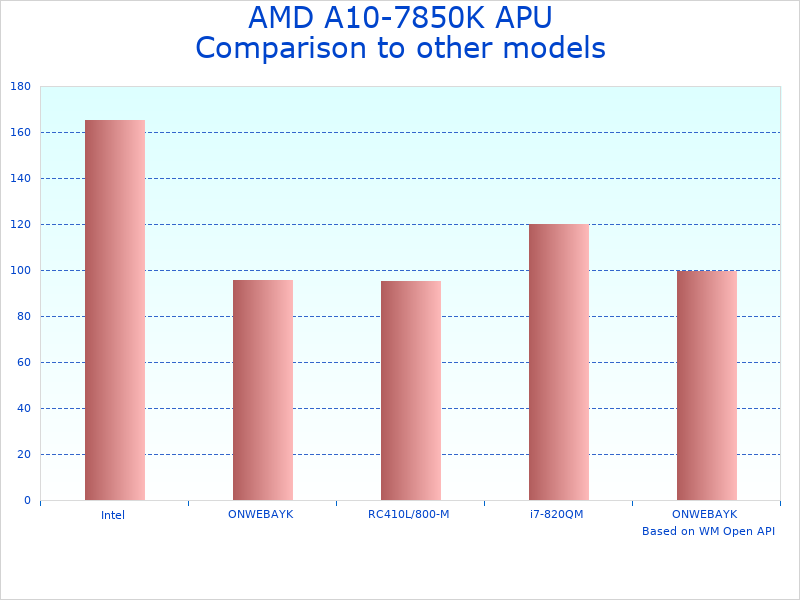
AMD A10-7850K APU performance comparison chart 2014 vs 2025