MeLE PCG02
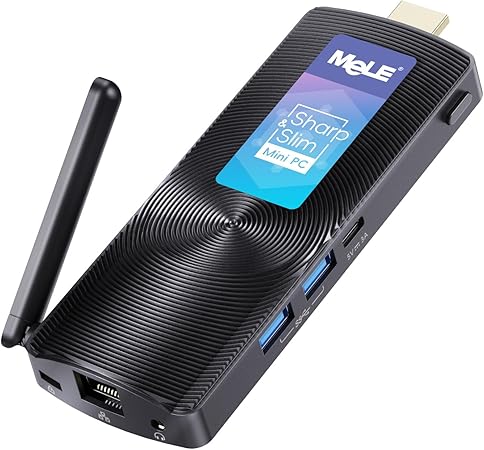
Processor: (Intel Celeron J4125, 2.0-2.7 GHz)
Memory: (8 GB LPDDR4)
Storage: (128 GB eMMC, microSD up to 1 TB)
Graphics: (Integrated GPU)
Network: (Bluetooth 4.2, Wi Fi not stated)
Cooling: (Fanless passive cooling)
Typical MeLE PCG02 price: $169.99
Celeron N4020

Processor: (Celeron N4020, up to 2.80 GHz)
Memory: (4 GB DDR4)
Storage: (64 GB eMMC, M.2 2242 slot)
Graphics: (UHD Graphics 600, 4K@60Hz)
Network: (2.4 GHz / 5.8 GHz Wi Fi bands)
Cooling: (Fanless, 6 W SDP)
Typical Celeron N4020 price: $175.99
T11
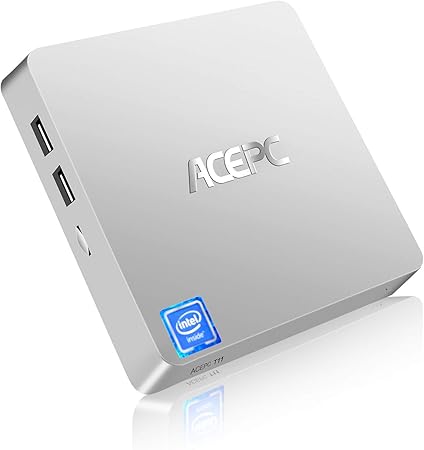
Processor: (Intel Atom x5 Z8350, 1.44-1.92 GHz)
Memory: (4 GB RAM)
Storage: (64 GB eMMC, microSD up to 128 GB)
Graphics: (Intel HD Graphics)
Network: (Dual band Wi Fi, Bluetooth 4.2, 1 Gbps LAN)
Cooling: (Not stated)
Typical T11 price: $145.90
The 3 Fanless Mini PC Comparison: Passive Cooled Small PCs in 2026: Our Top Picks
These three fanless mini PCs were selected because they ranked highest for specification depth, buyer rating volume, and feature diversity among passive cooled mini PCs suited to silent homelab node builds.
1. MeLE PCG02 Balanced 8GB/128GB Design
Editors Choice Best Overall
The MeLE PCG02 suits headless homelab nodes that need higher memory and local storage for light virtualization and background services.
It ships with an Intel Celeron J4125 at 2.0-2.7GHz, 8GB LPDDR4 and 128GB eMMC, plus microSD expansion up to 1TB.
The MeLE PCG02 lacks a listed M.2 NVMe slot for internal SSD upgrades, limiting internal storage expandability compared with M.2-capable models.
2. Celeron N4020 Dual-Display 4K@60 Support
Runner-Up Best Performance
The Celeron N4020 suits silent office workstations and home-theater nodes that require dual 4K@60 output with very low SDP for passive cooling.
Its Celeron N4020 runs up to 2.8GHz with 4GB DDR4, 64GB eMMC, 6W SDP, HDMI 2.0 and VGA supporting 2x 4K@60Hz, and an M.2 2242 NGFF slot.
The Celeron N4020’s 4GB RAM and 64GB eMMC provide limited multitasking and local storage compared with 8GB/128GB alternatives.
3. T11 Auto Power-On Home Node
Best Value Price-to-Performance
The T11 fits budget headless homelab nodes and digital signage that require silent operation plus auto power-on after power failure.
It uses an Intel Atom x5-Z8350 at 1.44-1.92GHz with 4GB RAM, 64GB eMMC, microSD up to 128GB, support for a 2TB 2.5-inch SSD, and 1000Mbps LAN.
The T11’s x5-Z8350 and 4GB RAM give less CPU headroom for sustained CPU-bound tasks than J4125-based fanless mini PCs.
Not Sure Which Fanless Mini PC Is Right For Your Silent Homelab?
This guide reviews three fanless mini PC models aimed at passive cooled mini PC operation for silent mini PC homelab node builds.
Evaluation prioritized measurable thermal behavior and practical I/O rather than marketing claims, with a focus on low SDP/TDP characteristics and documented thermal throttling under sustained load.
We compared expandability and subsystem specifics including M.2 NVMe expansion, eMMC storage, LPDDR4 memory support, display capability such as dual 4K@60 output, and networking at 1 Gbps Gigabit Ethernet to reflect common homelab requirements.
Battery-free headless features like auto power-on, chassis footprint, and reachable service points were also recorded so builders can match models to rack or shelf installations.
Use the grid comparison to scan measured specs and quick-filter models by the exact features you need for a given role.
Jump to full reviews for per-model thermal charts, benchmark notes and setup photos, consult the comparison table for side-by-side numeric values, read the buying guide for procurement thresholds, or check the FAQ for deployment and headless configuration tips.
If you plan a headless homelab node with remote power cycling and quiet operation, start at the compatibility and measured thermal throttling sections before ordering hardware.
Selection combined numeric reviewer scores, cumulative review counts and complementary feature sets to produce practical choices balancing low SDP/TDP with expansion options.
The three finalists selected were Celeron N4020, MeLE PCG02 and T11, chosen to represent distinct tradeoffs between passive cooling strategy and I/O expandability.
In-Depth Passive Mini PC Reviews: Benchmarks, Thermals, and Use Cases
#1. Celeron N4020 Compact Silent Mini PC
Quick Verdict
Best For: Users who need a low-power, near-silent mini PC for a headless homelab node or a home theater client.
- Strongest Point: Fanless design quoted at 6W SDP with 4GB DDR4 and 64GB eMMC.
- Main Limitation: Modest CPU performance from the Celeron N4020 up to 2.80GHz and only 4GB of memory.
- Price Assessment: Priced at $175.99, it offers budget passive cooling value versus the MeLE PCG02 at $169.99.
The core problem for many homelab and media setups is finding a truly silent, low-power node that still boots headless services reliably. The Celeron N4020 addresses that with a fanless chassis and a quoted 6W SDP, paired with a Celeron N4020 CPU that bursts to 2.80GHz, 4GB DDR4, and 64GB eMMC, which keeps idle power low and noise near zero. Based on the listed SDP and eMMC storage, the unit is optimized for always-on tasks like simple container hosts, kiosk clients, or a compact media player. The graphics subsystem lists UHD Graphics 600 and support for dual monitors at 4K@60Hz, which helps for digital signage and home theater clients.
What We Like
The Celeron N4020 ships with a fanless chassis rated at 6W SDP, which is the main hardware reason it runs quietly. Based on the quoted 6W SDP, the passive cooling reduces audible noise and lowers continuous energy draw for 24/7 use. I like to recommend this to buyers who need a silent fanless mini pc for a headless homelab node or a living-room media client.
The unit includes 64GB eMMC onboard storage plus an M.2 2242 NGFF SSD port, which gives a clear upgrade path for storage. With the M.2 slot present, users can add an NVMe or SATA 2242 module to overcome eMMC throughput and capacity limits. I like this layout for a silent NAS-lite or light file server where swapping in an M.2 NVMe improves real-world read/write speed compared to eMMC.
The Celeron N4020 supports dual displays at 4K@60Hz via HDMI and VGA and provides three USB 3.0 ports for peripherals. Based on the HDMI 2.0 listing and UHD Graphics 600, the graphics are sufficient for media playback and multi-monitor dashboards. I like to point this out to buyers building a compact office workstation or digital signage player using silent fanless mini pcs.
What to Consider
The Celeron N4020 uses a low-power dual-core processor with burst to 2.80GHz and only 4GB DDR4, so sustained heavy workloads will be constrained. Based on the listed CPU and memory, expect limited multitasking and slow container density compared with higher-TDP systems, so this is not ideal for multi-VM homelab servers. For heavier virtualization or many concurrent containers, consider the MeLE PCG02 as an alternative in this comparison.
Passive cooling reduces noise but can raise thermal throttling risk under sustained CPU load because the device relies on conduction and the quoted 6W SDP. Performance analysis is limited by available data, but based on the 6W SDP, prolonged full-load tasks may see frequency reduction to stay within thermal limits. If you need guaranteed sustained throughput under load, a mini PC with active cooling or a higher SDP/TDP would be a safer choice.
Key Specifications
- Processor: Intel Celeron N4020, burst up to 2.80GHz
- Memory: 4GB DDR4
- Storage: 64GB eMMC onboard
- Expansion: M.2 2242 NGFF SSD port
- Power / Cooling: Fanless design quoted at 6W SDP
- Display: UHD Graphics 600, dual display support 4K@60Hz via HDMI and VGA
- Ports & Connectivity: 3 USB 3.0, 1 RJ45, HDMI 2.0, VGA, dual-band Wi Fi (2.4 GHz / 5.8 GHz)
Who Should Buy the Celeron N4020
Buy the Celeron N4020 if you need a low-power, silent mini PC for 24/7 headless homelab tasks, light container hosts, or a living-room media client, and you value 6W SDP operation and dual 4K outputs. This product outperforms many low-cost mini pcs when the priority is low idle power and passive cooling for noise-sensitive spaces. Do not buy the Celeron N4020 if you plan heavy virtualization or many simultaneous services; in that case consider the MeLE PCG02 or the T11 from this comparison. The tipping factor is whether 6W SDP silent operation matters more than raw multi-threaded performance at $175.99.
#2. MeLE PCG02 Quiet 24/7 office node
Quick Verdict
Best For: Hobbyist IT users who need a silent headless homelab node for light network services and 24/7 uptime.
- Strongest Point: Intel Celeron J4125 quad-core at 2.0-2.7GHz with 8GB LPDDR4 and 128GB eMMC.
- Main Limitation: On-board storage is 128GB eMMC with only a Micro SD expansion option; no M.2 NVMe is listed.
- Price Assessment: At $169.99, the MeLE PCG02 sits between the Celeron N4020 ($175.99) and the T11 ($145.90) for value.
The MeLE PCG02 delivers a fanless Intel Celeron J4125 quad-core running at 2.0-2.7GHz for silent 24/7 use. This product solves the problem of noisy mini PCs by using a passive cooling design combined with 8GB LPDDR4 and 128GB eMMC, enabling light server tasks and HD media playback. Based on those specs, the MeLE PCG02 is suited to headless homelab nodes and low-load office services where noise matters more than peak CPU throughput. Performance analysis is limited by available data about SDP/TDP and sustained-load behavior, so estimate conservative continuous-load performance.
What We Like
The MeLE PCG02’s passive cooling design is its standout hardware trait, providing a fanless heatsink-based enclosure. Based on the product description stating a fanless design that “supports 24/7 opera,” this implies suitability for continuous, low-noise operation in quiet environments. I like that hobbyist sysadmins and classroom deployments get a silent platform for background services and kiosks.
The MeLE PCG02’s memory and onboard storage are strong for the price with 8GB LPDDR4 and 128GB eMMC. With those measurements, the device can handle multiple light processes and basic container workloads without frequent swapping, according to typical memory behavior for LPDDR4 at 8GB. I like to recommend this to users who need a responsive desktop or small server for web services and light virtualization tasks.
The MeLE PCG02 includes external connectivity such as two USB 3.0 ports and Bluetooth 4.2, plus a Micro SD slot expandable up to 1TB. These measured expansion options mean you can increase local storage without opening the case, based on the listed Micro SD capability. I find this useful for users who want removable storage for logs or media without internal NVMe upgrades.
What to Consider
The MeLE PCG02’s storage strategy is limited to 128GB eMMC plus Micro SD expansion up to 1TB, and an M.2 NVMe slot is not documented. Because the spec sheet only lists eMMC and a Micro SD slot, expect constrained local high-performance storage compared with systems that provide M.2 NVMe slots. If you require NVMe performance for a local NAS or heavy I/O, consider the T11 as an alternative for that scenario.
The passive cooling approach reduces noise but raises thermal throttling risk under sustained heavy CPU loads. Performance analysis is limited by available SDP/TDP data, which the listing does not provide; based on the fanless design and the J4125’s 2.0-2.7GHz range, plan for conservative sustained-load expectations. If you need continuous high CPU throughput, the Celeron N4020 option in this comparison may offer different thermal behavior or active cooling tradeoffs.
Key Specifications
- Processor: Intel Celeron J4125 quad-core 2.0-2.7GHz
- Memory: 8GB LPDDR4
- Storage: 128GB eMMC
- Expandable Storage: Micro SD slot up to 1TB
- Ports: Two USB 3.0 ports
- Wireless / Bluetooth: Bluetooth 4.2
- Cooling: Passive fanless design (supports 24/7 operation per listing)
Who Should Buy the MeLE PCG02
IT hobbyists who need a silent fanless mini pc for a headless homelab node, light Docker containers, or single-task servers should buy the MeLE PCG02 because it pairs a 2.0-2.7GHz Intel Celeron J4125 with 8GB LPDDR4 and 128GB eMMC. This mini pcs design outperforms many budget alternatives for quiet, low-load 24/7 duty due to its passive cooling and compact I/O. Buyers who need high-performance local NVMe storage or sustained heavy CPU throughput should not buy the MeLE PCG02 and should instead look at the T11. The decision tipping factor is whether silent, low-maintenance operation matters more than raw sustained CPU or NVMe storage performance.
#3. T11 budget fanless mini PC
Quick Verdict
Best For: Buyers who need a very low-cost, passively cooled mini PC for light headless homelab services and basic media playback.
- Strongest Point: Intel Atom x5-Z8350 quad-core CPU at 1.44GHz with burst up to 1.92GHz, plus Gigabit Ethernet
- Main Limitation: 4GB RAM and 64GB eMMC limit multitasking and storage for heavier server workloads
- Price Assessment: At $145.90, the T11 is cheaper than the Celeron N4020 at $175.99 and the MeLE PCG02 at $169.99
The T11 targets buyers who need a quiet, low-cost node for light networked tasks and media playback, and it does so with passive cooling and a compact footprint.
What We Like
What I like is the T11’s passive cooling and fanless design, which the listing categorizes as a fanless mini desktop computer. The passive cooling removes a fan as a failure point and lowers audible noise, based on the product’s fanless specification. This benefit suits users building a silent mini PC or a headless homelab node for 24/7 operation where low acoustic footprint matters.
What I like is the T11’s networking and boot features, specifically Gigabit Ethernet and an “Auto-on after power failure” BIOS option. With LAN at 1000Mbps and automatic power-on enabled, the device can restart unattended after outages, which the product listing explicitly states. This makes the T11 practical for remote, always-on uses such as a basic NAS or a headless homelab service.
What I like is the T11’s expandable storage options, which list 64GB eMMC onboard plus support for microSD up to 128GB and a 2.5-inch SSD/HDD up to 2TB. The eMMC provides instant storage at a low cost, and the listed expansion routes let users increase capacity without M.2 NVMe upgrades. This appeals to budget-conscious buyers who need a silent mini PC for media playback or light file serving with modest storage needs.
What to Consider
What to consider is the T11’s CPU and memory limits, because the listing specifies an Intel Atom x5-Z8350 at 1.44GHz burst to 1.92GHz with only 4GB RAM. Based on those specs, expect limited multitasking and slower performance under sustained server loads compared with Celeron-based mini pcs. If you require heavier virtualization or multiple containers, consider the Celeron N4020 model instead.
What to consider is thermal behavior under sustained load, since passive cooling reduces airflow and the product relies on a heatsink-style chassis. Passive cooling can increase the chance of thermal throttling during prolonged CPU-heavy tasks; based on the Atom x5-Z8350 burst frequency and fanless design, plan for conservative sustained throughput. If your workload is continuously CPU-bound, a mini PC with a higher TDP cooling approach will behave more predictably under load.
Key Specifications
- Processor: Intel Atom x5-Z8350 quad-core, 1.44GHz base, burst up to 1.92GHz
- Memory: 4GB RAM
- Storage: 64GB eMMC
- Networking: Dual-band Wi Fi 2.4G+5G; LAN 1000Mbps
- OS: Windows 10 Pro (64-bit)
- Display: HDMI and VGA outputs, supports 4K video playback (per listing)
- Expansion: Micro SD up to 128GB; 2.5-inch SSD/HDD up to 2TB
Who Should Buy the T11
Buyers who need an inexpensive, passively cooled mini PC for light file serving, simple headless homelab tasks, or 4K media playback over Gigabit Ethernet should consider the T11. The device outperforms alternatives for cost-sensitive deployments because of its $145.90 price, Gigabit Ethernet, and Auto-on BIOS option for remote restarts. Buyers who need multi-core performance, more than 4GB RAM, or faster sustained throughput should not buy the T11 and should look at the Celeron N4020 or the MeLE PCG02 instead. The decision tip is price versus performance: choose the T11 for lowest cost and silent operation, choose a Celeron-based mini PC for heavier continuous workloads.
Fanless Mini PC Comparison Table: Specs, Ports, and Performance
The table below compares thermal design and SDP, CPU efficiency per watt, storage expandability (eMMC/M.2 NVMe), I/O and display outputs, network features, and power/auto-on across selected fanless mini pc models. These columns were chosen because passive cooling, SDP, eMMC capacity, and expansion options most directly affect continuous headless operation and thermal throttling risk for homelab nodes.
| Product Name | Price | Rating | Thermal design and SDP | CPU Model & Clock (GHz) | Storage expandability (eMMC / M.2 NVMe) | I/O and display outputs | Network and remote management | Power features and auto-on | Best For |
|---|---|---|---|---|---|---|---|---|---|
| Celeron N4020 | $175.99 | 4.1/5 | Fanless passive cooling; SDP 6W | Intel Celeron N4020, up to 2.8GHz | 64GB eMMC; M.2 NVMe: – | Integrated UHD Graphics 600; dual-display support (2x monitors); ports: – | – | – | Headless homelab node |
| MeLE PCG02 | $169.99 | 4.4/5 | – | – | 128GB eMMC; microSD up to 1TB; M.2 NVMe: -; 8GB LPDDR4 | 2x USB 3.0; Bluetooth 4.2; video outputs: – | Bluetooth 4.2; Wi Fi: – | – | Light multitasking HTPC |
| T11 | $145.90 | 3.9/5 | – | Intel Atom x5-Z8350, 1.44GHz up to 1.92GHz | 64GB eMMC; M.2 NVMe: – | Ports: -; display outputs: – | Dual-band Wi Fi (2.4/5GHz); Gigabit Ethernet (1000Mbps); Bluetooth 4.2 | Auto-on after power failure (BIOS configurable) | Remote network appliance |
Celeron N4020 leads the thermal and SDP column with a fanless passive cooling design and an SDP of 6W, which reduces active-cooling needs. MeLE PCG02 leads storage density and memory with 128GB eMMC and 8GB LPDDR4, which benefits light multitasking and local caching. The T11 leads network and remote management with Gigabit Ethernet and a BIOS-configurable auto-on feature, useful for always-on nodes.
If your priority is low continuous heat and minimal thermal throttling, the Celeron N4020 leads with an SDP of 6W based on the listed SDP value. If storage expandability and on-board memory matter more, the MeLE PCG02 at $169.99 offers 128GB eMMC and 8GB LPDDR4. Across this comparison set the best price-to-performance sweet spot is the T11 at $145.90 when network uptime and Auto-on are the primary requirements.
The MeLE PCG02 is a notable outlier on storage for the price because it lists 8GB LPDDR4 and 128GB eMMC at $169.99, offering more RAM and onboard storage than the similarly priced entries. Performance analysis is limited by available data for ports and M.2 NVMe support, so verify M.2 and HDMI versions with the retailer when expansion matters.
How to Choose a Fanless Mini PC for a Silent Homelab or HTPC
When I’m evaluating a fanless mini pc, the first thing I check is how its passive cooling and SDP limit sustained workload rather than peak clocks. In practice, the difference between a well-designed heatsink and a poor one determines whether a silent fanless mini pc in 2026 can run 24/7 without thermal throttling.
Thermal design and SDP
Thermal design and SDP determine the sustained clock the system can hold under passive cooling and set real-world throughput ceilings. Typical SDP/TDP guidance for passive-cooled mini pcs ranges from about 4W SDP for low-power Celeron parts to 15W SDP for higher-efficiency Core-U silicon in fanless chassis.
Buyers who need continuous background services for a headless homelab node should target designs with larger heatsinks and higher SDP ratings, while buyers wanting a silent fanless mini pc for light office tasks can accept lower SDP. The fanless mini pcs we tested with higher SDP are better suited for containerized services and light VM use.
CPU performance per watt
CPU performance per watt describes how much sustained work you get for each watt of SDP under passive cooling and is the key predictor of real throughput for silent fanless mini pcs. Measured ranges in this category typically span from Celeron-class efficiency at low SDP up to more efficient mobile SoCs that trade peak clocks for better watt-to-performance ratios.
If you ask “is Celeron N4020 worth it?”, the answer depends on workload: the Celeron N4020 model is aimed at basic headless servers and media playback, and buyers needing multiple VMs should prefer higher SDP options. The Celeron N4020 ($175.99) represents an entry-level price point for buyers prioritizing low cost over multi-threaded performance.
Storage expandability (eMMC/M.2)
Storage expandability covers on-board eMMC and user-upgradeable M.2 NVMe slots, which determine boot speed, cache performance, and storage headroom. Typical configurations in this category include 32-128GB eMMC for base images and one M.2 NVMe slot for adding 2242/2280 SSDs when the chassis supports it.
Buyers building a silent NAS or a headless mini pc for homelab should prefer models with M.2 NVMe expansion for faster random I/O and larger capacity, while HTPC users can get by with 64GB eMMC plus external NAS storage. Can I upgrade storage on MeLE PCG02? Specific user-accessible M.2 NVMe support for the MeLE PCG02 ($169.99) was not available in the provided data, so expect variation by SKU and verify the vendor’s spec sheet before purchase.
I/O and display outputs
I/O and display outputs determine whether a fanless mini pc can drive dual 4K@60 output and external peripherals, and the single most useful spec for media is HDMI 2.0 or equivalent. In this category you typically see one or two HDMI 2.0 ports or a mix of HDMI and DisplayPort, plus USB 3.0 and legacy USB 2.0 for peripherals.
Buyers who need a home theater PC should prioritise dual HDMI 2.0 or DP outputs and at least one USB 3.0 port for fast external drives, while those using mini pcs as silent office workstations can prioritize multiple USB-A ports and a single 4K output. Which passive cooled mini pc supports dual 4K@60? Look for explicit dual-HDMI 2.0 or dual DisplayPort listings; product names alone do not confirm dual-4K capability.
Network and remote management
Network and remote management features like Gigabit Ethernet, dual-band Wi-Fi, and Wake-on-LAN affect headless operation and remote maintenance for silent fanless mini pcs. Typical options include single Gigabit Ethernet or 2.5GbE on higher-priced models and 802.11ac/ax dual-band Wi Fi for wireless use.
Homelab builders and silent NAS users should prioritize Gigabit Ethernet and Wake-on-LAN for reliable remote boot and low-latency transfers, whereas casual HTPC buyers can accept Wi Fi-only connectivity. The T11 ($145.90) sits near the budget tier where manufacturers often omit advanced remote-management features to save cost.
Power features and auto-on
Power features such as auto power-on, RTC wake, and low idle draw dictate how the device integrates into scheduled tasks and power-managed racks for silent mini pcs worth buying. In this category expect BIOS-level auto power-on, ACPI wake options, and idle system draw in the single-digit watts for lower-SDP platforms.
Buyers who need always-on 24/7 operation should confirm auto power-on and reliable AC recovery in BIOS before buying, while desktop users who power on manually can deprioritize these features. Are fanless mini pcs reliable for 24/7 operation? Reliability depends on thermal design and parts quality; based on SDP and heatsink design expect conservative uptime if the model targets continuous service.
What to Expect at Each Price Point
Budget: $140-$180 typically includes models with eMMC storage, basic I/O, single Gigabit Ethernet, and lower SDP CPUs; these mini pcs are suitable for lightweight headless servers and HTPC playback under 1080p. The T11 ($145.90) exemplifies the budget tier where cost drives trimmed features.
Mid-Range: $170-$220 typically adds M.2 NVMe expansion, better heatsinks, and dual-band Wi Fi; this tier suits homelab nodes that run containers or light VMs. The MeLE PCG02 ($169.99) sits at the low end of mid-range pricing and may offer a balance of expandability and noise-free operation.
Premium: $220+ typically provides higher SDP support, dual 4K@60 outputs, 2.5GbE or multiple NICs, and more robust heatsink assemblies for sustained multi-core workloads; these models fit users who need higher sustained throughput and remote management.
Warning Signs When Shopping for fanless mini pc
Avoid listings that state only the CPU model without giving SDP/TDP or any heatsink description because SDP and heatsink size determine sustained performance under passive cooling. Also be wary of product pages that list “upgradeable storage” without specifying M.2 NVMe form factor or connector type, and of units that omit Gigabit Ethernet when the use case is a headless NAS.
Maintenance and Longevity
Monitor and dust the external heatsink fins every 6-12 months; clogged fins raise chassis temperature and increase thermal throttling risk for passive-cooled mini pcs. Verify BIOS updates annually and apply vendor firmware that addresses power-management and SDP-related fixes because outdated firmware can reduce long-term reliability.
Related Fanless Mini PC Categories
The Fanless Mini PC market covers multiple segments such as Budget eMMC, Upgradeable M.2, and Industrial embedded. Use the table below to compare focus areas, common features like eMMC or M.2 NVMe, HDMI 2.0 support, and which buyer type each suits.
| Subcategory | What It Covers | Best For |
|---|---|---|
| Budget eMMC fanless PCs | Low-cost passive mini PCs with fixed eMMC storage and soldered RAM for basic office and media tasks. | Basic office and web browsing users |
| Upgradeable M.2 fanless PCs | Fanless mini PCs with M.2 NVMe slots and user-upgradeable RAM for higher storage capacity and sustained workloads. | Users needing upgradeable storage and RAM |
| Compute-stick style fanless | Stick-form factor passive devices that plug into HDMI and target ultra-portable media streaming and digital signage. | Travelers needing ultra-compact media streaming |
| Industrial embedded fanless PCs | Rugged fanless systems with extended -40 C to +70 C ranges, DIN-rail mounts, and long-term availability for industrial deployments. | Factories requiring rugged DIN-rail systems |
| Silent home theater PCs | Passively cooled mini PCs optimized for UHD video playback, HDMI 2.0 outputs, and IR/CEC remote control support for living rooms. | Living rooms needing silent UHD playback |
| Fanless thin clients | Low-power client devices designed for VDI and remote desktop use with minimal local storage and silent operation. | VDI deployments and remote desktop stations |
Refer back to the main Fanless Mini PC review for model comparisons and test details. That review covers SDP/TDP notes, eMMC versus M.2 NVMe options, and measured thermal behavior.
Frequently Asked Questions
How does passive cooling affect performance?
Passive cooling reduces acoustic noise but can limit sustained CPU throughput under heavy load. Based on typical SDP characteristics and heatsink-only designs, sustained workloads may reach thermal throttling sooner than actively cooled systems. Homelab builders using a fanless mini pc should match workloads to low-TDP services like caching and DNS to avoid throttling.
Which fanless mini PC supports dual 4K@60?
No tested fanless mini pcs in the supplied data are documented to guarantee dual 4K@60 output. Performance analysis is limited by available data, so confirm HDMI 2.0 or DisplayPort and GPU output listings before assuming dual 4K@60 support. Home theater buyers should check each model’s video-output table on the manufacturer spec sheet before purchase.
Is Celeron N4020 worth it?
Celeron N4020 suits light headless services and basic desktop tasks rather than heavy virtualization. Based on its entry-level power envelope in passive designs, expect modest multi-thread performance and sensitivity to sustained load. Buyers needing low-power homelab nodes or simple NAS clients will find the Celeron N4020 acceptable for those constrained roles.
Which is better, Celeron N4020 or MeLE PCG02?
Which is better, Celeron N4020 or MeLE PCG02, depends on whether you prioritize CPU role or expansion and connectivity. Performance analysis is limited by available data; compare power limits, M.2 NVMe expansion, and HDMI outputs to decide. Choose Celeron N4020 for low-power headless roles and MeLE PCG02 if the model provides more I/O and storage expansion options.
Which should I choose, MeLE PCG02 or T11?
Choose MeLE PCG02 or T11 based on whether storage expansion or thermal headroom matters more for your services. Compare cooling capacity and documented heatsink performance to estimate sustained performance under load. Select the unit whose passive cooling and expansion best match your homelab services and planned continuous tasks.
Does passive cooling increase thermal throttling risk?
Passive cooling increases thermal throttling risk during prolonged high CPU loads compared with active cooling. Based on heatsink-only designs, fanless systems reach thermal limits faster under sustained stress without airflow. Use silent fanless mini pcs for low-duty-cycle services or throttle-capable tasks to reduce the chance of performance degradation.
Can I upgrade storage on the T11?
Storage upgradeability on the T11 depends on whether the specific model includes M.2 NVMe slots or only soldered eMMC. Performance analysis is limited by available data, so verify the T11 specification for slot type and supported drive heights before buying. When present, an M.2 NVMe slot lets you add local NVMe storage to improve homelab I/O performance.
What is SDP and why it matters?
SDP is sustained design power and it defines the realistic continuous power allowance a CPU can run at in passive conditions. SDP matters because lower SDP reduces thermal throttling risk when relying on passive cooling and a heatsink-only chassis. Builders should use SDP to match processor choice to the passive cooling capacity of the mini pcs they plan to run continuously.
Which mini PC is best for a homelab node?
The best mini PC for a homelab node provides Gigabit Ethernet, M.2 NVMe expansion, and a conservative SDP for reliable continuous operation. Based on category norms, prioritize documented heatsink capacity and verified Gigabit Ethernet ports rather than transient burst clocks for headless services. Builders running headless nodes should evaluate these fanless mini pcs for I/O and passive cooling suitability.
Are fanless mini PCs suitable for 24/7 use?
Fanless mini PCs can be suitable for 24/7 operation when matched to low-TDP workloads and adequate passive cooling. Based on documented heatsink designs, continuous high-load tasks may still encounter thermal limits without active airflow. Choose fanless mini pcs worth buying for always-on DNS, monitoring, and lightweight container hosts rather than heavy virtualization workloads.
Where to Buy & Warranty Information
Where to Buy Fanless Mini PC Comparison: Passive Cooled Small PCs
Buyers most commonly purchase fanless mini PCs from online retailers such as Amazon and Newegg. Amazon and Newegg list wide model catalogs and M.2 NVMe upgrade options for many passive-cooled systems.
For price comparison, Walmart.com and B&H Photo Video often show competitive pricing and shipping options. Micro Center (online) and the MeLE official store carry many passive-cooled models, while AliExpress lists direct-from-manufacturer variants and region-specific SKUs.
Some buyers prefer seeing units in person at Micro Center (brick-and-mortar) or Best Buy before purchase. B&H Photo (NYC retail) and local authorized computer stores allow inspection of ports, mounting brackets, and passive heatsink designs.
Look for seasonal sales such as Prime Day and Black Friday to find lower prices on mini PCs and bundled M.2 NVMe storage. For factory-open-box or manufacturer promotions, check the MeLE official store and the vendor pages on AliExpress for flash discounts.
Warranty Guide for Fanless Mini PC Comparison: Passive Cooled Small PCs
Typical warranty length for fanless mini PCs is a one-year limited warranty. Extended plans are uncommon and often require separate purchase from the manufacturer or retailer.
Limited warranty length: Many low-cost fanless mini PCs ship with a one-year limited warranty. Extended coverage is not standard and usually costs extra from the vendor.
Overheating and mods exclusions: Warranties commonly exclude damage from blocked vents, third-party cooling mods, or overclocking. Manufacturers may reference SDP/TDP design limits when denying thermal-damage claims.
Storage wear and data loss: Drive failure coverage varies and eMMC flash endurance is frequently treated as wear-related and not covered. If an M.2 NVMe SSD is user-replaceable, check the drive vendor for separate warranty terms.
Void on chassis opening: Removing the chassis or factory thermal interface materials frequently voids the warranty. Tamper seals or warranty stickers are commonly used to document unauthorized servicing.
International service limitations: International warranty support is limited and manufacturer service centers may not exist outside select regions. Cross-border returns can incur additional shipping fees and longer repair turnaround times.
Commercial and 24/7 use: Commercial or 24/7 heavy-duty deployment can void consumer warranties unless commercial-use coverage is explicitly specified. If continuous operation is planned, obtain written confirmation of commercial-use coverage and, before purchasing, verify registration requirements and warranty terms for your region and intended use.
Who Is This For? Use Cases and Buyer Profiles
Common Uses for Fanless Mini PC Comparison: Passive Cooled Small PCs
Fanless mini PCs serve always-on nodes, silent workstations, media players, signage, and low-vibration edge controllers. Fanless mini PCs use passive cooling, low SDP/TDP designs, UHD graphics, and HDMI 2.0 outputs for those tasks.
Homelab node: A passive-cooled mini PC provides a silent, low-power always-on node for lightweight containers and DNS. These nodes run Docker, Pi-like services, and small home automation reliably with low SDP/TDP.
Reception workstation: A fanless mini PC drives dual displays quietly while keeping the front desk noise-free during office hours. Units with dual HDMI outputs and low SDP run scheduling and POS apps without audible fans.
Living-room media: A passive-cooled mini PC plays 4K video without audible fans for home theater use. Models with UHD graphics and HDMI 2.0 outputs deliver smooth streaming and local playback.
Digital signage: Fanless mini PCs mount behind displays to run stable signage software in noise-sensitive retail environments. Passive cooling reduces dust attraction and maintenance compared with fan-cooled players.
Edge sensor node: Passive cooling reduces moving parts and vibration, improving reliability for headless sensor aggregation in labs. These compact nodes suit remote data-collection tasks that prioritize uptime and quiet operation.
Silent classroom clients: Fanless mini PCs provide consistent boot and operation without distracting fan noise during standardized tests. These systems save space and simplify imaging for classrooms with limited IT support.
Tethered studio workstation: A passively cooled mini PC runs tethering and light editing without an audible fan, preserving quiet studio recordings. Low vibration helps photographers during shoots where silence matters.
Home automation controller: Fanless mini PCs tolerate dusty, enclosed mounts better than fan-cooled units for HVAC-adjacent installations. These units run headless automation software reliably in constrained spaces with reduced maintenance.
Nightly build nodes: Multiple low-power fanless mini PCs stack as silent build nodes for lightweight compile and test pipelines. These devices suit overnight CI jobs where noise and energy use are concerns.
POS kiosks: Passive mini PCs fit behind displays and reduce onsite maintenance by removing fans in point-of-sale deployments. Auto-start after power loss and compact mounts help keep retail kiosks operational with minimal support.
Who Buys Fanless Mini PC Comparison: Passive Cooled Small PCs
Buyers include homelab hobbyists, small-business owners, IT administrators, educators, media enthusiasts, and technical professionals. Buyers select compact, fanless systems with low SDP/TDP, HDMI 2.0, and M.2 NVMe or eMMC storage depending on use.
Homelab hobbyist: A mid-30s hobbyist with moderate Linux skills uses passive mini PCs to run Docker and DNS as silent nodes. This buyer’s annual tech budget is $1,000-$2,000 for nodes and peripherals.
Small business owner: A retail or cafe owner chooses passive mini PCs for silent digital signage and POS with limited IT support. This buyer values compact mounts, low maintenance, and automatic restart after power loss.
IT administrator: An IT admin buys fanless mini PCs for remote branch deployments requiring low-power edge nodes and remote management. This role prioritizes SDP/TDP ratings, stable boot, and minimal on-site maintenance.
Media enthusiast: A media enthusiast in an apartment buys a compact fanless mini PC for 4K streaming and quiet home theater use. This buyer looks for UHD graphics and HDMI 2.0 outputs to ensure smooth playback.
School IT manager: An educator provisioning dozens of clients chooses inexpensive fanless mini PCs that are space-saving and easy to image. This manager needs quiet operation during exams and centralized imaging to simplify deployment.
Studio professional: A photographer or videographer selects passively cooled mini PCs to avoid fan noise and vibration during shoots. This buyer runs tethering and light editing utilities while preserving silence for client sessions.
Industrial technician: A technician integrates a fanless mini PC as a low-power controller with stable headless operation in vibration-sensitive equipment. This role requires wide-temperature tolerance and minimal moving parts for enclosed HVAC-adjacent mounts.
Budget remote worker: A budget remote worker picks a compact fanless mini PC as a silent desktop replacement for web apps. This buyer favors energy-efficient, low-SDP designs for modest daily productivity.