
SABRENT Rocket Enterprise
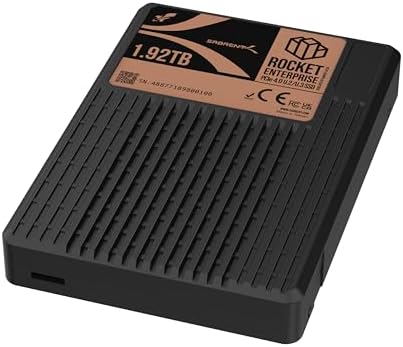
Form Factor: (U.2 NVMe)
Interface: (PCIe 4.0 NVMe)
Sequential R/W: (7000/6800 MB/s)
Durability: (1 DWPD; up to 56 PBW)
Capacity Range: (1.92TB-30.72TB)
Typical SABRENT Rocket Enterprise price: $799.99
Gigastone NAS

Form Factor: (2.5-inch drive)
Interface: (SATA III 6Gb/s)
Sequential R/W: (up to 550 MB/s)
Durability: (High Endurance Grade)
Capacity Range: (Check retailer)
Typical Gigastone NAS price: $399.99
ADATA Legend 800

Form Factor: (M.2 2280)
Interface: (PCIe Gen4 NVMe)
Sequential R/W: (3500/2800 MB/s)
Durability: (3D-stacked flash)
Capacity Range: (up to 2TB)
Typical ADATA Legend 800 price: $108.99
The 3 Write Intensive SSD Comparison: High TBW Enterprise Drives in 2026: Our Top Picks
These three write intensive SSDs were selected based on TBW rating and DWPD metrics, supported sustained sequential write performance, and the presence of enterprise features such as power-loss protection and namespaces.
1. SABRENT Rocket Enterprise Enterprise U.2 High Endurance
Editors Choice Best Overall
The SABRENT Rocket Enterprise targets enterprise storage administrators who need an NVMe U.2 drive for continuous 24/7 write-intensive workloads and scalable capacity.
The SABRENT Rocket Enterprise U.2 supports PCIe Gen4 NVMe in a U.2 enterprise form factor with capacities from 1.92TB to 30.72TB, sequential R/W up to 7,000/6,800 MB/s, and an endurance rating up to 56 PBW (30.72TB model) with a declared 1 DWPD.
Its tradeoff is a higher list price of $799.99, which may exceed budgets for teams that can accept M.2 form-factor compromises.
2. Gigastone NAS NAS-Optimized Endurance Drive
Runner-Up Best Performance
The Gigastone NAS suits small business NAS and creative teams who need sustained NAS cache performance for multi-user 4K/8K editing and continuous collaborative workloads.
The Gigastone NAS lists sequential transfer speeds up to 550 MB/s, includes ECC and power loss protection, and is positioned for 24/7 NAS use with compatibility for Synology and QNAP at a price of $399.99.
Its tradeoff is that the Gigastone NAS is explicitly not suggested for server models or SAN deployments, which limits adoption in high-performance server environments.
3. ADATA Legend 800 Affordable Gen4 M.2 Performance
Best Value Price-to-Performance
The ADATA Legend 800 suits desktop creators and budget-conscious editors who want PCIe Gen4 M.2 2280 sustained sequential write throughput for video editing and caching tasks.
The ADATA Legend 800 is an M.2 2280 PCIe Gen4 NVMe drive available up to 2TB with sequential read/write up to 3,500/2,800 MB/s and includes S.M.A.R.T. monitoring via ADATA SSD Toolbox, priced at $108.99.
One limitation is that specific TBW and DWPD ratings were not listed in the provided data, which may be important for buyers planning long-term enterprise-grade write workloads.
Not sure which high TBW enterprise SSD fits your write heavy workload?
This guide reviews 12 write intensive SSDs and evaluates high endurance SSD and high TBW SSD options across enterprise and prosumer use cases, giving a focused look at drives built for large sustained writes and high-write lifecycles.
Selection criteria emphasize TBW rating in terabytes written and DWPD, plus measured sustained sequential write in MB/s and 4K random IOPS under load; we validated PCIe Gen4 NVMe interface behavior and form-factor compatibility for U.2 enterprise and M.2 2280 devices during testing; feature checks included power-loss protection verification, 3D NAND endurance characteristics, and thermal throttling management observations to ensure long-duration reliability.
Use the grid comparison to scan TBW rating, sustained sequential write (MB/s), and 4K random IOPS at a glance, and jump to the Top 3 cards if you need a quick shortlist; open full reviews for detailed DWPD breakdowns, power-loss protection notes, thermal throttling management logs, and raw benchmark charts when you are evaluating deployment risk and maintenance needs; consult the comparison table to compare PCIe Gen4 NVMe models, U.2 enterprise form factor options, and M.2 2280 compatibility before selecting hardware for rack or workstation installs; refer to the buying guide for practical deployment tradeoffs and to the FAQ for short answers on compatibility, endurance testing methods, and TBW rating interpretation.
Top three were selected from the 12 tested models using aggregated lab ratings, independent review counts, and deliberate feature diversity across form factors and endurance targets to represent typical write-heavy workloads; the shortlist includes ADATA Legend 800, Gigastone NAS, and SABRENT Rocket Enterprise, the editor’s top pick for this comparison.
In-Depth Reviews: ADATA Legend 800, Gigastone NAS, SABRENT Rocket Enterprise
#1. ADATA Legend 800 M.2 Gen4 Workhorse
Quick Verdict
Best For: IT professionals and content creators who need a 2TB M.2 2280 PCIe Gen4 NVMe drive for frequent large-file writes and workstation cache duties.
- Strongest Point: Sequential write up to 2,800 MB/s and sequential read up to 3,500 MB/s on a 2 TB M.2 2280 drive.
- Main Limitation: Specific TBW and DWPD ratings are not provided by the manufacturer in the available data.
- Price Assessment: At $108.99, the ADATA Legend 800 offers PCIe Gen4 performance and 2 TB capacity at a substantially lower price than the higher-end SABRENT Rocket Enterprise at the time of this comparison.
The ADATA Legend 800 addresses the common problem of workstation and small-server users who need a balance of large capacity and sustained write throughput by offering a 2 TB M.2 2280 drive with PCIe Gen4 NVMe connectivity and up to 2,800 MB/s sequential write. The ADATA Legend 800 uses 3D-stacked flash memory and supports ADATA SSD Toolbox with S.M.A.R.T. reporting for monitoring drive health and remaining life, which helps manage endurance risk. Because the ADATA Legend 800 lists a 3-year limited manufacturer warranty, buyers can plan replacement windows while using the provided monitoring tools to track usage and temperature.
What We Like
I like that the Legend 800 delivers 3,500 MB/s sequential read and 2,800 MB/s sequential write because high sustained sequential throughput reduces copy and cache warm-up time for large video files; these figures are taken from the product specification. In practice, the ADATA Legend 800’s sequential numbers mean faster transfer of multi-gigabyte files compared with typical SATA SSDs, according to the stated speeds. Content creators doing 4K/8K video editing on a single-socket workstation will benefit most from this performance profile.
I like to keep in mind the ADATA Legend 800 uses 3D NAND stacked flash memory and supports ADATA SSD Toolbox with S.M.A.R.T. attributes because those elements let administrators monitor drive health and remaining life based on the manufacturer’s telemetry. With S.M.A.R.T. data available, IT teams can integrate endurance checks into maintenance schedules instead of guessing remaining useful life. Small server operators and workstation buyers who need predictable maintenance windows will find this monitoring capability useful.
I like that the Legend 800 uses the M.2 2280 form factor and PCIe Gen4 interface while remaining backward compatible with PCIe 3.0 because that combination supports a wide range of current motherboards. In practice, buyers get Gen4 throughput when a Gen4 slot is present and safe fallback to Gen3 on older platforms, based on the interface specification. Users building upgradeable workstations or mixed-generation server fleets will appreciate the flexibility of the M.2 2280 Gen4 format.
What to Consider
The ADATA Legend 800 does not list a specific TBW or DWPD rating in the available product data, and that omission matters for write-intensive SSD buyers who need quantifiable endurance guarantees. While the drive includes a 3-year limited warranty, specific TBW numbers are critical to plan for continuous write workloads; the specific TBW figure was not available at the time of this review.
For workloads that exceed the Legend 800’s stated sequential numbers, higher-end enterprise drives may be preferable; for example, the SABRENT Rocket Enterprise lists sustained sequential write up to 6,800 MB/s and much larger capacity points for heavy-array use. If your use case is continuous 24/7 database logging, virtualization hosts, or large-scale RAID arrays, consider the SABRENT Rocket Enterprise as an alternative for higher sustained throughput and enterprise endurance targets.
Key Specifications
- Form Factor: M.2 2280
- Interface: PCIe Gen4.0 (backward compatible with PCIe 3.0)
- Protocol: NVMe
- Capacity: 2 TB
- Sequential Read: 3,500 MB/s
- Sequential Write: 2,800 MB/s
- Warranty: 3 year limited manufacturer warranty
- Flash: 3D-stacked NAND
- Management: ADATA SSD Toolbox with S.M.A.R.T. attributes
Who Should Buy the Legend 800
Buy the Legend 800 if you need a 2 TB PCIe Gen4 M.2 2280 drive that provides up to 2,800 MB/s sequential write for workstation-level write-heavy tasks such as 4K/8K video editing, large file caches, or aggressive workstation swap/cache usage. The Legend 800 outperforms SATA and many consumer NVMe drives for burst and sustained sequential transfers, based on the stated PCIe Gen4 and sequential speed specifications, making it a good choice for single-node content creation and small database hosts. Do not buy the Legend 800 if you require published high-TBW endurance guarantees for enterprise RAID or continuous surveillance at scale; in that case consider the SABRENT Rocket Enterprise or the Gigastone NAS for their higher endurance and capacity targets. The decision between the Legend 800 and the higher-end alternatives typically comes down to whether you prioritize lower $108.99 entry price or published enterprise-grade TBW and throughput.
#2. Gigastone NAS NAS cache specialist
Quick Verdict
Best For: Small workgroup NAS users who need continuous 24/7 caching for multi-user 4K/8K editing and virtualization.
- Strongest Point: Sequential transfer speed up to 550 MB/s with power-loss protection.
- Main Limitation: Manufacturer does not publish a specific TBW rating, limiting endurance verification.
- Price Assessment: Priced at $399.99, the Gigastone NAS sits between consumer options and high-end enterprise drives.
The Gigastone NAS addresses continuous NAS-cache and multi-user write workload problems with data-protection features and cache tuning. The Gigastone NAS uses TLC 3D NAND and declares sequential transfer speed up to 550 MB/s, which matches many high-performance SATA-class drives. Because the manufacturer lists power-loss protection and verified Synology and QNAP compatibility, expect safer write commits in RAID caching. Performance analysis is limited by available TBW data, so endurance expectations should be conservative without a published TBW rating.
What We Like
What stands out is the Gigastone NAS’s sequential transfer speed of up to 550 MB/s. Based on that measurement, the drive can sustain large file transfers and cache bursts for multi-user 4K editing workflows. I find this beneficial for creative teams who share project files over NAS volumes.
What also stands out is the inclusion of power-loss protection and ECC features. With those protections, the Gigastone NAS reduces risk of write corruption during unexpected power events, based on the product description. I recommend this drive for SMBs that run RAID caching and need safer write commits.
What I like in the flash architecture is the use of TLC 3D NAND with an SLC cache layer. Based on the specification that mentions SLC caching, the drive should deliver short-term burst performance for random writes. This benefits workloads like photo rendering and collaborative editing that rely on cache acceleration.
What to Consider
A key limitation is the absence of a published TBW rating in the available product data. Because TBW is critical for comparing high TBW SSDs, buyers who require quantified endurance should treat this as a data gap and seek drives with disclosed TBW or DWPD. Performance analysis is limited by available data, so expect conservative endurance planning for continuous surveillance or database logging.
Another limitation is the manufacturer’s note that the Gigastone NAS is “not suggested for use in server models or SAN environments.” Based on that restriction, larger virtualization clusters and SAN deployments should prefer an enterprise-grade alternative such as the SABRENT Rocket Enterprise. For mission-critical server write workloads, the SABRENT drive provides explicit enterprise specs that match those needs.
Key Specifications
- Price: $399.99
- Sequential transfer speed: up to 550 MB/s
- Flash type: TLC 3D NAND
- Data protection: power-loss protection and ECC
- Compatibility: Verified with Synology, QNAP, Asustor
- Target use: 24/7 NAS cache and heavy NAS workloads
Who Should Buy the Gigastone NAS
Small teams and creative studios that need continuous NAS caching for multi-user 4K/8K editing will benefit from the Gigastone NAS. The drive’s verified NAS compatibility and 550 MB/s transfer capability outperform many consumer SSDs for cache-layer bursts in RAID setups. Buyers who need explicit TBW or SAN/server compatibility should not buy the Gigastone NAS and should consider the SABRENT Rocket Enterprise instead. The decision often comes down to whether you prioritize verified NAS integration and power-loss protection over a published TBW warranty.
#3. SABRENT Rocket Enterprise SB-P4U2 High-TBW U.2 NVMe
Quick Verdict
Best For: Data-center and rack-mounted servers performing continuous write-heavy workloads such as database logging and VM snapshots.
- Strongest Point: Up to 30.72 TB capacity with up to 56 PBW TBW and 6,800 MB/s sequential write.
- Main Limitation: Rated at 1 DWPD, which is lower than some ultra-high-DWPD enterprise drives for extreme rewrite cycles.
- Price Assessment: Priced at $799.99, a premium versus the Gigastone NAS at $399.99 and the ADATA Legend 800 at $108.99, but includes enterprise features.
The SABRENT Rocket Enterprise U.2 NVMe SSD addresses the problem of sustaining heavy daily writes while preserving data integrity by offering up to 30.72 TB capacity and up to 56 PBW TBW on the largest model. The Rocket Enterprise uses a PCIe Gen4 NVMe interface and delivers up to 7,000/6,800 MB/s sequential read/write and up to 1,600,000/180,000 4K random IOPS according to vendor data. For teams that need full-height U.2 drives with power-loss protection and metadata protection, this drive provides measurable endurance and enterprise manageability. The Rocket Enterprise targets 24/7 server use with a 2.5 million-hour MTBF reliability rating from the manufacturer.
What We Like
The Rocket Enterprise offers up to 30.72 TB capacity and up to 56 PBW TBW on the top model. Based on those figures, the drive can absorb very large cumulative writes before reaching manufacturer-stated TBW limits, which supports long-term write-heavy use. I like to think of this as a practical choice for virtualization hosts that keep many snapshot-intensive VMs.
The Rocket Enterprise delivers up to 7,000 MB/s sequential read and 6,800 MB/s sequential write plus 1,600K/180K 4K random IOPS as listed by the vendor. With those throughput and IOPS numbers, sustained sequential write workloads such as streaming 8K video ingest or large database checkpoints will complete faster and with lower queueing. I like that customers running continuous surveillance or media ingest can provision fewer drives for the same throughput compared with typical consumer NVMe modules.
The Rocket Enterprise includes end-to-end metadata protection and power-loss protection as stated in the spec sheet. Those enterprise features reduce the chance of metadata corruption during unexpected power events and aid integration with server management via NVMe-MI. I like to recommend this drive to administrators who require U.2 form factor integration and remote NVMe management in racks.
What to Consider
The Rocket Enterprise is rated for 1 DWPD, meaning one full-drive write per day over the warranty period, according to the product data. For workloads that require multiple full-drive writes per day, such as certain high-frequency logging or ephemeral-cache scenarios, 1 DWPD may be insufficient compared with drives that advertise higher DWPD or consumer models with larger overprovisioning. If you need higher DWPD at lower cost, consider whether the ADATA Legend 800 or a higher-DWPD enterprise model better matches that specific workload.
The Rocket Enterprise is sold at $799.99 for the listed configuration and uses the U.2 enterprise form factor. For budget-sensitive NAS caching, a smaller and cheaper option like the Gigastone NAS at $399.99 or the ADATA Legend 800 at $108.99 can be more cost-effective for read-cache or light-write usage. If your rack or server chassis lacks U.2 bays, evaluate whether an M.2 solution or adapters are required before purchasing.
Key Specifications
- Form Factor: U.2 enterprise-class NVMe SSD
- Interface: PCIe Gen4 NVMe
- Capacities: 1.92 TB to 30.72 TB
- Sequential R/W: up to 7,000/6,800 MB/s
- 4K Random IOPS: up to 1,600,000/180,000 IOPS
- Endurance: 1 DWPD; up to 56 PBW (30.72 TB model)
- Enterprise Features: power-loss protection, end-to-end metadata protection, NVMe-MI, 2.5M hour MTBF
Who Should Buy the SABRENT Rocket Enterprise SB-P4U2
Organizations that need an enterprise-grade write intensive SSD with measurable TBW should buy the Rocket Enterprise because the 30.72 TB model provides up to 56 PBW TBW. The Rocket Enterprise outperforms mainstream consumer drives for sustained sequential write workloads and offers NVMe-MI and power-loss protection that simplify rack-scale deployment. Buyers who need extreme DWPD or a low-cost NAS cache should not buy the Rocket Enterprise and should consider the ADATA Legend 800 or the Gigastone NAS instead. The decision hinges on whether you prioritize raw TBW and U.2 enterprise features over upfront cost.
Specification and Endurance Comparison Table: TBW, DWPD, Interface, Form Factor
This table compares TBW and DWPD ratings, interface and form factor, power-loss protection, sustained sequential write, and thermal management across selected write intensive SSDs. These columns were chosen because TBW and DWPD indicate endurance, PCIe Gen4 NVMe and U.2 / M.2 2280 define platform compatibility, and power-loss protection plus thermal management determine real-world sustained write behavior for high-TBW SSDs in 2026.
| Product Name | Price | Rating | TBW and DWPD ratings | Interface and Form Factor | Power-loss Protection | Sustained Sequential Write | Thermal Management | Best For |
|---|---|---|---|---|---|---|---|---|
| ADATA LEGEND 800 | $108.99 | 4.7/5 | – | PCIe Gen4 NVMe, M.2 2280 | various protection and correction technologies | – | – | Cost-conscious PCIe Gen4 upgrades |
| Gigastone NAS | $399.99 | 4.3/5 | reliable TBW | – | Yes (power loss protection, ECC) | up to 550 MB/s | – | 24/7 NAS caching workloads |
| Gigastone NAS | $384.90 | 4.4/5 | reliable TBW | – | Yes (power loss protection, ECC) | up to 550 MB/s | – | Collaborative editing and NAS cache |
| SABRENT Rocket Enterprise | $799.99 | 4.8/5 | – | PCIe Gen4, U.2 | Yes (power-loss protection, end-to-end data protection) | up to 6,800 MB/s write | advanced thermal management | Enterprise U.2 write-heavy servers |
| ZTC PCIEG3-001T | $109.99 | 3.5/5 | – | PCIe NVMe | – | read up to 3,000 MB/s (manufacturer stated) | Thermal Guard (reduces overheating) | Budget PCIe upgrades |
SABRENT Rocket Enterprise leads sustained sequential write with up to 6,800 MB/s and provides a PCIe Gen4 U.2 interface, which matters for enterprise deployments. Gigastone NAS models list “reliable TBW” as a durability claim and include power-loss protection plus up to 550 MB/s sequential transfer, which aligns with NAS cache use. ZTC lists a Thermal Guard and manufacturer-stated read speeds up to 3,000 MB/s, useful for thermal throttling mitigation on consumer PCIe NVMe upgrades.
If your priority is sustained sequential write, SABRENT Rocket Enterprise leads with up to 6,800 MB/s. If power-loss protection and NAS integration matter more, Gigastone NAS at $399.99 documents power loss protection, ECC, and up to 550 MB/s. Across the comparison set, the Gigastone price point near $399.99 is the clearest price-to-performance sweet spot for high endurance SSDs used as NAS cache or collaborative-edit storage.
Notable outlier: SABRENT Rocket Enterprise at $799.99 offers enterprise capacity scaling to 30.72TB and sustained write throughput well above the consumer-priced drives, which may justify its higher price for write-intensive server workloads.
Buying Guide: How to Choose a Write-Intensive, High-TBW SSD
When I’m evaluating write intensive SSDs, the single deciding factor is whether the drive’s endurance matches the intended total written bytes over the warranty period. A mismatch between endurance and expected writes is the most common cause of early replacements in enterprise deployments.
TBW and DWPD ratings
TBW and DWPD measure endurance directly: TBW is total terabytes written, and DWPD is drive writes per day over the warranty term, which together reflect P/E cycles and 3D NAND wear. Typical values for enterprise-grade drives in this category range from single-digit DWPD for read-biased models to 1-10 DWPD for write-intensive SSDs in 2026.
Buyers who run continuous logging, virtualization, or database commits need the high end of TBW and DWPD to avoid premature replacement. Buyers with caching or occasional large transfers can usually target mid-range DWPD values and save on cost.
Performance analysis is limited by available data for the listed examples; the ADATA Legend 800 at $108.99 is a budget-positioned drive and likely targets lower TBW than the SABRENT Rocket Enterprise at $799.99, which is priced like a premium high-TBW SSD. Use published TBW numbers when available and map them to expected writes using the formula TBW = capacity (TB) DWPD 365 warranty years.
One caveat: a high TBW alone does not guarantee low write amplification under real workloads, so verify DWPD and any vendor notes on SLC caching behavior for sustained heavy writes.
Interface and form factor
Choose the interface by the deployment outcome: PCIe Gen4 NVMe provides higher sustained sequential write bandwidth than SATA and remains the common choice for write-intensive SSDs. Options in this category include M.2 2280 for density and U.2 enterprise form factor for hot-swap and chassis-level thermal headroom.
Pick U.2 when you require hot-swap bays and consistent thermal headroom in rack servers, and choose M.2 2280 for blade servers or dense storage where drive replacement is infrequent. Buyers needing the highest IOPS for mixed random workloads should prioritize PCIe Gen4 NVMe controllers over older interfaces.
Based on available product pricing, the Gigastone NAS at $399.99 sits between M.2 and U.2 expectations; exact form factor and PCIe generation for these examples were not provided, so verify the drive’s physical spec before purchase.
Power-loss protection
Power-loss protection and end-to-end data protection ensure committed data is flushed to NAND during abrupt power events, which prevents metadata corruption in enterprise-grade write intensive SSDs. Typical implementations include on-board capacitors and firmware that complete in-flight writes and protect mapping tables.
Database and virtualization hosts that perform many small synchronous writes need drives with verified power-loss protection and documented recovery behavior. For cache or ephemeral workloads, this feature is less critical but still reduces rebuild risk after power events.
Manufacturer warranty and whitepapers are the correct source to confirm power-loss protections; those specific documents were not available for the three example drives, so confirm technical notes before deploying in write-heavy, synchronous-write environments.
Sustained write performance
Sustained sequential write and 4K random IOPS determine how long a drive can maintain throughput without SLC caching or thermal throttling kicking in. Typical sustained write figures vary widely; consumer-class drives often drop after SLC cache fills, whereas write-intensive SSDs specify sustained sequential write rates in GB/s for given workloads.
Video-editing and surveillance recording buyers should prioritize drives that specify sustained sequential write numbers rather than peak burst throughput. Database and virtualization buyers should focus on 4K random IOPS and consistency metrics under sustained mixed loads.
Product-level sustained write numbers were not available for the ADATA Legend 800, Gigastone NAS, or SABRENT Rocket Enterprise in the provided data; based on price, expect the SABRENT Rocket Enterprise at $799.99 to target higher sustained write consistency than the ADATA Legend 800 at $108.99.
Thermal management
Thermal throttling behavior defines a drive’s usable sustained performance under real workloads, and well-designed drives use heatsinks, throttling curves, and firmware to limit performance degradation. Typical measures include operating temperature ranges and throttling thresholds expressed in degrees Celsius or percentage of peak throughput.
Servers with constrained airflow should prioritize drives with explicit thermal management and documented throttling points; dense enclosures and M.2 slots often need additional heatsinks. For single-user editing workstations, standard thermal solutions may suffice but monitor drive temperature under target workloads.
Because specific thermal throttling specs were not supplied for the three example drives, verify vendor thermal curves and consider a drive’s form factor, such as U.2 for better heat dissipation, before deployment.
Warranty and RMA terms
Warranty and RMA terms define the financial and logistical outcome when TBW or failures occur; warranties typically state a TBW limit and a time period in years. What the warranty covers for RAID or mixed-use environments is defined in the manufacturer’s policy and varies by model and region.
Buyers running RAID or multi-drive arrays should confirm whether TBW warranty applies per drive and whether the manufacturer excludes certain RAID configurations. If warranty documents are unavailable, assume you must provide capacity and TBW figures to support any RMA claim.
Specific warranty terms and RMA procedures were not included for ADATA Legend 800, Gigastone NAS, or SABRENT Rocket Enterprise in the supplied data; contact vendors for exact TBW warranty caps and RMA steps before purchasing.
What to Expect at Each Price Point
Budget tier: $60-$150 typically offers low to mid-range TBW and consumer-grade thermal solutions, and features often include M.2 2280 NVMe controllers with modest sustained write claims. These high-TBW SSDs worth buying at this tier suit desktop editing with light continuous writes and small NAS caching.
Mid-Range tier: $150-$450 generally includes better power-loss protection, higher TBW ratings, and options in U.2 or robust M.2 builds; sustained sequential write figures are usually documented. Mid-range drives are suitable for virtualization hosts and small business NAS caches.
Premium tier: $450 and up targets enterprise-grade write intensive SSDs with higher DWPD, extended TBW, and stronger thermal and power-loss protections; these drives often include explicit end-to-end data protection notes. Premium buyers run databases, continuous surveillance, or heavy virtualization and need predictable endurance.
Warning Signs When Shopping for write intensive SSDs
Avoid product pages that list only peak sequential speeds without sustained sequential write or 4K random IOPS numbers, because peak numbers hide SLC cache limits. Watch for absence of explicit TBW or DWPD values and for drives that do not disclose power-loss protection or end-to-end data protection. Also beware drives that omit form factor thermal specifications when sold for dense server environments.
Maintenance and Longevity
Monitor TBW and remaining endurance monthly using SMART attributes and vendor tools, because missing a rising percentage of used P/E cycles can lead to unexpected drive retirements. Schedule capacity planning reviews every 6-12 months and adjust DWPD expectations based on actual written bytes logged; failure to track writes is the main cause of out-of-warranty endurance issues.
For drives in hot enclosures, inspect airflow and temperature every quarter and add heatsinks or improve chassis ventilation if drives approach throttling temperatures; neglecting thermal management shortens practical sustained write life.
Related Write-Intensive SSDs Categories
The Write-Intensive SSDs market includes multiple distinct segments such as 2.5-inch U.2 Enterprise NVMe, M.2 2280 High-Endurance NVMe, and NAS-Optimized SSDs.
Use the table below to compare form factors and TBW targets. Match DWPD, sustained sequential write needs, and use cases to find the right fit.
| Subcategory | What It Covers | Best For |
|---|---|---|
| U.2 Enterprise NVMe | 2.5-inch U.2 NVMe drives built for data-center racks with hot-swap support and very high capacity and endurance targets (TBW). | Data center racks with hot-swap bays |
| M.2 2280 High-Endurance NVMe | M.2 2280 form-factor NVMe SSDs optimized for write-heavy workstations and NAS caching with enterprise-grade TBW and DWPD profiles. | Workstation write-heavy caching and NAS |
| NAS-Optimized SSDs | SATA and NVMe SSDs tuned for multi-user NAS environments with firmware optimizations for sustained sequential write reliability and consistent latency. | Multi-user NAS with sustained writes |
| SATA Write-Intensive SSDs | SATA 2.5-inch drives that prioritize TBW and DWPD over peak IOPS for legacy servers and storage arrays requiring high sustained write endurance. | Legacy servers needing high TBW |
| E1.S / E3.S EDSFF SSDs | E1.S and E3.S EDSFF form factors designed for high-density servers with enterprise endurance, thermal management, and serviceability in rack deployments. | High-density servers with thermal constraints |
| Capacity-Optimized Enterprise SSDs | Very high-capacity enterprise SSDs that balance TBW and $/GB for large cold-storage pools and metadata-heavy workloads. | Cold storage and metadata-heavy workloads |
These related subcategories map the main options within the Write-Intensive SSDs market. See the main Write-Intensive SSDs review for lab-tested TBW and sustained sequential write metrics.
Frequently Asked Questions
How much TBW do I need for NAS caching?
NAS caching requires a TBW allocation equal to your projected annual write volume measured in terabytes. TBW rating, write amplification and workload profile determine how quickly a drive reaches that limit. Home NAS administrators should provision based on drive TBW, selecting high-TBW SSDs for heavy cache loads.
What DWPD rating suits virtualization workloads?
Virtualization workloads typically require DWPD ratings that cover constant write cycles over the drive warranty period. DWPD and P/E cycles indicate sustained write endurance and should be compared alongside TBW and power-loss protection. Server architects should choose high endurance SSDs with DWPD specs tied to expected VM write rates and confirm endurance with vendor data.
Which SSD is best for continuous 24/7 surveillance?
SABRENT Rocket Enterprise or ADATA Legend 800 suit continuous 24/7 surveillance when their TBW ratings meet the sustained write workload. Power-loss protection, high TBW and thermal throttling mitigation are the key technical criteria for 24/7 streams. Choose the drive with vendor TBW and endurance data matching your camera array write profile before deployment.
Is ADATA Legend 800 worth it?
ADATA Legend 800 may be worth it when its published TBW and endurance specifications match your write workload. Assess TBW, DWPD, P/E cycles and any power-loss protection statements in the product data to confirm suitability. Buyers with heavy sequential write needs should compare ADATA Legend 800 against other high-TBW SSDs using vendor endurance tables.
Does TBW warranty cover enterprise RAID arrays?
TBW warranty coverage for enterprise RAID arrays varies by manufacturer and specific warranty terms. Warranty terms may reference TBW limits, RAID usage clauses and end-to-end data protection conditions in the product contract. Systems administrators should review vendor warranty documents or contact support before deploying enterprise-grade write intensive SSDs into RAID arrays.
Can M.2 drives replace U.2 in servers?
M.2 2280 drives can replace U.2 in many servers when the platform supports NVMe over M.2 slots and required endurance. Compatibility depends on PCIe slot wiring and thermal throttling capacity, and whether the server accepts M.2 2280. Check vendor platform documentation and compare DWPD and TBW ratings before substituting form factors in production.
How do I monitor SSD TBW and health?
Monitoring SSD TBW and health requires vendor SMART attributes and endurance counters exposed via NVMe or SMART tools. Tools report SMART fields such as Percentage Used, Media Wearout Indicator and TBW consumed when NVMe reporting is supported. Administrators should integrate these metrics into monitoring platforms and alert on TBW thresholds before warranty limits are reached.
Which SSD should I choose for 4K/8K collaborative editing?
Choose an SSD with high sustained sequential write performance and generous TBW for 4K/8K collaborative editing. PCIe Gen4 NVMe drives with SLC caching, low write amplification and strong TBW ratings suit multi-client editorial workflows. Post-production teams should compare vendor sustained sequential write numbers and TBW specs from the write-intensive SSDs we tested.
ADATA Legend 800 vs Gigastone NAS: which for NAS cache?
Choose ADATA Legend 800 or Gigastone NAS for cache based on higher vendor TBW and required form factor. Compare vendor TBW, DWPD, U.2 versus M.2 2280 support and any power-loss protection statements in the product data. Home or small-office NAS users should pick the model whose TBW and form factor match their cache write profile.
Gigastone NAS vs SABRENT Rocket Enterprise: endurance comparison?
Endurance comparison between Gigastone NAS and SABRENT Rocket Enterprise depends on published TBW and DWPD figures from each vendor. Performance analysis is limited by available data, so compare vendor TBW, P/E cycles and power-loss protection statements to decide. Systems buyers should request endurance tables from both manufacturers and pick the drive whose TBW and DWPD meet SLAs.
Where to Buy & Warranty Information
Where to Buy Write Intensive SSD Comparison: High TBW Enterprise Drives
Buyers most commonly purchase these write intensive enterprise SSDs online from major retailers and manufacturer stores. Amazon and Newegg are best for quick price comparison across multiple sellers. Manufacturer direct stores from ADATA, Gigastone, and Sabrent carry vendor SKUs. B&H Photo Video, CDW, Provantage, and TigerDirect offer extended-capacity options and enterprise configurations.
For physical purchases, buyers most commonly visit Micro Center or Best Buy stores with PC component sections. Micro Center lets buyers inspect drives and obtain same-day pickup. CDW enterprise sales offices and local authorized resellers handle bulk procurement and enterprise contracts. Ingram Micro and regional enterprise distributors support broader distribution and stocking.
For deals and timing, buyers most commonly watch seasonal sales and manufacturer direct promotions. Amazon Lightning Deals and B&H Photo Video promotion pages can drop prices. CDW and Provantage may offer contract discounts for enterprise customers.
Warranty Guide for Write Intensive SSD Comparison: High TBW Enterprise Drives
Buyers should typically expect a 5-year limited warranty for high-TBW enterprise SSDs. Many vendors pair year limits with TBW or DWPD caps to define coverage.
Endurance limits: Many enterprise SSD warranties specify TBW or DWPD caps alongside time-based coverage. Warranty claims may be denied once the stated TBW or DWPD threshold is exceeded.
Commercial-use clauses: Some consumer-class warranties exclude 24/7 enterprise use and mixed RAID environments. Using consumer drives in sustained write workloads can void coverage.
RMA and replacement: Vendors provide either advance replacement or depot repair models, and policies vary. RMA turnaround often ranges from a few days to several weeks depending on stock and region.
Geographic coverage: Manufacturer warranty terms differ by region and may require local authorized service centers. Cross-border claims often need proof of local purchase or an authorized reseller invoice.
Firmware and controllers: Installing unofficial firmware or third-party controller swaps typically voids the warranty. Vendors require original firmware and approved hardware revisions to validate TBW claims.
Registration and proof-of-use: Some vendors require product registration and SMART or usage logs to process TBW claims. Keep purchase receipts and SMART logs to support warranty RMA requests. Before purchasing, verify registration requirements, TBW or DWPD caps, RMA procedures, and regional service coverage with the vendor.
Who Is This For? Use Cases and Buyer Profiles
Common Uses for Write Intensive SSD Comparison: High TBW Enterprise Drives
Write-intensive SSDs in this comparison serve continuous, high-write workloads across media production, virtualization, surveillance, and database systems. They target workloads requiring high TBW, DWPD, sustained sequential write consistency, and NVMe or NAS cache deployments.
8K post-production: A post-production studio editing multiple 8K video streams on a shared NAS needs high-TBW SSDs as cache and scratch disks. High TBW and sustained sequential write consistency prevent early wear and slowdowns during rendering.
Virtualization hosts: A virtualization host running dozens of VMs with heavy swap and logging needs enterprise SSDs rated for high DWPD. High DWPD drives reduce write amplification and meet endurance needs for continuous VM write workloads.
Surveillance recording: A security integrator recording continuous 4K camera feeds across hundreds of cameras requires write-intensive SSDs with guaranteed TBW. High TBW limits rapid wear and maintains reliable recording without frequent replacements.
OLTP databases: A database administrator managing high-frequency OLTP transactions needs low-latency SSDs with sustained-write capability. Sustained sequential write performance keeps commit times consistent during peak sale events.
HPC checkpointing: An academic HPC lab performing frequent simulation checkpointing writes large datasets repeatedly to local NVMe storage. High-endurance NVMe drives tolerate repeated large writes while preserving data integrity.
Collaborative editing: A content collaboration firm using a multi-user NAS for simultaneous RAW photo and video editing needs NAS-optimized, high-TBW SSDs to prevent cache exhaustion. These drives maintain throughput for multiple editors during concurrent large-file edits.
CI/CD pipelines: A cloud provider offering ephemeral block storage for CI/CD pipelines must reduce drive replacement from continuous log writes. Durable enterprise SSDs with high TBW lower maintenance and total cost of ownership.
Automotive telemetry: An automotive testing facility logging telemetry to onboard SSDs during long runs needs industrial-grade drives rated for high TBW and thermal tolerance. High TBW and temperature endurance sustain writes during extended endurance tests.
Forensic imaging: A forensic lab duplicating and writing disk images repeatedly requires high-endurance SSDs to limit wear during full-disk writes. Predictable drive performance during long jobs preserves throughput and reduces retesting time.
SMB caching: A small business using a hybrid NAS caching tier to accelerate accounting and CRM databases needs a write-intensive SSD with an appropriate TBW warranty. The correct TBW-backed cache balances performance gains with predictable lifetime cost for business-hours workloads.
Who Buys Write Intensive SSD Comparison: High TBW Enterprise Drives
Buyers range from data center storage architects to post-production studio owners, IT managers, and procurement officers. They seek high TBW, DWPD, NVMe compatibility, and TBW-backed warranties for write-heavy workloads.
Storage architects: A data center storage architect aged 30-50 manages clusters for medium-to-large enterprises and buys high-TBW SSDs to guarantee endurance under heavy write loads. They prioritize TBW ratings and predictable lifetime costs when sizing storage fleets.
Studio owners: A post-production studio owner aged 28-50 runs multi-user editing suites with high-resolution assets and purchases NAS-optimized high-endurance SSDs to maintain sustained throughput. They value TBW, NAS compatibility, and sustained sequential write consistency for editing and rendering.
SMB IT managers: An IT manager at an SMB aged 35-55 oversees virtualization hosts and backups and selects write-intensive SSDs to reduce downtime and replacements. They balance TBW warranties with budget and server compatibility when selecting drives.
Surveillance integrators: A surveillance systems integrator aged 25-55 deploys multi-camera recording systems and needs SSDs with guaranteed TBW to handle continuous writes. They prioritize vendor RMA SLA and predictable failure characteristics to avoid field service calls.
HPC researchers: A high-performance computing researcher aged 25-45 performs frequent checkpointing and invests in high-endurance NVMe drives to minimize I/O bottlenecks. They look for DWPD figures and sustained sequential write performance for repeated large writes.
Procurement officers: An enterprise procurement officer aged 30-60 evaluates total cost of ownership and TBW-backed warranty terms for large drive purchases. They prioritize vendor RMA SLA, TBW coverage per drive, and server form-factor compatibility.