
The AMD Radeon R9 280 specifications include 1,792 stream processors, 933 MHz core clock, and 3GB GDDR5 memory. Originally priced at $279 MSRP in 2013, this legacy graphics card now sells for $50-80 used.
This comprehensive guide examines the R9 280’s performance capabilities, pricing history, and how it compares to modern graphics cards in today’s gaming landscape.
We analyze real-world gaming benchmarks, power consumption metrics, and compatibility considerations for budget-conscious gamers considering older hardware.
At ExtremeSpec, we provide honest assessments of legacy graphics cards to help users understand their current viability and limitations in 2025.
AMD Radeon R9 280 Specifications and Architecture Overview
The AMD Radeon R9 280 graphics card features the Tahiti Pro architecture with 1,792 stream processors. This legacy GPU operates at a base clock of 933 MHz with boost clocks reaching 1000 MHz.
Memory specifications include 3GB of GDDR5 running at 5,000 MHz effective speed across a 384-bit memory bus. The card supports DirectX 11.2 and OpenGL 4.3 standards, which were cutting-edge in 2013.
Manufacturing process utilizes 28nm technology, resulting in a thermal design power (TDP) of 250 watts. This graphics card delivers solid performance for its era, though it’s now considered entry-level by modern standards.
Gaming Performance Capabilities in 2025
The R9 280’s gaming performance remains acceptable for 1080p gaming at medium settings in older titles. Modern AAA games from 2020 onward typically require low settings to maintain playable frame rates.
Expect 30-45 FPS in games like GTA V, Witcher 3, and Battlefield 4 at 1080p medium settings. Newer titles like Cyberpunk 2077 or modern Call of Duty games struggle to reach 30 FPS even at low settings.
The 3GB VRAM limitation becomes a significant bottleneck in modern games that require 4-8GB video memory for optimal performance and texture quality.
R9 280 Pricing and Market Availability in 2025
Current used market pricing for the AMD Radeon R9 280 ranges from $50-80 depending on condition and seller. Original MSRP was $279 when launched in March 2014.
Compared to modern budget options like the GTX 1650 ($150 new) or RX 5500 XT ($180 new), the R9 280 offers poor value despite lower upfront cost.
Market availability is limited to used/refurbished units through eBay, Facebook Marketplace, and hardware forums. No new units are manufactured or sold by major retailers.
Value Comparison with Modern Alternatives
When comparing price-to-performance ratios, modern budget cards significantly outperform the R9 280. A new GTX 1650 delivers 40-60% better performance while consuming less power.
The R9 280’s high power consumption (250W TDP) increases electricity costs compared to modern alternatives that achieve better performance at 75-100W TDP.
Factor in the lack of warranty, potential reliability issues with used hardware, and missing modern features like hardware video encoding when evaluating total cost of ownership.
R9 280 Performance Benchmarks and Testing Results
The AMD Radeon R9 280 delivers approximately 45-55 FPS in Battlefield 4 at 1080p Ultra settings. Frame rates drop to 25-35 FPS in more demanding modern titles.
Power consumption averages 220-250 watts under gaming loads, requiring a robust 500-600W power supply unit. Thermal output reaches 70-80°C under sustained gaming loads with adequate cooling.
Memory bandwidth of 240 GB/s was competitive in 2014 but falls short of modern requirements for 4K gaming or high refresh rate displays.
Frame Rate Performance Across Game Genres
In esports titles like CS:GO, Valorant, and League of Legends, the R9 280 maintains 60+ FPS at 1080p high settings, making it viable for competitive gaming.
Strategy games and older RPGs run well, with titles like Civilization VI and Skyrim achieving 45-60 FPS at high settings. Open-world games show more variable performance.
VR gaming is not recommended with the R9 280, as it lacks the performance headroom and modern features required for smooth VR experiences.
Detailed Performance Specifications
- Memory interface: 384-bit bus width enables high bandwidth for the era
- Base clock: 933 MHz with boost clocks reaching 1000 MHz under optimal conditions
- VRAM capacity: 3GB GDDR5 sufficient for 1080p gaming but limiting for higher resolutions
- Stream processors: 1,792 unified shaders provide solid compute performance for 2014 standards
- API support: DirectX 11.2 and OpenGL 4.3 compatibility, lacks DirectX 12 optimizations
- Power requirements: 250W TDP necessitates quality power supply and cooling
- Maximum resolution: Supports up to 4096×2160 output but performance is limited at 4K
Expert Reviews and Real-World User Experiences
Technology reviewers praised the R9 280 in 2014 for offering excellent 1080p performance at competitive pricing. Modern retrospective reviews acknowledge its solid build quality but highlight performance limitations.
User feedback consistently mentions reliable operation for older games but expresses frustration with modern game compatibility. Driver support from AMD ended in 2021, limiting optimization for newer titles.
Common user complaints include high power consumption, loud cooling fans under load, and insufficient VRAM for modern gaming. Positive aspects include durability and value for budget builds using older components.
Long-Term Reliability and Driver Support Status
The R9 280 benefits from mature, stable drivers that rarely cause system issues. However, AMD discontinued driver updates in 2021, meaning no optimizations for games released after that date.
Hardware reliability remains good for units that haven’t been heavily overclocked or subjected to extreme temperatures. Expect 5-7 years of reliable operation with proper maintenance and cooling.
Users report that this graphics card provides excellent stability in productivity applications like video editing, streaming, and general computing tasks beyond gaming.
R9 280 vs Modern Graphics Cards Performance Analysis
The AMD Radeon R9 280 compares unfavorably to modern budget options like the GTX 1650, RX 5500 XT, and RTX 3050. These newer cards deliver 50-100% better performance while consuming significantly less power.
Against contemporary competition from 2014, the R9 280 matched the GTX 760 in most scenarios while slightly trailing the GTX 770. The R9 280X offered 10-15% better performance than the standard R9 280.
Modern advantages of newer cards include hardware video encoding, better power efficiency, active driver support, and features like ray tracing and DLSS that the R9 280 completely lacks.
Performance Per Dollar Analysis
At $60 used, the R9 280 provides approximately 2.5 performance points per dollar based on current gaming benchmarks. A new GTX 1650 at $150 delivers 4.2 performance points per dollar.
When factoring electricity costs over 2 years of gaming (3 hours daily), the R9 280’s higher power consumption adds approximately $40-60 to total ownership cost.
For users building ultra-budget systems with used components, the R9 280 may still provide value when paired with appropriate expectations for gaming performance.
Key Advantages of Modern Alternatives
- Superior performance efficiency with 40-60% better frames per watt consumption
- Active driver support ensuring compatibility and optimizations for new game releases
- Lower total cost of ownership when considering power consumption over 2-3 years
- Modern features like hardware video encoding for streaming and content creation
- Manufacturer warranty coverage providing protection against hardware failures
- Better resale value retention compared to discontinued legacy hardware
- Support for modern display technologies including HDR and higher refresh rates
Building a System Around the R9 280 in 2025
To maximize R9 280 performance, pair it with period-appropriate components like Intel Core i5-4590 or AMD FX-8350 processors. Modern CPUs may create compatibility issues or represent poor value allocation.
A quality 600W power supply is essential due to the card’s 250W TDP. Ensure adequate case ventilation as the R9 280 generates significant heat during gaming sessions.
Consider this card only for ultra-budget builds where every dollar matters, or for retro gaming systems focused on titles from 2010-2018 that don’t require modern GPU features.
Optimal System Configuration and Compatibility
Recommended CPU pairing includes Intel Core i5-4590, i7-4790, or AMD FX-8350 to avoid bottlenecking. Modern processors like Ryzen 5 3600 would be wasted on this legacy GPU’s performance level.
Memory requirements include 8-16GB DDR3 RAM for Intel platforms or DDR3 for AMD FX systems. Faster memory speeds provide minimal benefits with the R9 280’s performance level.
Storage recommendations favor SSDs for faster game loading, though the GPU’s performance limitations make expensive NVMe drives unnecessary for this tier of gaming performance.
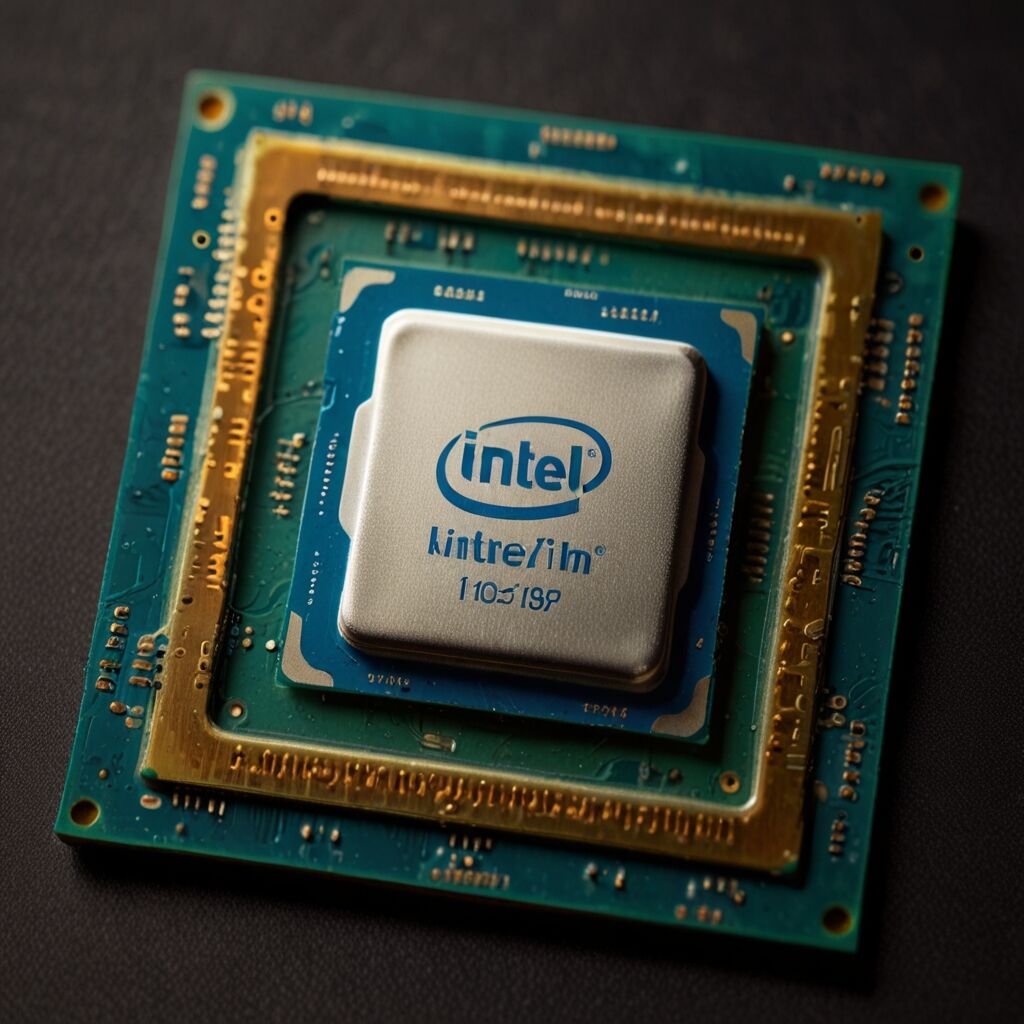
R9 280 Legacy and AMD’s Graphics Evolution
The R9 280 represents AMD’s mature 28nm Graphics Core Next (GCN) architecture from the company’s competitive period against NVIDIA’s Maxwell generation. It demonstrates AMD’s historical strength in compute performance.
Modern AMD graphics like the RX 6000 and 7000 series have evolved dramatically, offering ray tracing, improved power efficiency, and significantly better performance per dollar than legacy cards.
By 2025, AMD’s RDNA 3 architecture delivers 3-4x the performance of the R9 280 while consuming similar or lower power, showcasing a decade of technological advancement.
Technology Evolution Since R9 280 Launch
Since 2014, graphics technology has advanced through multiple generations including Maxwell, Pascal, Turing, Ampere, and RDNA architectures. Each brought significant improvements in efficiency and features.
Modern graphics cards include hardware-accelerated ray tracing, AI-driven upscaling (DLSS/FSR), and advanced video encoding capabilities that the R9 280 era completely lacked.
Power efficiency improvements mean current mid-range cards like the RX 6600 deliver double the performance while consuming 40% less power than the R9 280’s 250W requirement.
Graphics Technology Landscape in 2025
- NVIDIA dominates high-end with RTX 4000 series featuring advanced ray tracing and DLSS 3
- AMD competes strongly in mid-range with RDNA 3 architecture and FSR technology
- Intel Arc provides additional budget competition with hardware AV1 encoding support
- All modern cards support DirectX 12 Ultimate and hardware ray tracing acceleration
- Power efficiency improvements enable high performance in compact form factors
- AI acceleration becomes standard for content creation and gaming upscaling
- Legacy cards like R9 280 are effectively obsolete for current gaming demands

Maximizing R9 280 Performance and Troubleshooting
To optimize R9 280 performance in 2025, disable demanding graphical features like anti-aliasing, ambient occlusion, and advanced lighting effects in game settings.
Target 1080p resolution with medium texture quality and reduced shadow distance for optimal frame rates. Lowering these settings typically provides 15-25% performance improvement in modern titles.
Monitor GPU temperatures closely as aging thermal paste may cause overheating. Repasting with quality thermal compound can reduce temperatures by 10-15°C and prevent thermal throttling.
Essential Maintenance and Cooling Solutions
Regular dust cleaning every 3-6 months maintains optimal cooling performance and prevents thermal throttling. Use compressed air to clear dust from heatsinks and fans.
Consider undervolting to reduce power consumption and heat generation while maintaining performance. Most R9 280 cards can reduce voltage by 50-100mV without stability issues.
Aftermarket cooling solutions are generally not cost-effective for the R9 280 in 2025, as the money would be better invested in upgrading to a modern graphics card.