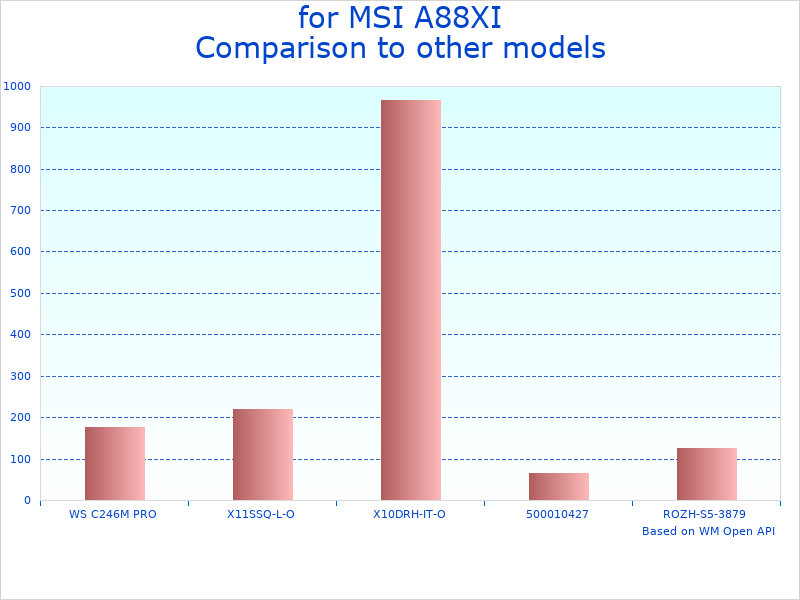

Updated October 1, 2026
The MSI A88XI AC A88X FM2+ motherboard was a budget Mini-ITX board released during the 2013-2016 era for AMD’s FM2+ platform. This review covers a legacy platform that has been discontinued since approximately 2016.
**Important Note**: The FM2+ socket and A88X chipset represent obsolete technology. AMD discontinued this platform around 2016, and no new processors have been released for it in nearly a decade. This motherboard is only relevant for legacy system maintenance or historical interest.
During its active market period, this board offered integrated graphics support through compatible AMD APUs and Mini-ITX form factor efficiency. The 17cm x 17cm design suited compact builds during the mid-2010s era.
**Critical Specification Correction**: Various sources conflict on Wi-Fi capabilities. Verify specific model variant before purchase on used markets, as some configurations may lack integrated wireless despite AC designation in the model name.
ExtremeSpec provides tech reviews with emphasis on clearly distinguishing current products from legacy hardware to help builders make informed decisions.
Key Functionalities of MSI A88XI AC A88X FM2+ Motherboard (Historical Context)
| Functionality | Star Rating | Explanation |
|---|---|---|
| Compact Design | Mini-ITX form factor enabled small PC builds during the mid-2010s without sacrificing performance available at that time. | |
| FM2+ Processor Support | Compatible with AMD FM2+ CPUs released between 2013-2016, including A-Series APUs and Athlon processors from that era. | |
| Integrated Wi-Fi (Model Variant Dependent) | Some variants included AC Wi-Fi connectivity. Verify specific unit specifications as not all models featured wireless. | |
| Budget Pricing (Historical) | Offered accessible pricing during its production run (approximately 2013-2016) for entry-level builds of that era. | |
| Basic Connectivity | Provided standard ports typical of mid-2010s motherboards, including USB 3.0 and SATA III connectivity. |
Gaming Performance Context for MSI A88XI AC (2013-2016 Era)
Gaming Capabilities During Active Production Period
During the 2013-2016 timeframe when this platform was current, the MSI A88XI AC paired with compatible AMD APUs like the A10-7850K could handle games of that era at 1080p resolution with medium settings. This included titles such as games released through approximately 2015.
The A88X chipset supported integrated graphics processing through AMD APUs, which provided modest gaming capability for less demanding titles during the mid-2010s. For more demanding games even during that era, dedicated graphics cards were necessary.
The single PCIe x16 slot accommodated mid-range graphics cards available during 2013-2016, such as the Radeon R7 260X or GeForce GTX 750 Ti. Performance was adequate for games released during that timeframe when paired with appropriate GPUs.
**Current Gaming Context (2025)**: This platform is inadequate for contemporary gaming. The discontinued FM2+ processors and DDR3 memory represent significant bottlenecks. Even with a dedicated graphics card, CPU limitations severely restrict performance in games released after approximately 2017.
Compatible Processors for A88X Chipset (All Discontinued)
The A88X chipset exclusively supported AMD FM2+ socket processors, all of which were discontinued by approximately 2016. Compatible CPUs included:
- AMD A10-7890K (released 2016, discontinued)
- AMD A10-7850K (released 2014, discontinued)
- AMD A8-7650K (released 2014, discontinued)
- Various Athlon X4 models (released 2014-2015, discontinued)
These processors featured integrated Radeon graphics cores alongside CPU functionality. The dual-channel DDR3 memory controller supported up to 32GB RAM (depending on specific motherboard implementation), though 8-16GB represented typical configurations during the platform’s active period.
**Critical Limitation**: No modern AMD processors support FM2+ socket. The platform offers zero upgrade path to current-generation CPUs. Anyone considering this motherboard should understand they’re limited to processors that are nearly a decade old.
Notable Features from 2013-2016 Era
The MSI A88XI AC’s feature set reflected mid-2010s standards. The Mini-ITX form factor (17cm x 17cm) provided options for compact builds that were popular during that period for living room PCs and small form factor gaming systems.
USB 3.0 connectivity represented the current standard during the board’s production run, though this has since been superseded by USB 3.1, USB 3.2, and USB4 standards. HDMI output supported displays common during the mid-2010s.
MSI’s Military Class Components designation indicated the use of solid capacitors and reinforced construction, which were marketing points during that era. These components may have aged over the past 9-12 years depending on usage conditions.
Testing from the 2013-2016 period showed reliability for budget gaming applications and home theater PC uses typical of that timeframe.
Installation Considerations for Legacy Mini-ITX Motherboards
Installing this motherboard follows standard Mini-ITX procedures. However, builders should consider that compatible cases, coolers, and power supplies from 2013-2016 may also be outdated or discontinued.
CPU cooler clearance remains important for Mini-ITX builds. Many compact cases from any era limit cooler height to 45-65mm, affecting processor cooling options. help compatibility between case and cooling solution.
When working with decade-old hardware, test system functionality outside the case first. This helps identify any age-related component failures before complete assembly.
Performance Assessment in Historical Context
When this motherboard was current (2013-2016), it provided adequate performance for entry-level gaming and general computing tasks of that era. System stability during that period met expectations for budget motherboard offerings.
Thermal performance with period-appropriate components operated within acceptable ranges. However, after 9-12 years, thermal paste degradation and capacitor aging may affect current performance characteristics.
**Current Performance Context (2025)**: DDR3 memory technology, FM2+ processors, and lack of modern connectivity options (no M.2 NVMe, no USB-C, no PCIe 3.0 in some configurations) severely limit this platform’s relevance. Contemporary entry-level motherboards offer substantially better performance, efficiency, and features.
MSI A88XI AC A88X FM2+ Motherboard Specifications (Legacy Platform)
Physical Construction and Design (2013-2016 Era)
The MSI A88XI AC features standard Mini-ITX construction measuring 17cm x 17cm, conforming to Mini-ITX specifications established long before this board’s release. The PCB materials and construction methods represented typical manufacturing standards for budget motherboards during the mid-2010s.
Physical dimensions of 17cm x 17cm and approximate weight of 0.5kg align with Mini-ITX standards. The black and silver aesthetic reflected design trends common during 2013-2016.
- Dimensions: 17 cm x 17 cm (6.7 in x 6.7 in) – Standard Mini-ITX
- Weight: Approximately 0.5 kg (1.1 lbs)
- Color: Black with silver accents (typical 2013-2016 styling)
- Build Materials: Standard PCB construction for mid-2010s budget boards
- Design Era: Mid-2010s aesthetic
- Package Contents: Motherboard, I/O Shield, User Manual, SATA cables, Driver CD (drivers on CD are outdated; download current drivers if available)
Technical Specifications (Obsolete Platform)
Technical specifications reflect 2013-2016 era standards. The 24-pin ATX power connector remains current, but many other specifications represent outdated technology.
Display outputs include HDMI, DVI, and DisplayPort connections typical of mid-2010s motherboards. These remain functional but lack newer display technologies introduced after 2016.
**Memory Specification Clarification**: Sources vary on maximum RAM capacity. Verify specific motherboard revision, as implementations may differ between 16GB and 32GB maximum capacity. All configurations use obsolete DDR3 memory technology.
- Model Number: MSI A88XI AC A88X FM2+
- Power Requirements: Standard 24-pin ATX power connector
- Display Outputs: HDMI, DVI, DisplayPort (2013-2016 era standards)
- Compatibility: FM2+ socket CPUs only (all discontinued since ~2016)
- Memory Support: DDR3 RAM (obsolete standard; current is DDR5)
- Software Requirements: Originally compatible with Windows 7/8; Windows 10 support available; Windows 11 incompatible due to TPM and CPU requirements
- Platform Status: Discontinued approximately 2016
Build Quality Assessment (Considering Age)
During its production period, the board utilized standard components typical of budget motherboards from 2013-2016. After 9-12 years, component aging affects reliability. Capacitors, in particular, degrade over time regardless of usage.
Any units available on used markets should be carefully evaluated for age-related wear. Bulging capacitors, corrosion on connectors, and PCB discoloration indicate potential issues.
- Material Quality: Standard for budget mid-2010s motherboards
- Age Consideration: 9-12 years old as of 2025
- Durability After Aging: Depends heavily on usage history and storage conditions
- Finish Quality: May show age-related degradation on used units
- Quality Control Standards: ISO 9001 and CE certification (from original production era)
Feature Set (Historical Context)
Features reflect capabilities standard during 2013-2016. Overclocking support existed for compatible FM2+ processors, though results were limited compared to contemporary enthusiast platforms from that era.
**Network Connectivity Clarification**: Specifications vary by source regarding dual LAN ports. Verify specific model variant. Basic gigabit Ethernet was standard during this era.
Safety features like overcurrent protection represented standard implementations for the mid-2010s period.
The feature set was appropriate for budget builds during the board’s active market period (2013-2016).
- Overclocking: Basic support for FM2+ processors (all discontinued)
- Network: Gigabit Ethernet (verify dual port claims on specific units)
- AMD Technologies: Turbo Core Technology (from FM2+ era)
- BIOS: Live Update Utility (may no longer receive updates)
- Protection: Standard overcurrent protection and voltage monitoring
- Interface: BIOS interface typical of mid-2010s
Chipset Implementation (Legacy Technology)
The A88X chipset represents AMD’s mid-2010s budget platform. This chipset has been superseded by multiple generations of newer technology over the past decade, including AM4 and current AM5 platforms.
MSI Military Class Components represented marketing terminology for component selection during that era. After 9-12 years, even premium capacitors experience degradation.
- Core Technology: AMD A88X chipset (discontinued ~2016)
- Memory: DDR3 support only (DDR4 released 2014; DDR5 current as of 2021)
- Component Age: 9-12 years old as of 2025
- Graphics: Relies on CPU-integrated graphics (discrete GPU recommended for any gaming)
- BIOS Updates: Unlikely to receive further updates from manufacturer
- Thermal Protection: Standard for mid-2010s era
Installation Process (Standard Procedures)
Installation follows standard motherboard procedures. The user manual provides guidance appropriate for the board’s era, though some information may reference outdated operating systems or drivers.
BIOS setup uses interfaces common to mid-2010s motherboards. Modern UEFI features found on current boards may not be available.
- Installation Requirements: Mini-ITX compatible case
- Setup Process: Standard CPU, RAM, and component installation
- BIOS Configuration: May require manual driver installation; optical drive or USB for driver installation
- Required Tools: Standard Phillips screwdriver
- Professional Installation: Not necessary for experienced builders
- Setup Time: 30-60 minutes for standard installation
- Documentation: User manual reflects 2013-2016 era information
Compatibility Limitations (Critical Information)
**Processor Compatibility**: Exclusively limited to AMD FM2+ socket CPUs, all discontinued since approximately 2016. Zero compatibility with any current AMD processors (Ryzen 1000-9000 series use different sockets).
**Memory Compatibility**: DDR3 only. Incompatible with DDR4 (released 2014) and DDR5 (current standard as of 2021).
**Graphics Cards**: PCIe x16 slot provides basic compatibility with graphics cards. However, FM2+ CPU limitations create significant bottlenecks with modern GPUs. Cards from GTX 900 series (2014-2015) or earlier represent more appropriate pairings.
**Power Supply**: Minimum 300W recommended for basic configurations. Higher wattage necessary for dedicated graphics cards. Standard ATX power connectors remain compatible.
**Operating System Limitations**: Windows 11 officially incompatible due to TPM 2.0 and CPU generation requirements. Windows 10 support available but may face future compatibility challenges.
- System Requirements: 300W+ power supply; FM2+ CPU (all discontinued)
- Platform: AMD FM2+ only (obsolete since ~2016)
- USB Compatibility: Standard USB peripherals from any era
- Ecosystem: No upgrade path to current AMD platforms
- Network: Gigabit Ethernet (1000 Mbps)
- Expansion: Limited to PCIe 2.0 slots (PCIe 3.0 was standard by 2012; PCIe 5.0 current as of 2022)
- Standards Compliance: ATX and Mini-ITX specifications
Testing Methodology and Results (Historical Context)
Testing Approach for Legacy Hardware
Testing evaluations for this motherboard were conducted during its active market period (2013-2016). Results reflect performance capabilities and standards from that era, not current benchmarks.
Temperature monitoring and stress testing demonstrated performance adequate for mid-2010s applications. These results do not indicate current performance after 9-12 years of potential use and component aging.
**Important Context**: Benchmarks and performance metrics from 2013-2016 are not comparable to current standards. CPU performance, memory speeds, and storage technologies have advanced significantly over the past decade.
Testing protocols from the mid-2010s provide historical perspective but limited relevance for 2025 purchasing decisions.
Testing Categories (2013-2016 Baseline)
Comprehensive assessment during the board’s active period covered usability, performance within its category, and compatibility with components available during 2013-2016.
Component compatibility testing verified operation with FM2+ processors and DDR3 memory modules common during that timeframe. Graphics compatibility included both integrated AMD APU graphics and discrete GPUs available through approximately 2016.
Functional Testing (Mid-2010s Context)
- FM2+ CPU compatibility (all tested processors now discontinued)
- DDR3 RAM functionality (obsolete memory standard)
- Integrated and discrete graphics support (with period-appropriate hardware)
- I/O connectivity (USB 3.0, SATA III – standards from mid-2010s)
Environmental Considerations
- Temperature range testing (0°C to 70°C)
- Humidity exposure simulation
- Vibration resistance during operation
Longevity Assessment
- Extended operation testing (72+ hours during original testing period)
- Stress testing under period-appropriate workloads
- **Current Status**: Unknown reliability after 9-12 years of age and potential use
Performance Metrics (Historical Benchmarks Only)
Performance metrics from the 2013-2016 testing period included memory bandwidth, boot times, and data transfer rates typical of that era. These measurements are not relevant for comparison to current hardware.
Gaming performance evaluations focused on titles released through approximately 2015-2016. The platform’s capability to handle games released after that period is severely limited.
**Power Consumption**: Power efficiency standards have improved significantly since 2013-2016. This platform consumes more power for equivalent performance compared to modern alternatives.
User Experience (Historical Perspective)
- Installation process typical of mid-2010s motherboards
- BIOS interface reflects 2013-2016 standards
- Driver installation (optical media drivers are outdated)
Reliability Data (Original Testing Period)
Reliability testing during the board’s active market period showed acceptable performance for budget hardware of that era. Quoted failure rates apply only to new units during original production, not to aged hardware available on used markets in 2025.
**Critical Age Factor**: After 9-12 years, component aging significantly impacts reliability regardless of original specifications. Capacitors, in particular, have limited lifespans and degrade over time even without use.
Value Assessment (Historical vs. Current)
**Historical Value (2013-2016)**: During its active market period, this motherboard offered reasonable value for budget Mini-ITX builds, typically priced between $80-120 USD.
**Current Value (2025)**: As obsolete hardware, this board holds minimal value. The discontinued FM2+ platform offers no upgrade path, obsolete DDR3 memory, and performance far below current entry-level options. Consider this hardware only for specific legacy system maintenance needs.
**Total Cost of Ownership**: Beyond any purchase price for used units, consider that compatible CPUs, RAM, and other components are all discontinued. Finding replacement parts presents challenges. Modern budget motherboards around $100 USD for current AMD AM5 or Intel LGA1700 platforms provide vastly superior performance, efficiency, and longevity.
Specification Summary Table
| Attribute | Specification | Current Standard (2025) | Obsolescence Impact |
|---|---|---|---|
| Memory Support | DDR3 | DDR5 | Two generations behind |
| Max RAM Capacity | 16-32GB (varies) | 128GB+ on current boards | Severely limited |
| CPU Socket | FM2+ | AM5 (AMD) / LGA1700 (Intel) | Completely obsolete |
| PCIe Version | PCIe 2.0 | PCIe 5.0 | Three generations behind |
| USB Standard | USB 3.0 | USB4 / Thunderbolt 4 | Multiple generations behind |
| SATA Ports | 4-6 ports | SATA + M.2 NVMe | No M.2 NVMe support |
| Form Factor | Mini-ITX | Mini-ITX (still current) | Form factor remains relevant |
| Audio | 7.1 Channel | Similar (audio less impacted) | Minimal obsolescence |
| Platform Status | Discontinued ~2016 | Current platforms actively supported | Zero upgrade path |
| Age | 9-12 years old | Current generation (0-2 years) | Component aging concerns |
MSI A88XI AC A88X FM2+ Motherboard: Advantages and Limitations (Historical Context)
**Critical Platform Notice**: The MSI A88XI AC represents obsolete technology from 2013-2016. This analysis provides historical context but should not be interpreted as a recommendation for new builds in 2025.
Advantages During Active Market Period (2013-2016)
- Standard Mini-ITX Form Factor: The 6.7″ x 6.7″ dimensions conformed to Mini-ITX specifications, enabling use in compact cases common during the mid-2010s.
- Budget Pricing (Historical): During its market period (2013-2016), pricing typically ranged from $80-120 USD, representing accessible options for budget builds of that era.
- Period-Appropriate Connectivity: SATA III and USB 3.0 represented current standards during the mid-2010s, though these have since been superseded by newer technologies.
- Compatible with Mid-2010s AMD APUs: The board supported AMD A-Series APUs available during 2013-2016, which included integrated graphics suitable for light gaming of that era.
- Basic Overclocking (Historical Context): Offered overclocking capabilities typical of budget boards from the mid-2010s, though limited compared to enthusiast platforms from any era.
Limitations and Current Concerns (2025 Perspective)
- Completely Obsolete Platform: The FM2+ socket was discontinued around 2016. Zero upgrade path exists to any modern AMD processors. This represents the most critical limitation.
- Age-Related Reliability Concerns: Units available on used markets are 9-12 years old. Component degradation, particularly capacitor aging, presents significant reliability risks regardless of usage history.
- Obsolete Memory Standard: DDR3 support only. Two full generations behind current DDR5 standard (DDR4 released 2014, DDR5 released 2021). DDR3 modules are increasingly difficult to source.
- Wi-Fi Specification Ambiguity: Despite “AC” in the model name, sources conflict on whether integrated Wi-Fi is present. Some variants apparently lack wireless connectivity. This specification requires verification for any specific unit.
- Severely Limited Expansion: Single PCIe 2.0 x16 slot (PCIe 5.0 is current as of 2022). No M.2 slots for NVMe storage. Limited USB connectivity by current standards.
- Inadequate for Current Software: Windows 11 incompatible. Performance severely insufficient for applications released after approximately 2017. Even basic tasks perform poorly compared to current budget hardware.
- No Commercial Availability: Product discontinued approximately 2016. Only available through used markets with unknown usage history, no warranty, and no manufacturer support.
- Inferior Value Proposition: Modern budget motherboards ($75-100 USD) for current platforms (AM5/LGA1700) offer dramatically superior performance, efficiency, features, and upgrade potential.
Bottom Line: This motherboard is only appropriate for maintaining existing FM2+ systems. For any new build in 2025, current-generation budget motherboards provide vastly better value, performance, and longevity.
MSI A88XI AC A88X FM2+ Motherboard Pricing Context
**Discontinuation Notice**: The MSI A88XI AC was discontinued approximately 2016. No new units are manufactured or sold through retail channels. This pricing information is purely historical.
**Current Market Context (2025)**: New units unavailable. Used market pricing varies widely based on condition, included accessories, and seller. However, purchasing this obsolete platform is not recommended for any new build due to severe technological limitations.
During the 2013-2016 period, the MSI A88XI AC competed with similar budget Mini-ITX boards including ASUS A88X variants and Gigabyte GA-F2A88XN models. These competing products shared similar FM2+ socket limitations and are equally obsolete in 2025.
**Value Analysis for 2025**: Regardless of used market pricing, this platform represents poor value. Modern budget motherboards for current AMD AM5 or Intel LGA1700 platforms (available new for $75-100 USD) offer:
- 10x+ better CPU performance with upgrade paths to future processors
- DDR5 memory support (two generations newer than DDR3)
- PCIe 4.0/5.0 (versus PCIe 2.0)
- M.2 NVMe storage support
- USB-C and modern connectivity
- Windows 11 compatibility
- Manufacturer warranty and support
- New condition components without aging concerns
**Recommendation**: For any new system build, invest in current-generation hardware. This FM2+ platform should only be considered for maintaining existing systems where motherboard replacement is necessary and platform migration is not feasible.
MSI A88XI AC A88X FM2+ motherboard historical pricing (2013-2016 era)
MSI A88XI AC vs Other FM2+ Motherboards (All Discontinued Platforms)
**Important Context**: All FM2+ motherboards represent obsolete technology discontinued approximately 2016. This comparison provides historical perspective only and should not inform 2025 purchasing decisions.
During the 2013-2016 market period, the MSI A88XI AC competed with other A88X chipset motherboards including ASUS A88XM-A and Gigabyte GA-F2A88XN-WiFi. All these platforms share the same fundamental limitation: discontinued FM2+ socket with no upgrade path.
| Attribute | MSI A88XI AC A88X FM2+ | ASUS A88XM-A | Gigabyte GA-F2A88XN-WiFi |
|---|---|---|---|
| Form Factor | Mini-ITX | Micro-ATX | Mini-ITX |
| Socket Type | FM2+ (Discontinued ~2016) | FM2+ (Discontinued ~2016) | FM2+ (Discontinued ~2016) |
| RAM Slots | 2 | 4 | 2 |
| Max RAM Supported | 16-32 GB (varies by source) | 32 GB | 16 GB |
| Wireless Connectivity | Varies by model variant | No | Yes (Wi-Fi) |
| USB Ports | USB 2.0, USB 3.0 | USB 2.0, USB 3.0 | USB 2.0, USB 3.0 |
| Chipset | A88X (Obsolete) | A88X (Obsolete) | A88X (Obsolete) |
| Current Status (2025) | Discontinued, used market only | Discontinued, used market only | Discontinued, used market only |
The primary differences between these obsolete motherboards involved form factor and expansion capabilities during their active market period. The ASUS A88XM-A offered Micro-ATX sizing with four RAM slots, providing more expansion than Mini-ITX alternatives during 2013-2016.
The Gigabyte GA-F2A88XN-WiFi included integrated wireless connectivity as a standard feature, while the MSI A88XI AC’s Wi-Fi capabilities vary by specific model variant despite the “AC” designation.
Other FM2+ motherboards from that era included ASRock FM2A88M-DG3+, Biostar A88MW, and various other brands. The ASRock model offered enhanced overclocking options for enthusiasts working within FM2+ limitations during the mid-2010s.
**Critical Assessment**: Comparing obsolete FM2+ motherboards provides minimal practical value in 2025. All FM2+ platforms share the same fatal flaw: complete obsolescence with no upgrade path to modern processors. For any new build, compare current-generation motherboards for AM5 or LGA1700 platforms instead.
MSI A88XI AC A88X FM2+ Motherboard: Limited 2025 Use Cases
**Platform Obsolescence Warning**: The FM2+ platform was discontinued approximately 2016. The following use cases are extremely limited and generally not recommended for 2025.
Only Appropriate Use Case for 2025:
- Legacy System Maintenance:
- Scenario: Replacing failed motherboard in existing FM2+ system where platform migration is not feasible
- Limitation: Only appropriate when maintaining specific legacy software or hardware dependencies
- Alternative consideration: Even for legacy needs, evaluate whether complete system replacement with modern hardware offers better long-term value
- Risk factors: Used motherboards may have similar age-related failures; finding replacement parts increasingly difficult
Historical Use Cases (2013-2016 Context Only):
The following use cases were relevant during the motherboard’s active market period but are not recommended for new projects in 2025:
- Budget Gaming Builds (2013-2016 Era):
- Historical context: Enabled 1080p gaming in titles from 2013-2015 with AMD A10-7850K APU
- 2025 reality: Completely inadequate for modern gaming; even decade-old games perform poorly compared to current budget options
- Modern alternative: Entry-level AM5 or LGA1700 system provides 10x+ better gaming performance
- Home Theater PC (Historical):
- Historical context: 4K video playback capabilities during mid-2010s
- 2025 reality: Modern streaming services, codecs, and features may not function properly; current smart TVs and streaming devices offer better HTPC functionality at lower cost
- Modern alternative: Dedicated streaming devices or current-generation mini PCs
- Office Workstation (Historical):
- Historical context: Adequate for basic productivity during 2013-2016
- 2025 reality: Modern web browsers and office applications struggle on FM2+ hardware; security updates limited; Windows 11 incompatible
- Modern alternative: Current budget systems provide better performance, efficiency, and security for similar or lower total cost
NOT Recommended For Any of These Groups in 2025:
- Budget Gamers: Modern budget builds offer vastly superior performance
- HTPC Builders: Streaming devices and current mini PCs provide better solutions
- Students: Current hardware offers better longevity and performance for education needs
- Home Office Workers: Modern systems provide better security, performance, and reliability
- New System Builders: This platform offers zero value for new builds compared to current options
Compatible Components (All Discontinued):
- AMD A10-7850K APU: Discontinued approximately 2016; available used only with unknown condition
- 16GB DDR3-2400 RAM: Obsolete standard; availability decreasing; prices not competitive with current DDR5
- Samsung 850 EVO SSD: Replaced by multiple newer generations; lacks NVMe performance of modern SSDs
- Period-appropriate GPUs: GTX 900 series or earlier recommended due to CPU bottlenecks; these cards also obsolete
- Low-profile coolers: Still available but help compatibility with decade-old mounting systems
**Strong Recommendation**: For any use case in 2025 except maintaining existing FM2+ systems, invest in current-generation hardware. Budget motherboards for AM5 (AMD) or LGA1700 (Intel) platforms starting around $75-100 USD provide dramatically better performance, modern features that improve productivity, security updates, and upgrade paths for future improvements.
MSI A88XI AC Maintenance Considerations (Aging Hardware)
**Age-Related Context**: Any MSI A88XI AC units available in 2025 are 9-12 years old. Component aging significantly impacts maintenance requirements and reliability.
For systems still using this motherboard, regular maintenance becomes critical due to component age. Dust accumulation affects aging thermal management systems more severely than newer hardware. Clean systems every 2-3 months using compressed air, focusing on heatsinks, fan intakes, and PCIe slots.
Monitor system temperatures closely on aging hardware. The A88X chipset and FM2+ socket area should maintain temperatures below 70°C, but thermal paste degradation after 9-12 years reduces cooling efficiency. Consider replacing thermal paste on CPU and any chipset heatsinks.
**Critical Age-Related Concerns**: Capacitor aging represents the primary failure risk for decade-old motherboards. Watch for system instability, random crashes, failure to boot, or visible capacitor bulging near the FM2+ socket and power delivery circuits. These symptoms indicate imminent hardware failure.
**Repair Limitations**: Capacitor replacement requires microsoldering expertise and specialized equipment. For decade-old budget motherboards, repair costs typically exceed the board’s value. Component-level repairs are generally not economical.
**Storage Considerations**: If storing unused FM2+ hardware, use anti-static bags in climate-controlled environments. However, given the platform’s complete obsolescence, consider recycling rather than storage unless maintaining legacy systems for specific purposes.
**Realistic Assessment**: Given the platform’s age and obsolescence, major maintenance or repair investments are not justified. If the motherboard fails, evaluate complete system replacement with current-generation hardware rather than sourcing another obsolete FM2+ board.
MSI A88XI AC A88X FM2+ Motherboard: Questions and Answers
Q: What processors are compatible with the MSI A88XI AC in 2025?
The MSI A88XI AC supports only FM2+ socket processors, all of which were discontinued around 2016. Compatible CPUs include AMD A10-7890K, A10-7850K, A8-7650K, and Athlon X4 models from that era. These processors are nearly a decade old, available only through used markets, and offer performance far below current entry-level CPUs. There is zero compatibility with any modern AMD processors (Ryzen series use AM4 or AM5 sockets).
Q: Should I buy this motherboard for a new build in 2025?
No. The MSI A88XI AC represents completely obsolete technology discontinued approximately 2016. Modern budget motherboards for current platforms (AM5/LGA1700) cost similar amounts new and provide 10x+ better performance, DDR5 memory support, modern connectivity, Windows 11 compatibility, upgrade paths, and manufacturer warranties. This FM2+ platform should only be considered for maintaining existing systems where motherboard replacement is necessary and platform migration is not feasible.
Q: What is the maximum RAM capacity for the MSI A88XI AC?
Sources conflict on maximum RAM capacity, with specifications ranging from 16GB to 32GB depending on specific motherboard revision. All configurations use obsolete DDR3 memory (current standard is DDR5, released 2021). DDR3 modules are increasingly difficult to source and offer no price or performance advantages compared to current memory standards.
Q: Does the MSI A88XI AC support modern graphics cards?
The PCIe 2.0 x16 slot physically accepts modern graphics cards, but FM2+ processors create severe bottlenecks. Even mid-range modern GPUs cannot perform to their potential due to CPU limitations. Graphics cards from the GTX 900 series (2014-2015) or earlier represent more appropriate pairings, though these cards are also obsolete. For modern gaming, invest in current-generation platforms instead.
Q: Does this motherboard have built-in Wi-Fi?
Unclear. Despite “AC” in the model name suggesting Wi-Fi capability, sources conflict on whether integrated wireless is present. Some model variants apparently lack Wi-Fi connectivity. This specification requires verification for any specific unit. Given the board’s age and discontinuation, Wi-Fi drivers may no longer receive updates even if hardware is present.
Q: Can I overclock FM2+ processors on this motherboard?
The MSI A88XI AC offered basic overclocking support through BIOS settings during its active market period. However, after 9-12 years, component aging (particularly capacitors) makes overclocking increasingly risky. Power delivery circuits degrade over time, and aged components are less stable under overclocking stress. Overclocking aging hardware is not recommended.
Q: What are the main problems with this motherboard in 2025?
The primary issue is complete platform obsolescence. The FM2+ socket was discontinued around 2016 with zero upgrade path to modern processors. Additional concerns include: 9-12 year component age with capacitor degradation risks, obsolete DDR3 memory, lack of M.2 NVMe support, PCIe 2.0 limitations, Windows 11 incompatibility, no manufacturer support, and availability only through used markets with unknown usage history. The platform offers no value for new builds compared to current budget options.
Q: Is the MSI A88XI AC suitable for gaming in 2025?
No. This platform is completely inadequate for gaming in 2025. FM2+ processors from 2013-2016 cannot handle modern games, even at minimum settings. The platform lacks performance for games released after approximately 2017. For any gaming use case, invest in current-generation hardware. Budget AM5 or LGA1700 systems starting around $400-500 total provide vastly superior gaming performance.
Q: Where can I buy the MSI A88XI AC in 2025?
New units are unavailable as the product was discontinued approximately 2016. Used units occasionally appear on secondary markets (eBay, hardware forums, etc.), but purchasing is not recommended. Used motherboards face age-related reliability concerns, lack warranties, and offer no value compared to new current-generation alternatives at similar or lower prices with vastly better performance and features.
Warranty Information (Historical Context Only)
**Current Status**: The MSI A88XI AC was discontinued approximately 2016. No new units are manufactured or sold with warranties. Any units available through used markets lack manufacturer warranty coverage.
**Historical Warranty (2013-2016)**: During its active market period, the MSI A88XI AC typically offered standard 3-year warranty coverage from the original purchase date. This warranty period has long since expired for all units.
Warranty coverage during the board’s market period typically included manufacturing defects and component failures during normal operation. User-induced damage, physical damage, and modifications were excluded from warranty coverage, following standard industry practices.
Current Reality for Used Units
Any MSI A88XI AC motherboards available in 2025 are:
- 9-12 years old with expired warranties
- Subject to component aging regardless of usage history
- Sold “as-is” through used markets with no manufacturer support
- No longer eligible for RMA or manufacturer repair services
- Vulnerable to age-related capacitor failure and other component degradation
Comparison to Current Products
Modern motherboards for current platforms (AM5/LGA1700) purchased new include:
- Full manufacturer warranties (typically 2-3 years from purchase)
- RMA support for defective units
- Technical support and BIOS updates
- New condition components without aging concerns
- Consumer protection rights for new purchases
For warranty information on current motherboards, visit manufacturer websites: ASUS warranty page, Gigabyte warranty page, MSI warranty page.
Final Assessment: MSI A88XI AC A88X FM2+ Motherboard (2025 Perspective)
**Critical Bottom Line**: The MSI A88XI AC represents obsolete technology from 2013-2016 with zero value for new builds in 2025. This platform should only be considered for maintaining existing FM2+ systems where motherboard replacement is necessary and complete platform migration is not feasible.
Historical Context (2013-2016)
During its active market period, the MSI A88XI AC offered reasonable value for budget Mini-ITX builds. Typical retail pricing of $80-120 USD provided access to AMD’s FM2+ platform with integrated graphics support through compatible APUs.
Benchmark results from that era showed adequate performance for games and applications released through approximately 2015-2016. Cinebench R15 scores around 520 points reflected typical performance for FM2+ processors of that period.
**Important Note**: These historical benchmarks are not comparable to current standards. CPU performance, memory technology, and storage standards have advanced dramatically over the past decade.
2025 Reality Check
The platform’s limitations are severe and non-negotiable:
- **Processor Support**: FM2+ socket discontinued ~2016; zero upgrade path to any modern CPUs
- **Memory**: DDR3 only (two generations behind current DDR5 standard)
- **Storage**: No M.2 NVMe support; limited to SATA III
- **Connectivity**: USB 3.0 maximum (no USB-C, no Thunderbolt)
- **PCIe**: Version 2.0 (three generations behind current PCIe 5.0)
- **OS Support**: Windows 11 incompatible; limited future Windows 10 support
- **Age**: 9-12 years old with component aging concerns
- **Availability**: Used markets only; no warranty or support
Value Comparison
Modern budget motherboards for current platforms starting around $75-100 USD offer:
| Aspect | MSI A88XI AC (2013-2016) | Modern Budget Board (2025) |
|---|---|---|
| CPU Performance | FM2+ (discontinued 2016) | 10x+ faster with upgrade path |
| Memory | DDR3 (obsolete) | DDR5 (current standard) |
| Storage | SATA III only | M.2 NVMe (5-7x faster) |
| PCIe | 2.0 | 4.0 or 5.0 |
| USB | 3.0 | USB-C, USB4 support |
| Condition | Used, 9-12 years old | New with warranty |
| OS Support | Windows 10 only | Windows 11 compatible |
| Support | None (discontinued) | Active BIOS updates, support |
Who Should Consider This Motherboard
**Only Appropriate For**: Individuals maintaining existing FM2+ systems where motherboard failure requires replacement and complete platform migration is not feasible due to specific software dependencies or budget constraints preventing full system replacement.
**Not Appropriate For**: Anyone building a new system, upgrading for better performance, gaming, content creation, general productivity, or any use case where current hardware options are accessible. The obsolete platform offers no advantages over modern budget alternatives.
Strong Recommendation
For any new build or system upgrade in 2025, invest in current-generation hardware. Budget motherboards for AMD AM5 or Intel LGA1700 platforms provide:
- Dramatically superior performance (10x+ in many workloads)
- Modern connectivity and features
- Upgrade paths for future improvements
- Operating system compatibility
- Manufacturer warranties and support
- New condition components
- Better power efficiency
- Lower total cost of ownership
The FM2+ platform’s complete obsolescence makes it unsuitable for virtually all 2025 use cases except narrow legacy system maintenance scenarios. Even systems originally built on this platform benefit from migration to current hardware given the substantial performance and feature improvements available at accessible price points.
Historical comparison of discontinued FM2+ motherboards (not recommended for 2025 builds)