
Sapphire Radeon R9 21226-00-40G
Category: CPU-Motherboards
Updated October 15, 2026
Legacy Hardware Notice: The R9 290X is a 10+ year old graphics card with significant limitations for modern gaming. This analysis is provided for historical context and specific use cases only.
Executive Summary
The AMD Radeon R9 290X, released in October 2013, was AMD’s flagship graphics card that competed with NVIDIA’s GTX 780 Ti. Built on the 28nm Hawaii architecture, it featured 4GB of GDDR5 memory and delivered strong performance for its era. However, the card was notorious for high power consumption and thermal issues that limited its appeal.
Today, the R9 290X is obsolete for mainstream gaming but may serve niche purposes for retro gaming enthusiasts or extreme budget builds. Understanding its historical context helps explain why it’s not suitable for modern gaming needs.
Historical Performance and Competition (2013-2015)
Launch Specifications
| Specification | R9 290X | GTX 780 Ti (competitor) |
|---|---|---|
| Architecture | 28nm Hawaii XT | 28nm GK110 |
| Memory | 4GB GDDR5 | 3GB GDDR5 |
| Memory Bus | 512-bit | 384-bit |
| Base Clock | 1000 MHz | 875 MHz |
| TDP | 290W | 250W |
| Launch Price | $549 | $699 |
2013-Era Gaming Performance
At launch, the R9 290X delivered competitive performance against NVIDIA’s flagship. In demanding 2013 titles like Crysis 3 and Battlefield 4, it achieved 45-60 FPS at 1440p on high settings. The generous 4GB VRAM provided an advantage in memory-intensive scenarios, particularly as games began utilizing more texture memory.
However, the card’s Achilles heel was thermal management. Reference designs frequently reached 95°C under load, causing thermal throttling that reduced performance. The Sapphire variant improved cooling but still struggled with heat dissipation.
Technical Analysis
Architecture Details
The Hawaii GPU featured 2816 stream processors arranged in 44 Compute Units. It supported DirectX 11.2 and OpenGL 4.3, along with AMD’s Mantle API—an early attempt at low-level graphics programming that preceded modern APIs like DirectX 12 and Vulkan.
Memory Subsystem
The 512-bit memory interface provided substantial bandwidth (320 GB/s), which was impressive for 2013. This wide bus helped the card handle high-resolution gaming better than some competitors with narrower memory interfaces.
Power and Thermal Characteristics
The 290W TDP made the R9 290X one of the most power-hungry consumer GPUs of its generation. Combined with inefficient reference cooling, this created significant thermal challenges that affected both performance and acoustics.

Modern Relevance and Limitations (2025)
Critical Limitations for Modern Use
- No hardware ray tracing support
- Limited DirectX 12 Ultimate features
- No modern upscaling technologies (DLSS/FSR equivalent)
- Outdated video encoding capabilities
- Poor power efficiency by current standards
Realistic Performance Expectations
In 2025, the R9 290X can handle:
- Esports titles: CS2, League of Legends, Valorant at 1080p high settings
- Older AAA games (2018 and earlier): 1080p medium-high settings
- Modern AAA games: 1080p low settings with frequent frame drops
- 1440p gaming: Only viable in less demanding or older titles
Who Should Consider This Card
- Retro gaming enthusiasts building period-appropriate systems
- Users with extreme budget constraints (under $75)
- Those needing temporary GPU while saving for modern hardware
- Secondary system builders for non-demanding applications
Used Market Analysis
Current Pricing Reality
Used R9 290X cards typically sell for $50-$100 depending on condition. Anything above $100 represents poor value given the card’s limitations and age-related risks.
Better Alternatives
For similar or slightly higher budgets, consider:
- GTX 1060 6GB (used, ~$120-150): Better efficiency, similar performance, more modern features
- RX 580 8GB (used, ~$100-140): Better performance, more VRAM, improved driver support
- RTX 3050 (new, ~$250): Significantly better performance with ray tracing and DLSS
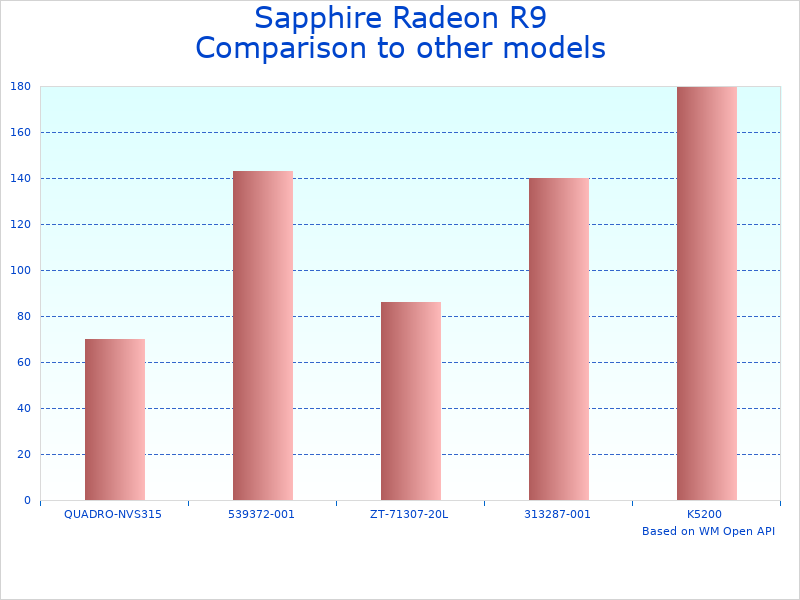
Graphics card market comparison
Installation and System Requirements
Power Requirements
- PSU: 750W+ recommended for total system (not just GPU)
- Connectors: 6-pin + 8-pin PCIe power
- Power efficiency: help high-quality PSU due to high power draw
Physical Considerations
- Length: ~11 inches (280mm) – verify case clearance
- Slot requirement: Dual-slot design
- Cooling: help adequate case ventilation for heat dissipation
Used Hardware Risks and Maintenance
Common Issues with Used R9 290X Cards
- Thermal paste degradation: 10+ years of heat cycles
- Fan bearing wear: Original fans may be failing or noisy
- VRAM degradation: Memory chips may have developed errors
- Capacitor aging: Power delivery components may be near end-of-life
Essential Maintenance Steps
If purchasing a used R9 290X:
- Immediately replace thermal paste and clean heatsink
- Test extensively with stress testing software
- Monitor temperatures closely during initial weeks
- Consider the card a short-term solution due to age
System Compatibility
Compatible Era Components
The R9 290X pairs well with processors and motherboards from its era:
Frequently Asked Questions
Is the R9 290X worth buying in 2025?
Only for very specific use cases like retro gaming or extreme budget constraints. For most users, saving slightly more for a GTX 1060 6GB or RX 580 8GB provides better value and modern features.
What games can it still play?
Esports titles, games from 2018 and earlier at 1080p, and some modern indie games. Don’t expect good performance in current AAA titles.
How much power does it really use?
The GPU alone consumes up to 290W under load. Total system power consumption often exceeds 400W, making it expensive to run compared to modern efficient cards.
Should I replace the thermal paste?
Yes, absolutely. After 10+ years, the original thermal paste has likely degraded significantly. This is essential maintenance for any used R9 290X.
Final Assessment
Historical Significance
The R9 290X was important for establishing AMD’s competitiveness in high-end graphics during the mid-2010s. It offered good value at launch and featured forward-thinking specifications like 4GB VRAM.
2025 Reality Check
This card is now firmly legacy hardware. While it can still function in very limited scenarios, most users would benefit from modern alternatives that offer:
- Better performance per watt
- Modern feature support
- Active driver development
- Warranty coverage (if buying new)
Recommendation
Not Recommended for general use. Consider only if building a retro gaming system or have extremely limited budget with specific compatibility needs. Proper maintenance and realistic expectations are essential if proceeding with a purchase.
For modern gaming needs, invest in current-generation hardware that will provide better performance, efficiency, and longevity.
Graphics card generation comparison